Published on
August 27, 2025
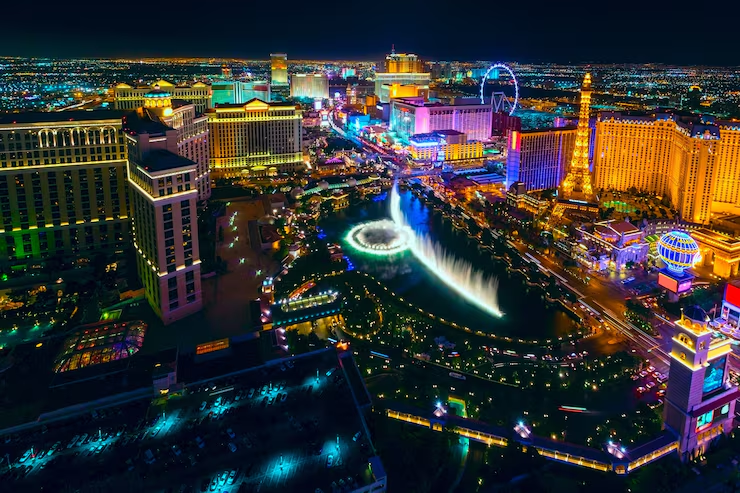
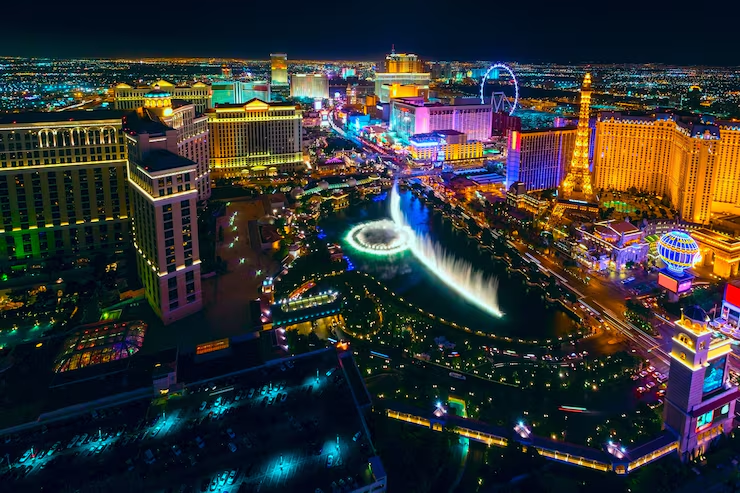
Las Vegas, known for its vibrant hotels, casinos, and entertainment, has seen a downturn in tourism, influenced by a variety of factors. Among them are the US trade policies, which have sparked consumer hesitation, particularly in international markets. Despite Las Vegas resorts offering attractive discounts and promotions, visitation has continued to fall. The rise in costs linked to tariffs and trade tensions has left both domestic and international visitors wary about booking trips to the Strip. According to the Las Vegas Convention and Visitors Authority (LVCVA), the city experienced a 6.5% decline in tourism traffic in May 2025, marking the fifth consecutive month of decreasing visitor numbers.
Steve Hill, the President and CEO of LVCVA, acknowledged that these fluctuations in tourism are directly related to broader economic uncertainties. He pointed out that Las Vegas operators, facing the same economic pressures as the rest of the country, are adjusting their strategies by offering enticing deals to attract guests. However, despite these discounts, Las Vegas tourism continues to struggle under the weight of shifting consumer priorities influenced by the political climate.
Why Are Visitors Hesitant to Book Trips to Las Vegas?
The drop in Las Vegas visitation can be attributed to a mix of factors. The most significant of these is the economic uncertainty stemming from President Trump’s trade policies, which experts predict will drive up consumer prices. The Conference Board’s Consumer Confidence Index revealed a 5.4-point decline in June, with Americans becoming more cautious about spending. With tariffs and increased prices on the horizon, consumers are less willing to splurge on luxury travel or entertainment, leading to a reduced volume of visitors to Las Vegas.
Stephen Miller, an economics professor at the University of Nevada, Las Vegas, emphasized that uncertainty in the economy leads to slower decision-making, with travelers postponing their plans and holding back on discretionary spending. He noted that when consumers are uncertain about their financial stability, they tend to delay big-ticket purchases such as vacations.
The Role of Pricing and Resort Fees in Declining Las Vegas Visits
For many travelers, the perception that Las Vegas is becoming an overpriced destination has played a significant role in the decline of visitation. Resort fees, higher parking rates, and increased prices for food and drinks have been commonly cited as reasons for the city’s decreasing popularity. Andrew Page, a frequent traveler from Tampa, Florida, expressed his frustration with the rising costs, particularly the additional fees that have made him feel that the value he once enjoyed from Las Vegas no longer exists. He noted that when planning his trips, he now prioritizes destinations that offer a more inclusive experience and better value for money.
As tourists become more budget-conscious, they are becoming more selective about their travel choices, and Las Vegas is no longer appearing at the top of the list for many. Though Steve Hill of LVCVA suggested that concerns over pricing are more anecdotal than a primary reason for the decline, it is clear that the cumulative effect of price hikes and extra fees is dampening the appeal of Las Vegas, especially for those looking to maximize the value of their travel budget.
A Decline in International Visitors, Particularly from Canada
International visitation to Las Vegas, especially from Canada, has also experienced a decline. While domestic travelers still account for the majority of visitors, Canadian tourism has seen a noticeable drop, with visitation down by 15% in 2025 compared to the previous year. Several Canadian visitors have cited frustration with U.S. political rhetoric, particularly President Trump’s comments about making Canada the “51st state.” This has led to a shift in travel preferences, with many Canadians now opting to explore domestic destinations or other international locations instead of heading south to Las Vegas.
Brian Faulkner, a frequent visitor from Calgary, Alberta, shared that he and his wife used to visit Las Vegas multiple times a year, but political tensions have prompted them to reconsider. They have now redirected their travel budget to domestic adventures and international trips such as Scotland. This sentiment is echoed by many Canadians who, feeling patriotic, have increasingly opted for local tourism and domestic travel as a response to the political climate in the United States.
Blair Yaworsky, a frequent Las Vegas visitor from Edmonton, Alberta, also noted that he has become uneasy about traveling to the U.S. due to both the political environment and the rising costs. His experiences reflect a broader trend seen among Canadians, particularly those who previously made Las Vegas a regular part of their travel routines.
The Broader Impact of Trade Tensions on Travel Trends
The hesitation among Canadian travelers is reflective of broader international travel trends. According to the International Trade Administration, total international visitation to the U.S. was down by 1% in the first four months of 2025, with the largest drop in Canadian visitors (down by 14.5%). As political tensions continue, many Canadians are choosing to stay within their borders or visit other countries, contributing to the decline in Las Vegas tourism.
This shift is concerning for the Las Vegas tourism sector, as Canadian visitors have historically been a major source of revenue. As tensions with the U.S. escalate, it seems likely that this decline will continue unless there is a shift in the political rhetoric or a change in the economic conditions.
Looking Ahead: Optimism for Las Vegas Tourism in 2026
Despite the current downturn, Steve Hill remains optimistic about the future of Las Vegas tourism. The city is set to host a series of high-profile events in the coming months, including the SEMA Show in November 2025, expected to bring in around 160,000 attendees. In 2026, Las Vegas will also host CONEXPO-CON/AGG, a major construction trade show, which is expected to attract nearly 140,000 visitors. These events are expected to provide a much-needed boost to Las Vegas visitation, and Hill believes that the city will rebound as the economy stabilizes and confidence returns.
Looking further into the future, Hill sees 2026 as a pivotal year for Las Vegas, with strong prospects for trade shows and group business meetings. He noted that the Las Vegas tourism outlook for 2026 is “almost certainly the best trade show and group business meeting outlook that we’ve ever had.”
Conclusion: A City at the Crossroads of Change
Las Vegas is undoubtedly at a crossroads, navigating the challenges posed by U.S. trade policies, economic uncertainty, and rising travel costs. While discounts and promotions are being offered to entice visitors, the city’s tourism sector is facing significant headwinds as international and budget-conscious travelers become more hesitant to visit. The ongoing trade tensions and political rhetoric have played a role in diminishing Las Vegas’s appeal, particularly among Canadian travelers.
However, there is still hope for recovery, with Las Vegas continuing to attract major events and exhibitions that will help bring tourism back. The city’s ability to adapt to changing economic conditions and attract visitors through its unique offerings will determine whether it can regain its status as a top global tourist destination.