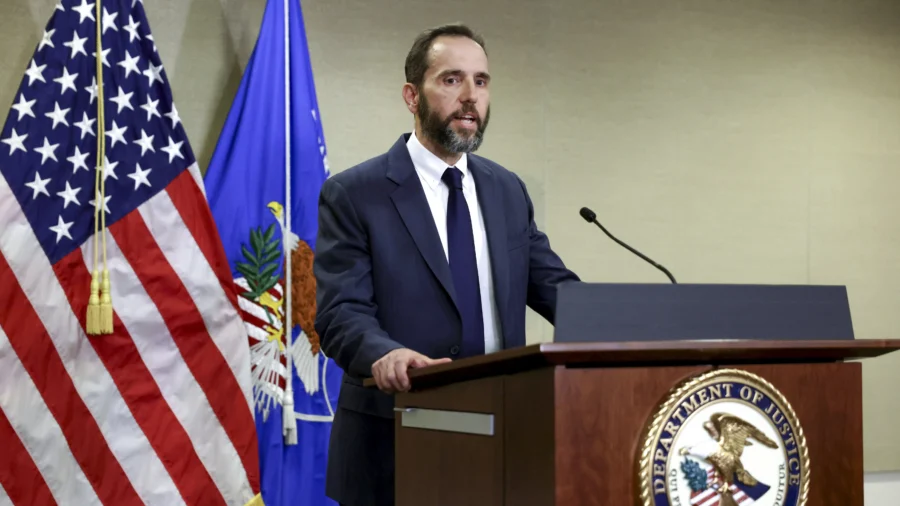
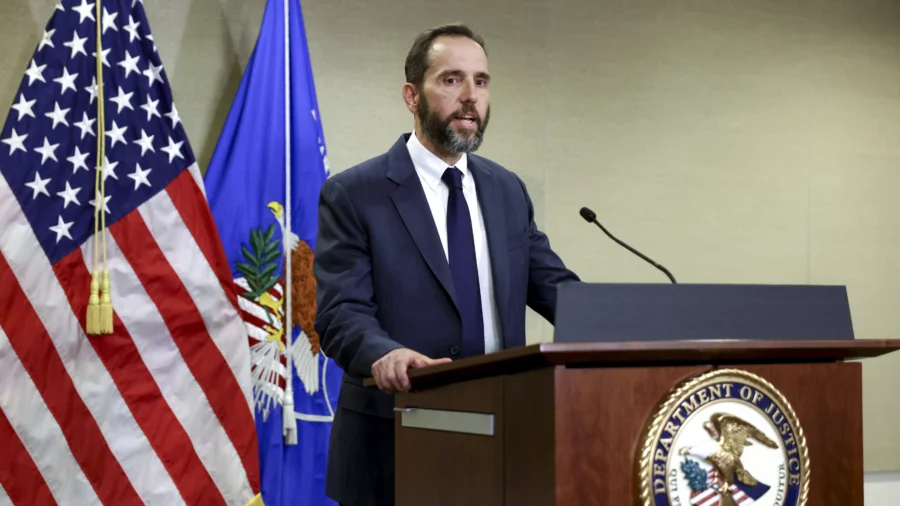
Attorneys for former special counsel Jack Smith responded to a federal watchdog investigation over potential Hatch Act violations, saying the probe is “unfounded.”
Smith, they wrote, had “steadfastly followed applicable Department of Justice guidelines and the Principles of Federal Prosecution, and he did not let the pending election influence his investigative or prosecutorial decision-making” during his investigations.
“Mr. Smith followed well-established legal principles in conducting the investigations into President Trump, and the courts presiding over the resulting prosecutions have already rejected the spurious allegations that the manner in which Mr. Smith prosecuted these cases was somehow improper,” the attorneys wrote.
Their letter was addressed to Jamieson Greer, the acting head of the Office of Special Counsel, an independent watchdog office within the federal government.
Due to a Department of Justice (DOJ) policy that blocks the prosecution of a sitting president, both of Smith’s cases were ultimately dropped after Trump was reelected president last year.
Smith had been appointed by then-Attorney General Merrick Garland in November 2022 to oversee two preexisting investigations against Trump, including alleged mishandling of classified materials and an election-related case.
The classified documents case was dismissed by U.S. District Judge Aileen Cannon last year on arguments that Smith was unlawfully appointed as special counsel. Later, Smith and his team appealed Cannon’s decision but dropped it when Trump won the election.
The election case, meanwhile, was dismissed by U.S. District Judge Tanya Chutkan in November 2024 on the grounds that the president-elect could not be charged.
Trump was also charged in Fulton County, Georgia, on alleged election interference charges, but that case was dropped, too. Fulton County District Attorney Fani Willis was disqualified from the case last December by a Georgia appeals court.
In May 2024, Trump was found guilty by a jury of falsifying business records in connection with payments that the Trump campaign had made during the 2016 election.
The president pleaded not guilty in all four cases, arguing that they were politically motivated attempts to harm his reelection campaign.
Cotton added that “defendants in these types of cases typically have more than two years to prepare for trial, but President Trump’s defense team had fewer than six months to review 13 million pages of evidence and thousands of hours of video footage provided by prosecutors … jury selection was to begin just two weeks before the Iowa caucuses.”
The Associated Press contributed to this report.