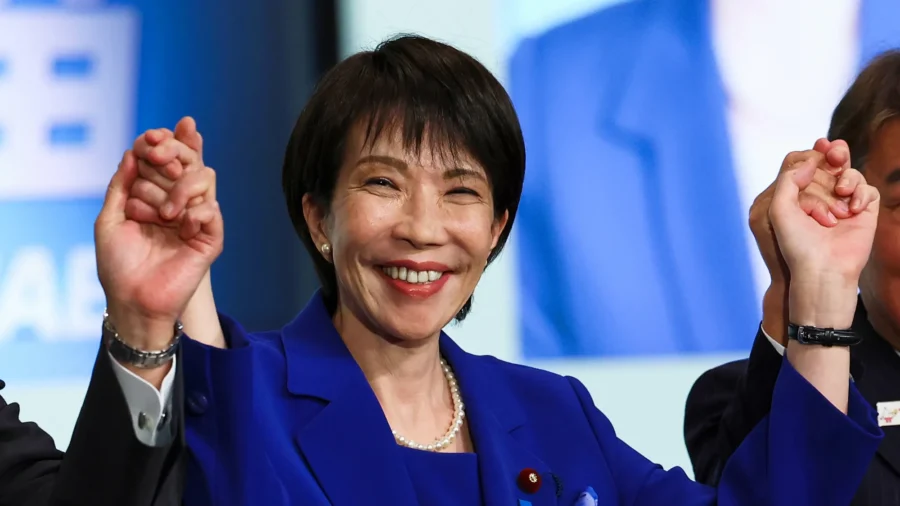
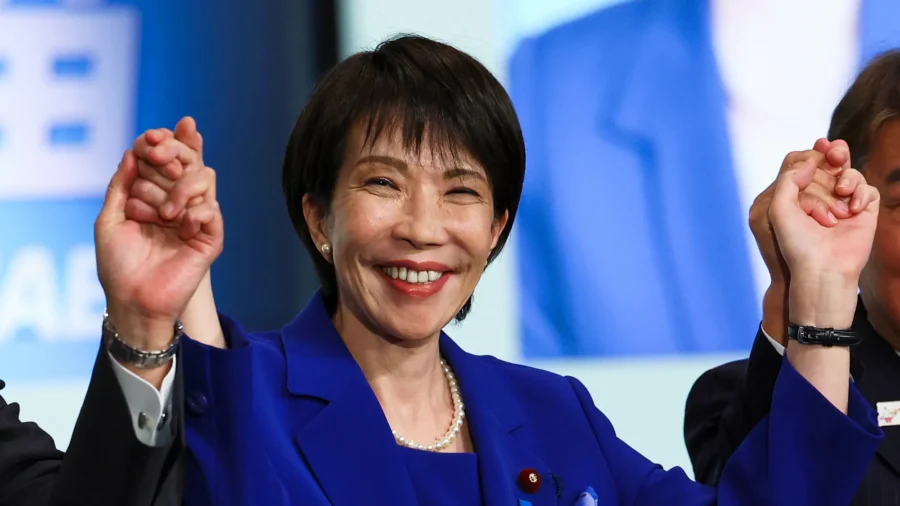
Japan’s ruling Liberal Democratic Party (LDP) on Oct. 4 elected former Economic Security Minister Sanae Takaichi as its new leader, positioning her to become the country’s next prime minister in a parliamentary confirmation vote expected in mid-October.
Takaichi, 64, a staunch conservative and vocal China hawk, defeated her moderate rival Shinjiro Koizumi by 185 votes to 156 in a runoff at LDP headquarters in Tokyo. The victory makes her Japan’s first female party president and, almost certainly, its first female prime minister—since the LDP remains the largest bloc in parliament and opposition parties are too fragmented to mount a united challenge.
Moments after the result was announced, Takaichi called for unity and renewal inside a party battered by scandal and electoral setbacks. “Rather than feeling happy right now, I feel real challenges lie ahead,” she said. “We must all pull together across all generations and work as one to rebuild the LDP. Everyone will have to work like a horse.”
An admirer of former British Prime Minister Margaret Thatcher and protégé of the late Shinzo Abe, Takaichi has championed Abe’s conservative agenda and frequently visited the Yasukuni Shrine, a flashpoint in Japan’s relations with its Asian neighbors. Her win is expected to reassure the LDP’s nationalist base but may complicate diplomacy with China and South Korea.
“The choices made by the new prime minister will be instrumental in defining Japan’s role in shaping the region’s future, requiring a blend of strategic foresight, diplomatic agility, and domestic reform to navigate an increasingly turbulent world stage,” Hannig wrote.
If confirmed, Takaichi will soon face her first diplomatic test: a potential meeting with U.S. President Donald Trump at the end of October, ahead of the Asia-Pacific Economic Cooperation summit in South Korea. Takaichi has pledged to make the Japan–U.S. alliance the cornerstone of her foreign policy.
“It is essential to … confirm the reinforcement of the Japan–U.S. alliance,” she said, adding that Tokyo must deepen cooperation with partners such as South Korea, Australia, and the Philippines to ensure a free and open Indo-Pacific.
Takaichi’s election drew swift international reactions. U.S. Ambassador to Japan, George Glass, issued a statement congratulating Takaichi on becoming the 29th president of the LDP and its first female leader. “I look forward to working with her to strengthen and grow our partnership on every front.”
China’s Foreign Ministry reacted cautiously, calling the outcome “Japan’s internal affair.” In a statement, the spokesperson’s office said Beijing hopes Tokyo would “promote a strategic and mutually beneficial relationship.”
The LDP’s choice of Takaichi strengthens its conservative image at home, but much of her early focus could come on the international stage, where Japan faces growing U.S.–China tensions and shifting regional alliances.