Over the past half-decade, the Big Ten has emerged as a formidable power that can match any league with its high-level success and conference depth. Oregon, Washington, USC and UCLA have added not just wins and championships, but top-notch coaches as well. When you throw in program-changing hires like Curt Cignetti at Indiana, you’ve got a new-look Big Ten that can credibly call itself the best in the land. It’s the conference that has won the past two national championships and placed seven teams into the first two years of the 12-team College Football Playoff.
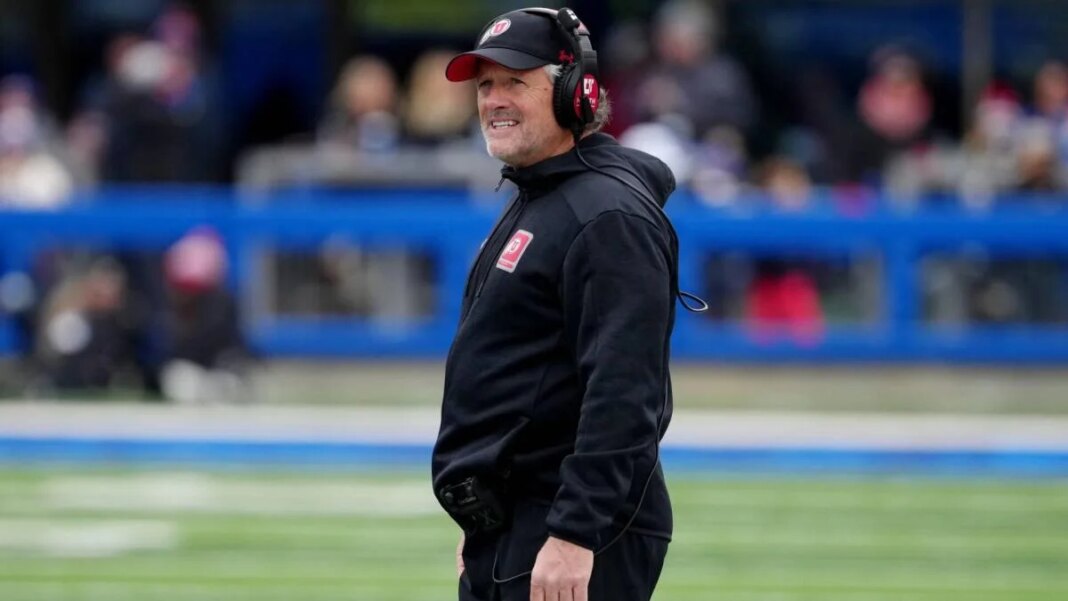
Now, the caliber of coaching has improved yet again with Michigan’s hire of Kyle Whittingham. More than two decades of success at Utah established Whittingham as one of the top coaches of the 21st century, and he now takes over a program just a couple of years removed from winning it all. But earning Hall of Fame consideration down the line does not automatically push Whittingham to the front of the Big Ten line. He must carve out his place among a group loaded with College Football Playoff appearances — and, as of last season, a national title.
So where does Kyle Whittingham fit within the current landscape of Big Ten coaches? We did our best to shake it out, taking into consideration all aspects of the coach-ranking process
Ryan Day has never finished outside the top 10 at Ohio State. Four times in the last six years the Buckeyes have finished inside the top four. Winning the first-ever 12-team College Football Playoff gave Day the national championship that was missing from an otherwise stellar resume (which includes a 54-5 record in Big Ten play) to cement him not just the top coach in the conference but one of the top coaches in the country.

2. Curt Cignetti, Indiana
Cignetti told fans to seek out his track record when his preparedness for the job was questioned, and he’s only added to it since joining the Hoosiers. Cignetti has piled onto a resume that already included success at the Division II level, the FCS ranks and into the Sun Belt. He produced the winningest season in Indiana history in Year 1, then topped it with a 13-0 campaign and a Big Ten title in Year 2. With a 24-2 record as Indiana’s head coach, Cignetti jumps to the front of the list with a blueprint that can be replicated moving forward in Bloomington.

3. Dan Lanning, Oregon
Still very much a coach on the rise, Lanning’s ranking really stems back to the work he’s done making the transition from the Pac-12 to the Big Ten. The only regular season loss in two years of Big Ten play was a 10-point defeat to the No. 1 team in the country in Indiana, and last year’s Big Ten title run included wins against Ohio State, Michigan and Penn State. At 47-7 overall, Lanning clearly is one of the top coaches in the sport and currently angling for the national title hardware that can jump him into the top tier nationally.
Getty Images
4. Kyle Whittingham, Michigan
Does Whittingham get something of a boost for his longevity 177 wins and three conference titles across two different leagues at Utah? Yes, absolutely. But as Michigan’s new coach is jockeying with younger head coaches at the top of the Big Ten, the 66-year old Whittingham also gets credit for winning at least 10 games four times in the last six full seasons (2019-2025, excluding the COVID year) which includes back-to-back Pac-12 titles in 2021-22. That late Pac-12 era run also brings intrigue to the Big Ten present as Whittingham battled with Lanning’s Ducks and Lincoln Riley’s Trojans. Those results from 2022-23 also helped shape these rankings, as Whittingham went 0-2 against Lanning and was 3-0 against Riley before the Utes departed for the Big 12.

5. Lincoln Riley, USC
If Lincoln Riley’s ranking was determined exclusively by his first six seasons, top-five in the conference is too low. He’d be in the mix for the top-five among all coaches nationally. Riley started his head coaching career with four straight Big 12 titles and three straight College Football Playoff appearances, and after winning 11 games in Year 1 with USC his overall record stood at 66-13 with six top-15 finishes. The issue is, Riley is 24-14 since then and has gone 11-7 against Big Ten opponents since joining the league. A nine-win campaign in 2025 and a top-ranked recruiting class point to a return to form for both Riley and USC in the future, but in the present moment Riley needs to conquer some coaches ahead of him to make it back to the top.
6. Kirk Ferentz, Iowa
This is where we have to pay respect to one of the patron saints of Iowa football. The man who picked up the baton from Hayden Fry and has guided the Hawkeyes into the 21st Century. Things were rough when Ferentz took over 1999 but he quickly established a culture of consistency that peaked with Big Ten titles in 2002 and 2004 with three straight top-10 finishes. In total this a head coach who has had his team bowl eligible in 23 of the last 25 seasons and won 10 games or more four times since 2015.

7. Bret Bielema, Illinois
Bielema’s impressive run at Wisconsin is reason enough for a high ranking, but that would be selling short what he has done at Illinois. Yes, Bielema did win three straight Big Ten titles with the Badgers from 2010-12 and finished with 10 or more wins in four of his seven seasons with the program. But the revitalization efforts in Champaign are similarly impressive. Illinois had eight or more wins just twice from 2000-2020 and Bielema has now hit that mark three times since taking over in 2021, including an 18-7 record over the last two years.
8. Matt Campbell, Penn State
Campbell left Iowa State as the winningest coach school in school history and the only one to lead the Cyclones to 11 wins in a season. He won eight or more games five times in 10 years at a place where that benchmark was not often hit, but Penn State presents a different opportunity and higher expectations. A coach who thrived in the underdog role, Campbell now wears the logo of a frontrunner and has plenty to prove at a place where eight wins is considered a down year.
9. Matt Rhule, Nebraska
At Temple, Rhule got the Owls from 2-10 in Year 1 to 10-4 by Year 3 and won a conference title in Year 4. At Baylor he went from 11 losses in Year 1 to 11 wins in Year 3. Rhule has hung his hat on his ability to build, and those previous trends were pointing towards a big jump in 2025 for Nebraska. Instead, the Cornhuskers endured an injury to star quarterback Dylan Raiola, finished with just one more regular-season win (7) than the previous year and failed to record a winning record in Big Ten play for the third straight season under Rhule.

10. Jedd Fisch, Washington
Fisch has earned respect as an offensive mind — and has been a coveted assistant for much of the 21st century — but his head-coaching profile remains limited and inconsistent. His 32-33 overall record is weighed down by a 1-11 season in Year 1 at Arizona, though guiding the Wildcats to a 10-win season by Year 3 stands as one of the most impressive rebuilds of the past decade. He is 15-11 through two seasons at Washington and 9-9 in Big Ten play, placing him squarely in the middle tier — a coach with obvious chops, but still work to do to contend for the top five.
Getty Images
This was a tough balance because Fitzgerald was widely respected for the program he built at Northwestern before his controversial ouster altered his standing in the coaching industry. After a couple of years away and a successful lawsuit against the university, he returns to the Big Ten at a public state school with a broader recruiting footprint than he had with the Wildcats. From 2015-20, Northwestern finished in the top 25 four times and won at least seven games in five seasons, including a 10-win campaign in 2017 and Big Ten West titles in 2018 and 2020. Can he replicate that success in a different environment?

12. Luke Fickell, Wisconsin
This is an uncomfortable ranking because Fickell seems to be a sharp head coach who showed the ability to develop a program and win consistently at a high level at Cincinnati. The Bearcats went 57-18 under Fickell with two top-10 finishes and three double-digit win seasons across six years. When he was hired away by Wisconsin, the fit seemed perfect for a former Ohio State nose guard and longtime Buckeyes assistant. Yet Fickell’s return to the Big Ten has not gone as expected. He carries a losing record (17-21) into Year 4 with win totals that have decreased each season.

You could place Fleck anywhere from No. 8 to No. 15 in these rankings without much pushback, thanks to the steady consistency he has delivered in nearly a decade as Minnesota’s head coach. Fleck is 66-44 at the helm of the Golden Gophers and recently improved to 7-0 in bowl games, finishing every full season (excluding 2020) with a bowl victory since 2018. He loses some ground here due to a middling conference record (39-40) and just two seasons with double-digit wins (once at Western Michigan, once at Minnesota), but his profile could shift quickly with a breakthrough season to complement his consistent production.
14. Greg Schiano, Rutgers
On one hand, Schiano is responsible for most of the high level success Rutgers football history. He’s led the Scarlet Knights in nine of the program’s 13 bowl appearances and six of their seven bowl wins. His 99 wins across two tenures is by far the most all-time and his .478 winning percentage is basically in line with the standard across 156 years of Rutgers football (.492). But the seven-win peak from 2023 and 2024 might be the ceiling for Rutgers in the Big Ten chapter of Schiano’s tenure, as he’s 15-39 against conference foes since returning in 2020 and has reached the postseason just three times in six years.

15. Barry Odom, Purdue
While Odom deservedly has a strong reputation as a coach — particularly on defense — it’s hard to argue for a high coach ranking coming out of a 2-10 season. Overall, Odom is 46-43 across his stops at Missouri, UNLV and Purdue, and his instant success with the Rebels (19 wins in two years) helped power his candidacy to save a Boilermakers program that wants to avoid becoming the Big Ten’s doormat in a new era.
16. Bob Chesney, UCLA
When we do the power conference coach rankings every May, one of the guiding principles to my personal ballot is the experience a coach has had in the power conference ranks. For that reason, Chesney still has a lot to prove at UCLA. He has showcased impressive coaching chops with success at the Division 2 level, FCS and most recently leading James Madison to a College Football Playoff appearance.

17. David Braun, Northwestern
Braun has done a strong job keeping Northwestern steady after taking over the program in July before the 2023 season, when he went 8-5 and won Big Ten Coach of the Year. He is 11-14 since, including 6-12 against conference opponents. Clearly, a coach with significant potential and a long runway at just 40, Braun’s challenge will be proving that the Wildcats can consistently be a tough out in the Big Ten.
18. Mike Locksley, Maryland
Maryland has had some ups and downs during Locksley’s tenure, but unfortunately the stock is pointed in the wrong direction after back-to-back 1-8 seasons in Big Ten play. When Locksley had the Terps humming with 23 wins across three seasons that each ended in a bowl victory, hopes were high that the DC native and former Maryland assistant could usher in a new era of success for the program. Now he enters 2026 under pressure to deliver results and prove that the last two seasons of 4-8 campaigns were short-term bumps in the road.