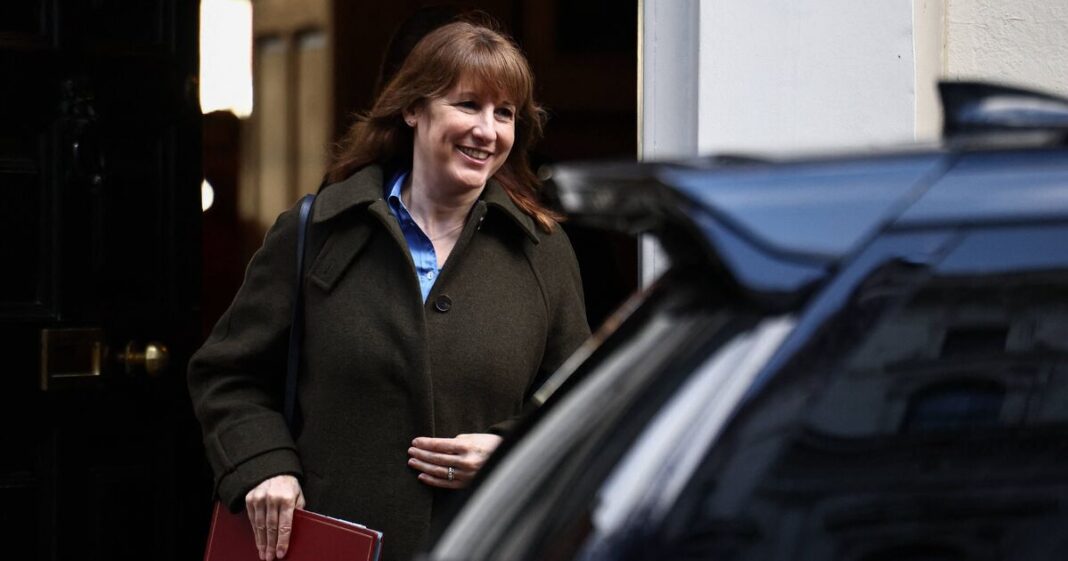
Too many Labour MPs want it all, and no amount of pleading from the top of government about the depleted public finances seems to make a difference.
The mainly leftist MPs want all the wrongs of the last 15 years put right and quickly. Their next opportunity to demand more cash arrives when Rachel Reeves delivers her spring statement on 3 March.
All the signs are that the chancellor will try to marry caution about the public finances – directed at backbench MPs – with an optimistic message about the economic recovery to cheer the public.
Whatever she says, there will be many on her own side who will demand that economic orthodoxy be ditched in favour of a bolder outlook delivered with a Liz Truss-like energy. Where the former prime minister extolled the virtues of tax cuts as economic rocket boosters, Labour MPs will instead trumpet public spending as the engine of growth.
Last week’s figures showing a record haul of tax receipts in January will have fuelled this desire, revealing, supposedly, that the Treasury is in good shape and able to accommodate their many and varied spending demands.
A drop in inflation from 3.4% in December to 3% in January was also good news, as was the increased likelihood of a cut in interest rates by the Bank of England for struggling businesses and the mainly younger half of the population up to their ears in mortgage debt.
Lower inflation and lower interest rates, possibly cut from 3.75% to as low as 3% by the end of the year, will not only ease the cost of living crisis – which is still a crisis – it will also help the public finances.
Record tax receipts in January were joined by lower interest bills on government borrowing. Lower inflation will give public sector bodies more spending power and quell demands from unions for mega pay rises.
City economists estimate that there could be £10bn to £11bn more headroom when the chancellor gives her update on the public finances next month. That would push the Treasury’s financial buffer up to more than £30bn.
More broadly, surveys of the private sector show businesses are feeling more confident about the coming year, and company directors say that after a long hiatus, they are considering making investments again.
A major injection of private sector investment is what has been missing from the UK economy since the 2008 financial crash, so a rebound would be exactly the kind of lift Reeves and the government would cherish.
Retail sales improved in January beyond City economists’ expectations. Shoppers bought electronic goods by the bag load, trading in their barely out-of-the-box TVs and mobile phones for new models.
Yet the improved economic news cannot disguise the weaknesses at the heart of the UK economy and the excess demands on the public finances, which should put Labour MPs who agitate for more spending on the back foot.
Looking again at January’s tax receipts, it’s clear that much of the extra money came from capital gains tax (CGT) payments, and these were generated by individuals offloading assets to avoid tax hikes in the future.
That means the jump in CGT revenue was likely to have been based on one-off property and financial asset sales, and so gives little indication of the longer-term prospects for tax receipts.
Whatever happens between now and the end of the financial year, UK borrowing is likely to total about £130bn and be just short of 4.5% of annual national income – a figure the financial markets believe indicates the government is financially incontinent.
Baked into the forecasts of the Office for Budget Responsibility (OBR) are deep budget cuts for most Whitehall departments to preserve more generous funding for the NHS, schools and defence. It’s only when the stringent spending limits imposed on most civil servants are kept in place that the annual deficit begins to fall.
Where are the pressure points on the public finances? One example is the £6bn in funding unaccounted for in 2029 from the additional cost of supporting children with special educational needs.
A report last week from the County Councils Network said spending on transport for Send children alone could be as much as £3.5bn in 2030. This is another bill that lies outside the current budget forecasts.
The prime minister has his own pet projects. Defence is currently his main focus and the budget for it may need to rise by as much as £10bn to meet a commitment to boost defence spending to 3% of national income by the end of the parliament.
Quite how he plans to carve out the funds to reach the 5% of national income in 2034 demanded by Donald Trump is not clear, but assuredly for a future prime minister to consider.
It is an illustration of how spare money is largely illusory at the moment. The public finances are in a precarious position and can still be blown off course by a rise in borrowing costs or the rising cost of youth unemployment, which will continue unless more investment can be deployed to boost growth.
Labour’s leftist MPs are in the same camp as the Green party leader, Zack Polanski, and the many Tory and Reform UK MPs who wish for things they cannot afford. There is no magic money tree. Liz Truss gave us an object lesson in chutzpah that no one wants to relive.