Sci-fi television has always been irresistible because it suggests that anything can happen. Artificial minds. Faster-than-light travel. Societies that work… or don’t. However, the moment that a TV show stops taking its own ideas seriously, the premise cracks. That’s where hard sci-fi comes in, and why it’s such a nightmare to pull off on TV.
Hard sci-fi isn’t about being cold or joyless. It’s about discipline. Science matters, and so does the rule of cause-and-effect. If a TV show breaks the law of physics, you need an explanation as to why. And on television, where budgets fluctuate, writers’ rooms change, and seasons stretch longer than originally planned, that level of precision is hard to maintain. Plenty of sci-fi TV shows start strong and fizzle out, but some survive by understanding when not to explain too much, when to slow down, and when to trust the audience to keep up. These eight hard sci-fi titles are consistently sharp and thoughtful TV shows that respect their science, their storytelling, and your intelligence.
‘Travelers’ (2016 – 2018)

Travelers does something radical with its premise. On the surface, it’s a deceptively simple story about people from a bleak future sending their consciousnesses back into the bodies of present-day humans, moments before those people are about to die, to prevent the catastrophe that destroyed everything. However, Travelers, created by Brad Wright and running for three seasons on Showcase and later Netflix, is more interested in the human cost of that arrangement than the mechanics of it.
These travelers have missions, but they also have lives that belonged to people they never were, complete with spouses, children, jobs, addiction, and grief. Eric McCormack gives a great performance as Grant MacLaren, an FBI agent whose body gets occupied early on. The ensemble cast gives the show an emotional texture. No season ever loses the thread of what the show is fundamentally about, which is people trying to do morally complicated things while still being, stubbornly and inconveniently, human.
‘Dark’ (2017 – 2020)

Dark, the German Netflix series created by Baran bo Odar and Jantje Friese, opens in the fictional town of Winden in 2019 with a missing child, a cave, and a sense of dread so thick that it practically envelops you. From there, you get to watch one of the most complex narratives ever put on television. Four families. Multiple timelines (1953, 1986, and 2019). A time loop that’s not just a plot device but the entire philosophical architecture of the show.
It’s exhausting to describe Dark, one of the best shows with more than one timeline. However, it’s so compelling because Odar and Friese are extraordinary filmmakers who ensured the story follows a careful and deliberate pace. With its grey skies and amber lamplight and forest, the show is atmospheric, and Ben Frost’s score is vaguely unsettling. Each season of Dark does something different. Season 1 is a mystery. Season 2 is a tragedy. Dark Season 3, which introduces an alternate world and a concept called the Knot, is almost philosophical.
‘Westworld’ (2016 – 2022)

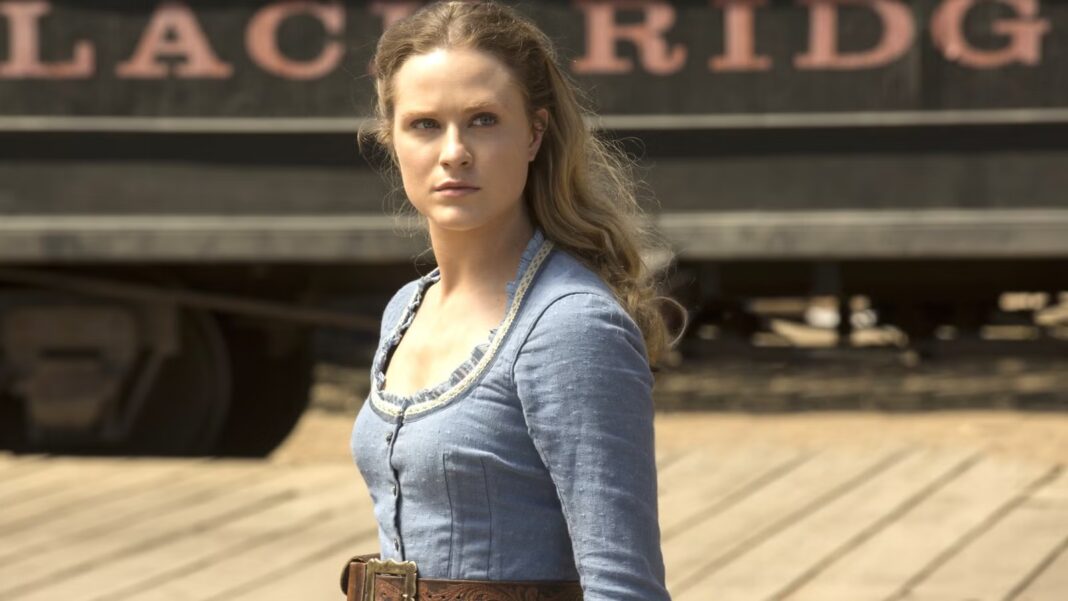
When Westworld premiered in 2016, it felt like HBO had cracked open a Pandora’s box of philosophical sci-fi. The show begins in a futuristic theme park where android “hosts” cater to human fantasies. It quickly turns into a meditation on consciousness and free will. With Anthony Hopkins, Evan Rachel Wood, and Jeffrey Wright anchoring the cast, the series has performances that elevate its already cerebral storytelling.
Over four seasons, Westworld never falters because it embraces reinvention. Season 1 is a puzzle-box thriller, Season 2 expands into rebellion and chaos, Season 3 shifts the focus to the wider world, and Season 4 circles back to the show’s existential themes. The hard sci-fi element comes from its commitment to exploring AI, predictable systems, and algorithms that ruthlessly shape human behavior.
‘Farscape’ (1999 – 2003)

It’s difficult to explain the premise of Farscape to someone who hasn’t seen it without sounding like you’re describing a fever dream. Created by Rockne S. O’Bannon and produced by Jim Henson Company, it follows American astronaut John Crichton, who gets accidentally flung across the universe through a wormhole and ends up aboard a living ship called Moya alongside a crew of alien fugitives.
Yes, it could have become a campy show very quickly. However, Farscape finds its footing, and once it does, it becomes emotionally brutal, unpredictable, and scientifically grounded in ways that a sci-fi show that is so visually eccentric has no business being. The hard science shows up in wormhole physics and in the show’s treatment of alien biology and culture, both of which become significant plot elements in later seasons.
‘Orphan Black’ (2013 – 2017)

Orphan Black follows Sarah Manning, a con artist and generally unreliable person, who witnesses a woman who looks exactly like her step in front of a train. What unfolds next is a conspiracy involving human cloning, corporate science ethics, and a secret organization called the Dyad Institute, which has been monitoring and controlling a group of cloned women for their entire lives.
Cloning is the hook, but Orphan Black is most fascinating because it focuses on how people react when they realize their bodies are intellectual property. Tatiana Maslany’s performance is the show’s beating heart. Her ability to inhabit multiple clones with distinct personalities, accents, and quirks is nothing short of astonishing. All five seasons are high-quality because the central mystery keeps evolving rather than spinning in circles. The finale, which aired in 2017, tied all necessary plot threads together gracefully, proving that Orphan Black never had a weak season.
‘Ghost in the Shell: Stand Alone Complex’ (2002 – 2005)

After over two decades, Ghost in the Shell: Stand Alone Complex remains one of the most intellectually stimulating science fiction series ever made. And that says a lot for an anime that premiered in Japan back in the day. Created by Kenji Kamiyama and based on Masamune Shirow’s manga, the series is set in mid-21st century Japan. It centers on Major Motoko Kusanagi and Section 9 as they navigate cybercrime, political corruption, and the line between human and machine.
While the world it depicts is exploited in the most glorious ways, it’s worth appreciating the anime’s structure on its own terms. Each season weaves self-contained cases that flesh out the world and the characters, while a larger arc builds slowly towards a payoff with real weight. The direction is clean, the writing is consistently great, and the follow-up film, Solid State Society, makes this a complete, flawless sci-fi anime.
‘Severance’ (2022 – Present)

Severance arrived on Apple TV in early 2022 and within a few weeks, it became sensational. Created by Dan Erickson and directed largely by Ben Stiller, the series is set inside a corporation called Lumon Industries where certain employees have undergone a procedure that literally divides their consciousness into two separate selves: an “innie” who only exists inside the office and has no memory of the outside world, and an “outie” who goes home each night with no knowledge of what they do at work.
Adam Scott plays Mark Scout, a man who chose severance after the death of his wife, and the show uses his story to examine grief, corporate control, and the ethics of consent. The show also explores what it means for two versions of the same person to exist simultaneously with completely different experiences, relationships, and desires. And when the innies begin to resist, you wonder, who exactly is doing the resisting? Severance is far from over, but it’s already operating at an elite level.
‘The Expanse’ (2015 – 2022)

The final hard sci-fi show with no bad seasons is The Expanse. Based on the novels by James S.A. Corey, the series begins with a missing-person case before expanding into a massive conflict between Earth, Mars, and the Belt. The show’s genius lies in the fact that it treats space travel as labor instead of fantasy. Ships flip and burn. G-forces kill. Communication lag matters. At the center are spectacular characters played by Steven Strait, Dominique Tipper, Shohreh Aghdashloo, and more.
The quality of the writing, which is sophisticated and intimidating and touches on political themes, remains consistent across all six seasons. The three-way tension between Earth’s UN, Martian Congress, and the Belt’s OPA powers almost every plot development, and it still never slips into melodrama. When Syfy canceled The Expanse after Season 3, the fan campaign to save it was loud enough to get Amazon to pick it up. The final three seasons introduce the protomolecule’s origins and a threat that operates on a greater level. The Expanse ends decisively and well, proving that hard sci-fi can be thrilling, expansive, and airtight across every season.
Did we miss any hard sci-fi gems? Let us know in the comments!