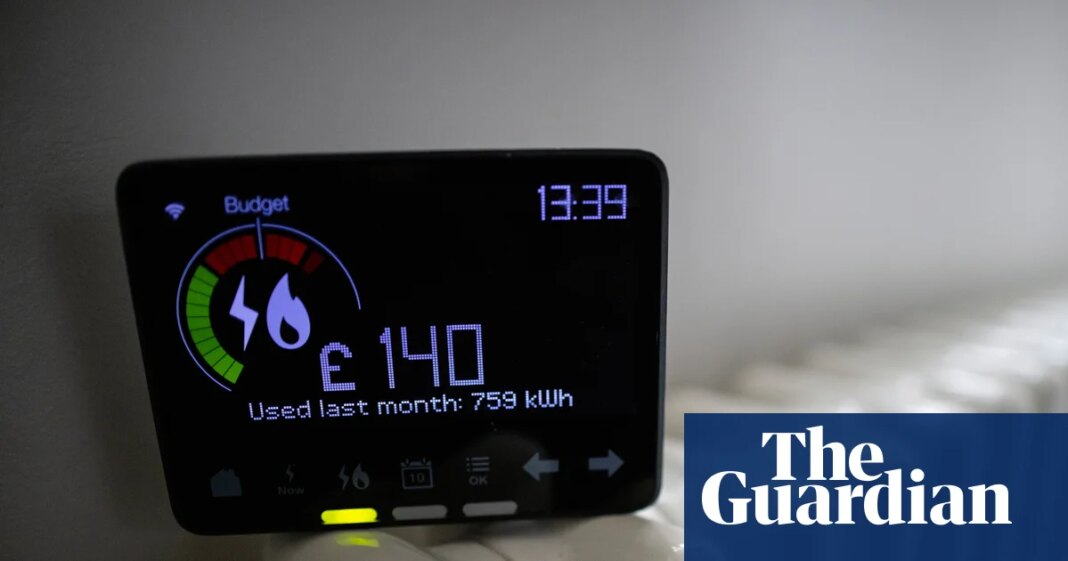
The average energy bill for millions of households will fall by £10 a month in the spring, after Ofgem said the price cap would fall by 7% owing to a shake-up in green levies.
The price cap is revised by the energy regulator for Great Britain every three months. It said that from April the cost of the average annual dual-fuel bill would drop to £1,641, down from £1,758 today.
The 7% reduction is the biggest since last summer and follows the November budget, in which the chancellor, Rachel Reeves, promised to shave £150 a year off bills by removing or reallocating green levies. The saving is not as big as promised because the cost of running the energy network has increased.
Why is the price cap falling?
The lower price cap is primarily down to the changes announced in the budget when Reeves promised to shift or scrap some of the green levies included in bills. This included ending the energy company obligation (ECO) home insulation scheme and financing older renewable energy projects out of general taxation.
The cap restricts how much suppliers can charge customers on their default tariff for each kilowatt hour of electricity and gas they use, and also standing charges.
At the moment the maximum rate for a customer who pays by direct debit is 28p a kWh (rounded to the nearest penny) for electricity and 6p for gas. From 1 April, these figures will be 25p and 6p respectively.
Meanwhile, average daily standing charges, now at 54.75p for electricity and 35.09p for gas, (a daily total of almost 90p) will move to 57.21p and 29.09p, or a total of more than 86p from 1 April. (The government has moved the cost of the warm homes discount from standing charges to unit prices – a move that will help those with low levels of energy use but will mean families with higher demand paying more.)
Ofgem said wholesale prices – which make up the largest portion of the bill – were “stable” at the moment and down 6% over the past three months. However, this was offset by an increase in the cost of maintaining and upgrading the country’s energy networks, including power lines and gas pipes. This added about £6 a month to bills.
I am on a fixed deal. Will my bill also go down?
Yes and you should receive an email or letter from your supplier in the near future explaining how the changes will affect your deal. The price cap protects consumers on a supplier’s default tariff but in this instance those on fixed deals will have a reduction too because the fall in energy costs is due to a blanket change in government policy.
“The main driver of this price drop is the budget decision to remove some levies from consumer bills,” says Richard Neudegg, the director of regulation at Uswitch.com. “Critically, this government-led reduction means every household in Britain will see their rates reduced from April, not just those on the typically more expensive price cap default tariff.”
The UK consumer champion Martin Lewis said most fixed deals would drop by 7% to 9% in April. The MoneySavingExpert.com founder added that it was “most”, not all deals, because smaller companies were exempt from the ECO so the cost was never baked into bills.
Will my bill fall by £150 regardless of how much energy I use?
No. The chancellor used the figure of £150 but how your energy costs stack up depends on how much you use. Also, with moving parts like network costs and wholesale prices, the only thing you can say with any certainty is that your bill will be lower than it would have been without government action.
“The levy changes are mostly in the electricity unit rates, so the exact reduction in bills will vary per household, based on energy usage,” says Neudegg. “This is not going to be a uniform £150 cut to bills. Higher-usage homes will see the biggest savings, while those using less energy may see a more modest change.
“Within the price cap, there will also be changes in standing charges – those households with gas supply will see a decrease. Standing charges overall remain a frustration point for many consumers, making up around 19% of the average household’s bill.”
The lower unit price for electricity means high users, which may include vulnerable households with medical equipment, are likely to see the biggest upside. However, those who use little electricity and a lot of gas will benefit the least.
Recent analysis by the Resolution Foundation thinktank has found savings will be larger for poorer households. Energy bill falls are worth twice as much to households in the bottom 20% by income as for the top 20%, it adds.
Is this fall a one-off or can I expect bills to continue to fall?
As we have learned to our cost over the past few years, the energy market does not stand still. But after what has been a long-running financial squeeze, annual bills across 2026 are on track to be about £1,645 – £200 lower, in real terms, than in 2024.
But energy analysts are already predicting that when the cap is revised in three months’ time it will creep higher again.
Jonathan Marshall, the principal economist at the Resolution Foundation, says that while the price cap announcement is “genuinely good news for families who’ve been squeezed hard by energy bills for years now … bills remain far higher than they were before the energy crisis hit, and the relief we’re seeing today won’t last forever”.
Marshall says network costs are already “creeping up, and come 2029, the government’s support disappears almost overnight – leaving ministers facing an uncomfortable choice between letting family bills jump again, or finding more money from a cash-strapped Treasury”.
Should I shop around for a better energy deal?
Yes. Ofgem is encouraging households to do so and also consider whether fixing with their existing supplier or switching could save them money.
About 60% of households are on their supplier’s default tariff but Tim Jarvis, Ofgem’s director general of markets, says the regulator is seeing “encouraging signs of greater engagement and competition, with switching increasing by almost 20% year on year”.
He adds: “The price cap protects households from overpaying for energy, but it’s a safety net. Last year, consumers on fixed deals paid around £115 less than the cap on average, so we’d encourage people to speak to their supplier about the options available and consider whether a different tariff or payment method could help bring their bills down further.”
Lewis says the cheapest fixes are 14% less than the current price cap. “And as they will drop in April by, in many cases, more than the price cap that differential will remain.” As your cheapest option depends on usage and location, use a comparison site, he advises. “There are other options too, for lower users EDF has a price cap tracker which matches the rate but £100 off standing charges for a year. Plus there are EV tariffs and sophisticated user time of use tariffs worth checking out.”
At the top of the best-buy tables are a number of deals offering fixes that are more than £100 below the April price cap figure. Fuse Energy has a 13-month deal priced at £1,498 – which is £143 cheaper – while Outfox Energy has a 12-month deal prices at £1,519.