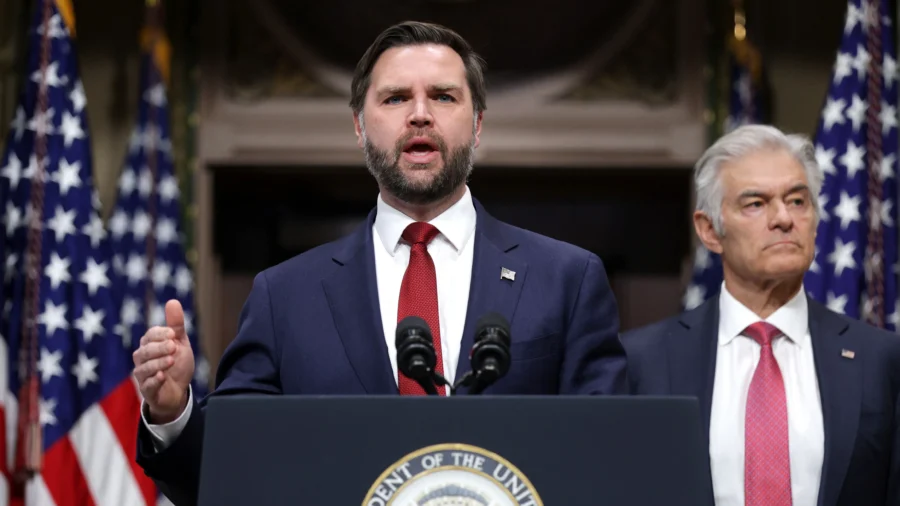
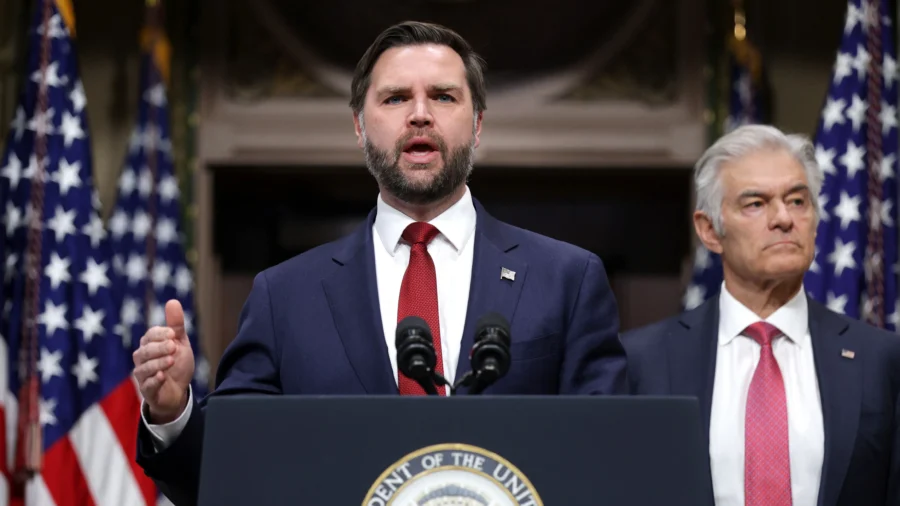
Vice President JD Vance and Centers for Medicare and Medicaid Services Administrator Mehmet Oz announced aggressive policy changes on Wednesday to curb healthcare fraud.
The measures entail a temporary pause on $259 million in federal Medicaid payments to Minnesota, as well as a nationwide moratorium on new medical equipment suppliers.
“There are way too many Americans who are being defrauded by very bad actors in our society,” Vance said.
Officials allege exploitation of programs designed for vulnerable Americans, including autistic children and low-income families.
“We are going to start very aggressively in the administration, cracking down on the people and the organizations that are defrauding Americans,” Vance said.
The Minnesota deferral results from audits which uncovered untrackable payments and fraudulent claims.
The state must submit a comprehensive remedial plan within 60 days. If they do not comply, the federal government could withhold up to $1 billion in funds this year alone.
Providers have already received funds from the state, with officials vowing no immediate disruption to services, in part thanks to Minnesota’s rainy day fund.
Oz underscored examples such as schemes paying mothers about $1,000 to falsely enroll children as autistic for unrendered services.
“It ultimately diverts resources away from kids who truly have autism.” Oz said. “Their mom made a bad decision, the kid pays the price for the rest of their life.”
Nationally, the six-month moratorium addresses durable medical equipment fraud, where suppliers bill for undelivered items like braces and catheters, generating billions in fraudulent claims. Oz cited South Florida having twice as many such suppliers as McDonald’s outlets.
“And that’s not because Secretary Kennedy is closing down McDonald’s,” Oz said. “That’s because the amount of fraud is so massive that it’s easier to open one of these suppliers than open a bank account.”
Officials estimate $300 billion in annual healthcare fraud, waste and abuse, representing about 5 percent of total spending. Oz said reducing it by 5 percent could double the length of Medicare’s solvency, from approximately five years to ten years.
“We shouldn’t be sending money to fraudsters,” Vance said. “We should not be sending money to companies that are committing mass fraud. We shouldn’t be sending money to anybody that’s trying to defraud the American taxpayer.”
Minnesota Gov. Tim Walz on Wednesday said the move has “nothing to do with fraud” and called it a “campaign of retribution.”
“When it comes to the corruption that is plundering—really, it’s plundering America—there’s been no more stunning example than Minnesota,” Trump said.