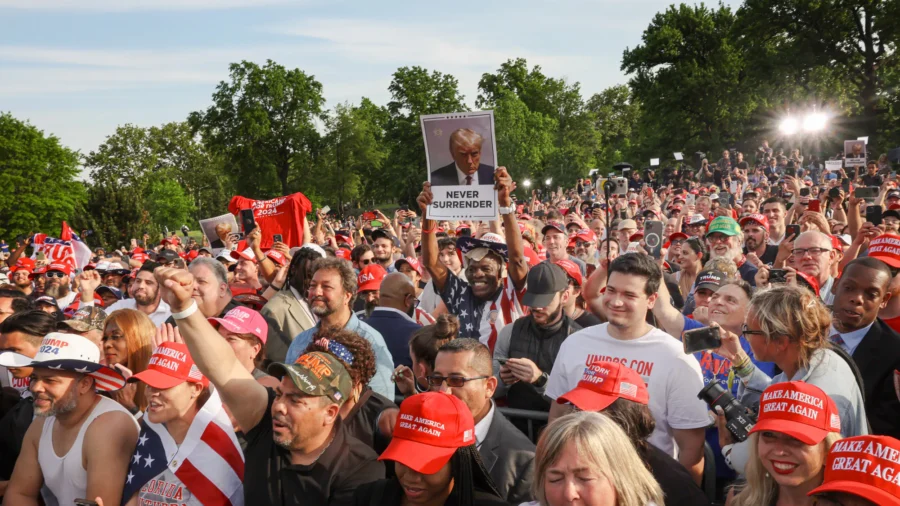
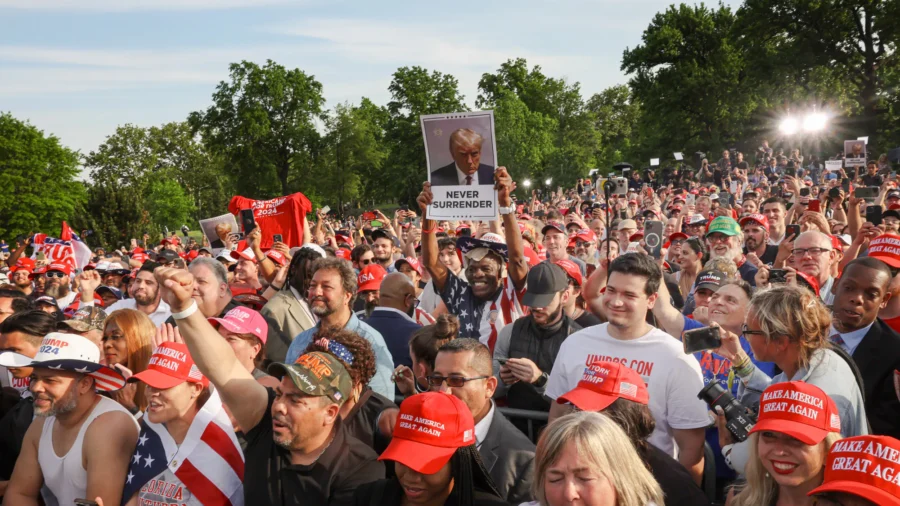
No Republican presidential candidate in modern history won a larger share of Latino voters than President Donald Trump did in 2024. Edison Research’s national exit poll found Trump took 46 percent of Hispanic voters, up from 32 percent in 2020.
Over a year later, as the first primaries of the 2026 midterms have begun, a string of Democratic victories in heavily Hispanic areas and a cascade of polling showing Trump’s approval among Latinos has fallen have complicated the narrative that Republicans have locked in a durable realignment in an election where Trump is not on the ballot. The question heading into the 2026 midterms: Are those 2024 gains holding for Republicans?
Signs of a Reversal
Low-turnout contests can be hard to generalize, but the results have reopened questions about whether GOP gains are holding.
Rehmet, an Air Force veteran and union leader, told CNN that voters were “fed up with the campaigns of outrage, the culture wars, all the same stuff that they’re trying to use to divide us.” He said he started his campaign by organizing in underserved Latino neighborhoods and focused on bread-and-butter economic issues.
“No Democrat has represented this community in the Texas Legislature in nearly half a century, and this win sends a powerful message: Latino voters are persuadable, engaged, and ready to shape the future,” Voto Latino said after Rehmet’s win.
In December, Democrat Eileen Higgins won the Miami mayoral runoff with 59 percent of the vote, defeating a Republican endorsed by Trump. Higgins became the first woman and the first Democrat to lead the city since 1997. Her win was also fueled by Hispanic and Latino residents, who make up roughly 70 percent of Miami’s population.
GOP Officials Sound the Alarm
Some of the most pointed warnings have come from within the Republican Party itself.
Garcia also warned that Trump could lose the midterms “because of Stephen Miller”—a reference to the White House deputy chief of staff for policy and Homeland Security adviser, who is widely regarded as a chief architect of the administration’s immigration crackdown.
Economy First, Not Immigration Alone
Strategists and researchers across the political spectrum say cost of living remains the dominant force shaping Latino opinion—just as it is shaping the majority of the electorate overall—and that treating immigration as the sole driver of any shift misses the picture.
“Despite the visibility of immigration rhetoric, most Latino voters remain focused on affordability, stability, and survival,” Javier Palomarez, president of the USHBC, told The Epoch Times in a statement. He noted that just 19 percent of Hispanic business owners in the survey said they were thriving, while 71 percent were surviving or struggling. Trust in both parties was low: 33.1 percent said they trust neither party to manage the economy.
But Palomarez added that the administration’s enforcement tactics, “particularly those that feel disruptive to families and local economies, may be reaching a tipping point among Latino Republicans.”
“For many, immigration only becomes a voting issue when it aligns with community trauma or the opinion of cultural scapegoating,” he said. “Both parties risk losing ground if they ignore the economic urgency driving Latino sentiment. Republicans are likely to see the sharpest fallout if enforcement tactics continue to be viewed as hostile, excessive, or indifferent to Latino identity and families.”
Republican Counterpoint
Meanwhile, the Republican National Committee disagreed with the notion that Latino gains are slipping.
“Republicans have made steady gains with Hispanic voters across the country by addressing the pocketbook issues that impact them the most,” RNC spokesman Zach Kraft told The Epoch Times. “There is a reason why South Texas has been slipping away from Democrats and will be a top battleground in 2026 with Republicans on offense.”
Fergus Hodgson, author of “The Latin America Red Pill” and publisher of the Impunity Observer, said that Latino support for the GOP is growing.
He told The Epoch Times in an email that many Latino communities “are benefiting from the crackdown on the worst criminals among them” and that deportation operations are not racially targeted but aimed at criminals in the illegal immigrant population.
Hodgson said the most persuadable Latino voters for Republicans are the religiously devout, particularly those receptive to social conservatism on issues like gender ideology and marriage. He also credited Secretary of State Marco Rubio with building goodwill among Colombian, Venezuelan, and Cuban voters through his Latin American-focused foreign policy.
Not a Monolith
Analysts on all sides say one of the biggest mistakes either party can make is treating Latino voters as a single bloc. Edison Research’s exit poll data showed the sharpest 2024 shift among Latino men, but AP VoteCast data analyzed by the Brookings Institution found the movement was also concentrated among non-college Latino voters.
Palomarez identified the most movable subgroups heading into 2026 as working-age, U.S.-born, and small-business-engaged voters, particularly in battleground states such as Texas, Arizona, and Florida.
Some Polling Shows a Drop
Meanwhile, national surveys show weakening approval for Republicans among Latinos. A Pew Research Center bilingual survey of 4,923 Latino adults, conducted in October 2025, found that 70 percent disapprove of Trump’s job performance, including 55 percent who strongly disapprove. Approval had fallen from 36 percent near the start of his term to 27 percent by October. Among Latinos who voted for Trump in 2024, approval dropped from 93 percent to 81 percent.
The survey found that 65 percent of Latinos disapprove of the administration’s approach to immigration, 61 percent say Trump’s policies have made the economy worse, and 78 percent say the policies have been harmful to Hispanics. For the first time in nearly two decades of Pew surveys, 68 percent of Latinos said the situation of Hispanics in America has worsened compared with a year earlier.
Democrats Try a New Playbook
In response to the 2024 losses, some Democrats and aligned organizations are overhauling how they reach Latino voters. On Feb. 18, CHC BOLD PAC, the campaign arm of the Congressional Hispanic Caucus, launched Ruido—Spanish for “noise”—a program that recruits Latino social media creators to produce civic engagement content on TikTok, Instagram, YouTube, and other platforms.
The program launched last month with roughly 50 creators, including Carlos Eduardo Espina, an Uruguayan-American creator with about 14 million followers.
“After 2024, Democrats can’t keep doing the same thing and expect different results,” said Rep. Linda T. Sánchez (D-Calif.), chairwoman of CHC BOLD PAC, in a press release. “Ruido meets Latino voters where they are—on their phones and through trusted voices in their communities.”
“We know that Latino voters who participate in primaries and vote early are far more likely to show up again in the general election,” said Rep. Jimmy Gomez (D-Calif.), a Ruido co-chair.
The program operates in two phases. The first, this spring, focuses on building early-voting habits during primaries. The second will expand the network to drive general election turnout.
“Early voting becomes a habit, and habits build momentum. When someone posts that they voted early, that’s more than just content—it’s social proof that encourages their friends and followers to do the same.”
What to Watch
Christopher said the clearest indicators heading into November will be swings in heavily Latino precincts, differential turnout in special elections, and whether issue-salience polling shows enforcement concerns rising to match or overtake cost-of-living pressure.
Palomarez warned that both parties risk losing ground if they ignore the economic urgency.