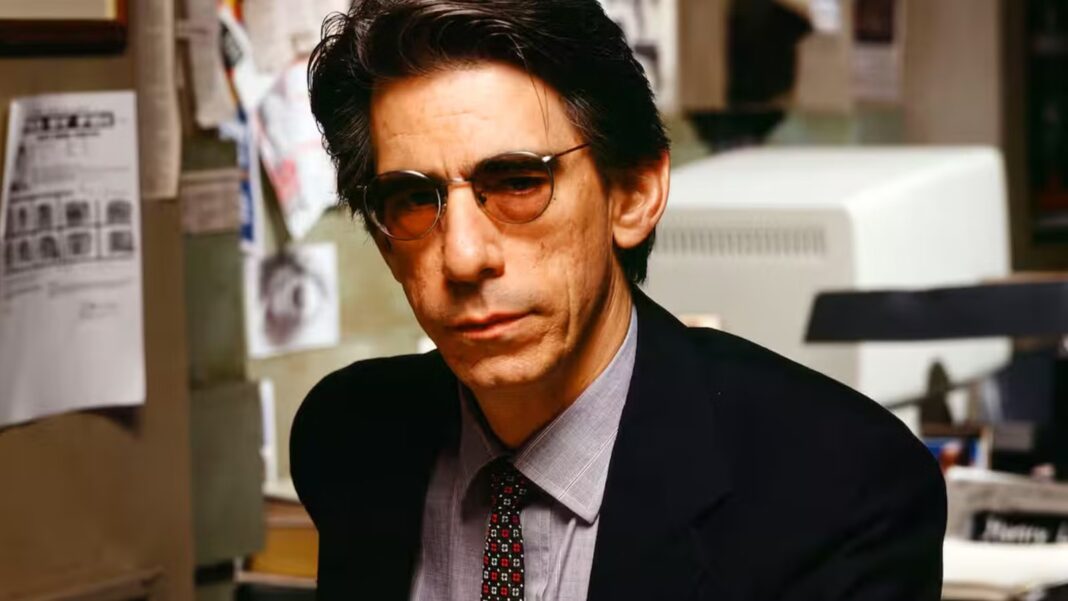
I’m embarrassingly easy to convince when it comes to new crime shows. Give me a fresh detective, a serial killer with an elaborate nickname, and a couple of glowing reviews, and I’m already moving things around to slide it into my schedule. Convincing me to watch a network procedural from the ‘90s, though? That’s a tough sell. There are only so many hours in the day, and plenty of old detective thrillers feel… well, old. There are 22 episodes in a season, cases that magically wrap up before the credits roll, and dialogue that sounds like everyone rehearsed it in the mirror a dozen times.
However, there’s exactly one crime procedural that gets me every single time, and it’s Homicide: Life on the Street. It premiered on NBC on January 31, 1993, ran for seven seasons, and is currently streaming on Peacock and Tubi. Every time I go back to watch an episode or two, I end up wondering why I thought it would feel dated. The oversized suits and ancient desktop computers disappear into the background because the writing refuses to let you coast. 33 years later, it still scratches an itch that very few crime dramas can reach, and even more modern shows I already genuinely enjoy, like The Rookie, owe everything to it.
Andre Braugher Is the Reason You Cannot Look Away From ‘Homicide: Life on the Street’

Homicide follows the detectives of a Baltimore Police Department homicide unit. It’s based on David Simon’s non-fiction book about the year he spent with the real department. Simon went on to make The Wire, and if you want to understand where the show’s DNA came from, Homicide is the answer. Where modern detective shows love investigators who solve impossible cases because they’re simply better than everyone else, Homicide has no interest in turning its detectives into superheroes. The cases don’t always get solved, and the paperwork is endless. Witnesses disappear, and evidence falls apart. The show never pretends everything is fine, which was radical for television at the time.
But the real reason I admire the show is Frank Pembleton. Andre Braugher plays him as the most intellectually formidable detective I’ve ever encountered on any screen. A man who treats every interrogation as a personal challenge and every conversation as a chess match he has already won. Watching him work in the Box (the show’s interrogation room) is an experience that has no contemporary equivalent. He calmly presses, he listens, he pivots, he notices the tiny hesitation before an answer, and he lets the silence do the talking even when it’s unbearable. And the people across from the table crack because he makes it feel like the only available option.
Robin Williams guest stars in Homicide: Life on the Street‘s Season 2 premiere, “Bop Gun.”
The Season 1 episode “Three Men and Adena,” where Pembleton and Bayliss spend the entire hour trying to break a suspect in the murder of an 11-year-old girl, is as close to perfect as procedural television can get. The case stays unsolved, and the suspect walks. It’s an ending that would not air today without a truckload of pushback. But Homicide? Did it in the first season. Braugher brought this same quality to Ray Holt in Brooklyn Nine-Nine 20 years later, and watching both performances back to back, you can spot the invisible string that connects them. The composure, the precision, the sense that something is being held very carefully in check. But, of course, Pembleton is the original, and he is better.
You Can Still See ‘Homicide’s Influence Across Modern Television

The Rookie is currently one of the most-watched dramas on TV, pulling in over 9 million viewers per episode in Season 8 and heading into a ninth season this fall, alongside a new spin-off, The Rookie: North. It’s an exciting show. It is warm and propulsive and well-cast. It also emphasizes character dynamics alongside weekly investigations. But The Rookie sits in a long tradition of crime procedurals that Homicide invented and that have since smoothed out everything that made the original interesting and groundbreaking.
Homicide‘s timelessness is even more awe-inspiring when it’s considered that the series spent years being surprisingly difficult to watch due to legal restrictions. Finally, streaming has allowed a whole new generation of viewers to get acquainted with television’s most defining crime drama, and it’s unbelievable how barely outdated the show feels. The clothes? Sure. The computers? Absolutely. The storytelling? Not even slightly. I’ve watched plenty of detective shows over the years, and I still enjoy the slicker, faster-paced procedurals that dominate television today. But whenever someone asks me where to start if they want to see the genre operating at its absolute peak, I always recommend Homicide: Life on the Street. It is on Peacock right now, and it is better than you remember, or even expected.