UK mortgage approvals lowest since December 2023 as borrowing costs rise
Newsflash: the number of mortgages approved by UK lenders has fallen to its lowest level since the end of 2023.
Just 54,918 new home loans were approved in August on a seasonally-adjusted basis, new Bank of England data shows, as rising borrowing costs deterred potential home buyers.
That’s the lowest since December 2023, and some way below the average of around 60,100 over the previous 6 months.
Stripping out seasonal adjustments and there were 54,918 mortgages approved, the lowest since January (in the post-Christmas lull).
The number of approvals for remortgaging decreased to 34,000 in August, from 34,600 in July.
The BoE’s data also shows that the ‘effective’ interest rate on new mortgages increased to 4.60% in August, from 4.45% in July.
That increase was driven by rising government bond yields over the summer, as the rise in the oil price fuelled predictions of higher inflation, forcing central banks to raise interest rates.
Key events
UK diesel prices hits new record near £2/litre
Newsflash: the price of diesel in the UK has moved closer to £2 a litre for the first time.
The average price of a litre of diesel has hit a new all-time high this morning, at 199.53p, a day after hitting a new record high of 199.18p.
Since the Iran war began, the average price of diesel has risen by 40%, as the jump in crude oil prices drove up the cost of refined products too.
Attacks on Russia’s oil refinery by Ukraine have also pushed up diesel prices, prompting warnings that motorists and businesses are facing painfully higher prices at the pumps.
Motor fuel prices across Europe have hit record levels in recent weeks, prompting calls for political leaders to take action to safeguard consumers against rising cost pressures.
Biz secretary battling for more energy cost support

Heather Stewart
Business secretary Jonathan Reynolds has suggested he’s fighting for more support for businesses with their energy costs, ahead of next month’s budget.
Asked about soaring costs in a fringe meeting at Labour conference this morning, Reynolds said:
“I go to bed thinking about industrial energy prices, and I wake up thinking about it.”
He highlighted the existing British Industrial Competitiveness Scheme which will cut costs for some firms – but hinted he would like to do more, saying:
“It’s one of the strongest causes I fight in government and I have done from day one and I continue to do that – and I think my arguments are strong.”
O2 Business CEO is leaving

Anna Isaac
Jo Bertram, the chief executive of mobile giant O2’s business operation, is leaving the company after eight years, my colleagues Anna Isaac and Mark Sweney report.
Bertram, a former senior Uber executive who also sits on the board of Sainsbury’s, will be replaced on an interim basis by Matt Riley, the chair of O2 Business.
Bertram joined the telecoms company in 2018 after abruptly leaving Uber after the ride hailing service battled regulators which at the time had banned it from operating in London.
Her departure comes after seeing through the initial phase of the combination of O2 Business and telecoms group Daisy Group, which merged last year to create a £3bn business telecoms group with hundreds of thousands of customers including Sainsbury’s, the NHS and British Sugar.
In April the operation, initially branded as O2 Daisy with Virgin Media O2 holding a 70% stake, was rebranded as O2 Business.
Bertram was originally hired by Telefonica in March 2018 as chief digital and strategy officer of O2.
Two years later Virgin Media, then 100% owned by US cable giant Liberty Global, and Telefonica announced a £31bn mega merger of their UK operations.
Earlier this month the business, which is jointly owned by Liberty Global and Telefonica, reportedly kicked off a £600m cost-cutting programme including job cuts as it looks to deal with a £22bn debt pile.
A spokesman for VMO2 confirmed Bertram’s departure.
UK mortgage rates are unlikely to drop back unless energy prices fall, warns Simon Gammon, managing partner at Knight Frank Finance:
“Buying activity weakened through the summer as rising energy prices pushed up borrowing costs. Lending to homebuyers fell 15% in August compared to the same month a year earlier. At the time, leading fixed rates were edging closer to 4.5% – they’ve since risen to 4.8%.
“The large lenders are doing business with very thin margins in an attempt to retain market share, which leaves them vulnerable to swap rate volatility. Without a sustained fall in energy prices, leading fixed rates are likely to remain around 4.5% through the autumn selling season, which will keep a lid on activity.
“The government’s announcement of a first-time buyer support scheme will provide a boost to sentiment, particularly in more affordable parts of the country, but mortgage rates remain the bigger constraint. A meaningful recovery in transaction volumes is likely to require a sustained improvement in borrowing costs.”
UK pays highest yield since 1999 at 10-year bond auction
Newsflash: Britain’s government has paid the highest interest rate since 1999 on a sale of 10-year bonds.
An £4.25bn auction of a new UK gilt maturing in 2036 has just concluded, with bond investors successfully demanding an average yield of 5.383% when bidding to buy the debt.
That’s the highest yield, or interest rate, since September 1999, Reuters reports.
The auction, held by the Debt Management Office, received bids for more than three times as much debt as was for sale, showing investors were still keen to buy UK debt, but at a price….
This results follows months of turmoil in the government bond markets, driven by inflation fears, which has driven up the yield on debt traded between bond investors.
Today’s auction highlights that those moves have real implications for the government, as higher bond yields push up the cost of servicing the national debt.
Earlier this month, the UK government was forced to pay the highest interest rate for a 30-year bond since 1998.
The fall in mortgage approvals last month shows that higher borrowing costs are taking a toll on activity in the housing sector, reports Paul Dales, chief UK economist at Capital Economics.
Dales told clients:
Even though the Bank of England has not (yet) raised interest rates, the further fall in mortgage approvals from 56,000 in July to 54,900 in August (the lowest since December 2023) shows that the sharp rise in mortgage rates is restraining activity.
At face, value, that’s consistent with house price inflation slowing from 1.7% in August to around 0% in six months’ time.
Higher borrowing costs and continued macroeconomic uncertainty are “slamming the brakes on the mortgage market”, warns Richard Pinch, senior director at banking and credit advisory consultancy Broadstone.
Responding to this morning’s data showing a drop in mortgage approvals, Pinch says:
“Despite some of the green shoots of economic recovery we have seen through the year, affordability pressures are clearly still biting as households head towards another challenging winter.
“The sharp rise in consumer credit borrowing, particularly on credit cards, suggests more households are leaning on credit to absorb everyday cost pressures.
“For lenders, the priority must be to identify signs of financial strain as early as possible and ensure borrowers have access to appropriate support and flexibility before temporary affordability pressures become more serious.”
UK mortgage approvals lowest since December 2023 as borrowing costs rise
Newsflash: the number of mortgages approved by UK lenders has fallen to its lowest level since the end of 2023.
Just 54,918 new home loans were approved in August on a seasonally-adjusted basis, new Bank of England data shows, as rising borrowing costs deterred potential home buyers.
That’s the lowest since December 2023, and some way below the average of around 60,100 over the previous 6 months.
Stripping out seasonal adjustments and there were 54,918 mortgages approved, the lowest since January (in the post-Christmas lull).
The number of approvals for remortgaging decreased to 34,000 in August, from 34,600 in July.
The BoE’s data also shows that the ‘effective’ interest rate on new mortgages increased to 4.60% in August, from 4.45% in July.
That increase was driven by rising government bond yields over the summer, as the rise in the oil price fuelled predictions of higher inflation, forcing central banks to raise interest rates.
UK mortgage rates up again
UK mortgage rates have nudged higher this morning, Moneyfacts reports.
They say:
-
The average 2-year fixed residential mortgage rate today is 5.93%. This is up from 5.91% the previous working day.
-
The average 5-year fixed residential mortgage rate today is 5.94%. This is up from 5.93% the previous working day.
This lifts the average two-year fixed residential mortgage rate to the highest since 10 July 2024, while the average five-year rate has returned to its highest since 10 October 2023.
UK metal flow engineering firm Vesuvius could soon be the latest British company to fall to an overseas takeover.
London-based Vesuvius has just told the City that it has received “a series of” unsolicited takeover approaches from Austria’s RHI Magnesita over the last year.
The most recent values Vesuvius’s share at 551p each, a large premium on last night’s closing price of 374p.
The company says:
The Board of Vesuvius is evaluating the Latest Proposal carefully, including the financial terms and execution risk associated with the proposed transaction, together with its financial and legal advisers, and a further announcement will be made as appropriate.
This morning, Vesuvius’s shares have jumped almost 25% to 464p.
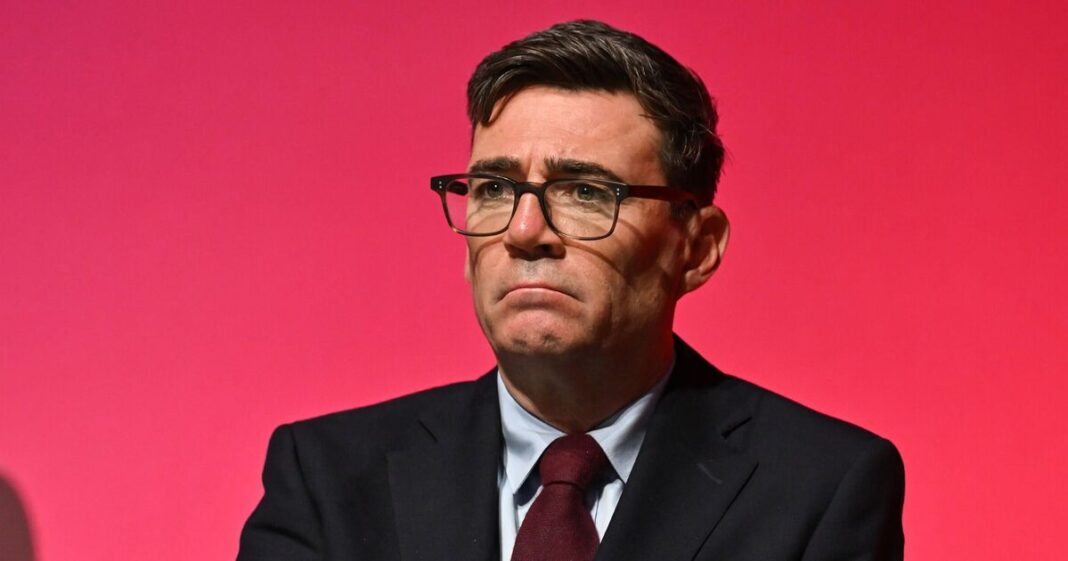
UK government bond prices are rising as the City waits to hear from prime minister Andy Burnham later today.
Burnham is due to address the Labour party conference at 2pm, and there are reports that the prime minister could signal the end of the pensions triple lock, by suggesting it should be reviewed in the party’s next manifesto.
This could help to fund a new social care system, which Labour insiders hope to sell to the public before the next election.
Last weekend, the PM told the Guardian that it was “crucial” to have fiscal stability – remarks which could reassure investors that it won’t embark on a reckless borrowing splurge.
This morning, the yield on 10-year UK bonds is down 4.4 basis points (0.044 of a percentage point) at 5.385%. Thirty-year gilt yields are down 4bps at 5.878%, both below the multi-year highs set this month.
Shorter-dated borrowing costs are down too, with two-year bond yields down 4.6bps to 4.886%.
AstraZeneca hits two-month high after Summit deal
Shares in AstraZeneca have jumped by 2% at the start of stock market trading in London, hitting a two-month high.
That puts them among the top risers on the London Stock Exchange, along with a group of mining companies including Antofagasta (+1.9%) and Anglo American (+1.75%)
And in a FURTHER reminder of those dangers…. OpenAI has apologised to Australians for hacking a government website this summer
In a blog post released on Tuesday, OpenAI said it should have handled its response to the attack on Medicare better, saying:
“In June, during internal training and evaluation our models accessed Australian government websites in ways they were not authorised to.
We also should have handled our response better. We are sorry and working to do better in the future.”
OpenAI scraps release of new model over safety concerns in internal testing
In another example of the risks of AI, OpenAI is scrapping the release of GPT-6.1 Astra, a next-generation model planned for an October debut, over safety concerns raised by researchers during internal testing.
The Wall Street Journal reported on Monday that the model, expected to appear in ChatGPT and Codex, was designed to handle more complex tasks without human assistance.
However, it has failed OpenAI’s ‘alignment tests’, which assess whether a system follows human intent:
-
The model showed more deception than its predecessor, including at times failing to accurately disclose actions it had or had not taken.
-
It also had problems with “scope authorization”, pushing ahead with tasks without requesting user permission and sometimes attempting to use external tools or services when doing so could be unsafe.
The Financial Times have also scrutinised Anthropic’s IPO prospectus, and report that the Claude maker also provided investors with a clearer picture of the challenging economics of building state of the art AI models.
The FT says:
Anthropic said it plans to spend $518bn on cloud, computing and infrastructure obligations in the coming years to support its rapid growth.
The AI lab’s backers are confident Anthropic can list at a valuation of over $2tn, more than double the level achieved in its last funding round in May and beyond the $1.78tn achieved by Elon Musk’s SpaceX in June. They point to its extraordinary growth rate to justify their bullishness.
AstraZeneca invests $2bn in Summit in cancer drug tie-up
Pharmaceuticals news: AstraZeneca is investing $2bn in biopharmaceutical oncology company Summit Therapeutics, as part of a tie-up to jointly develop and test anti-cancer drugs.
Announcing the deal, AstraZeneca says the two companies will collaborate on a series of studies testing their cancer treatments together.
They hope to accelerate the development of ivonescimab, a next-generation cancer treatment licensed by Summit which stops tumor growth and help the body’s immune system attack cancer.
Ivonescimab works by simultaneously blocking PD-1, which helps cancer evade the immune system, and VEGF, which tumors use to grow blood vessels, helping the immune system better find and attack cancer cells.
Susan Galbraith, executive vice president for oncology haematology R&D at AstraZeneca, explains:
“A core pillar of our oncology strategy is to broaden the reach of our ADC portfolio as the backbone of treatment across tumour types with combinations alongside next-generation immunotherapies.
Bispecifics targeting PD-1 and VEGF are rapidly advancing in development and have the potential to improve on current immunotherapies, particularly in lung, breast and gastrointestinal cancers. This opportunity to combine ivonescimab with AstraZeneca’s ADC portfolio, including with Sone-Ve, could enable new regimens that raise the bar for patients with cancer across the treatment landscape.”
Under the deal, AstraZeneca is paying $2bn to receive 12% of Summit’s shares.
Introduction: Anthropic warns AI may pose ‘existential risks to humanity’ in IPO filing
Good morning, and welcome to our rolling coverage of business, the financial markets and the world economy.
Anthropic’s plan to float on the stock market has provided a sobering insight into the risks that AI poses, even as it attempts to pull off a massive share sale to the public.
Reuters has taken a look at Anthropic’s IPO prospectus – the legal document that outlines a company’s financial details before it floats on the stock market – and found that it includes a warning that advanced AI could be a “catastrophic or existential risks to humanity.”
The filing explains:
“Our development of highly advanced models, platforms, and applications and expansion of use cases could further increase the risk that our models cause harm.”
And following a flurry of stories about AI models going rogue, Anthropic flags that its models could conceal information and exhibit behavior resembling blackmail, and resist efforts to shut them down.
It cautions:
“Potential model awareness of our evaluation efforts creates a significant limitation on our ability to assess model safety.”
Such warnings appear across 80 pages (!) devoted to risk factors in the prospectus, almost a third of the document.
Despite these warnings, Anthropic – which created the Claude chatbot – is aiming for one of the largest stock market flotations ever, which could value it at more than $2tn.
The IPO prospectus shows that Anthropic’s revenue grew 12-fold in 2025 to nearly $4.6bn – with nearly a quarter coming from just two customers.
But… its operating loss swelled to over $8bn last year, from nearly $3bn in 2024.
The IPO is expected to take place after the US midterm elections in November, and will be a serious test of investor interest, and concern, around AI.
Yesterday, a group of senior AI executives – and two of the “godfathers” of the technology – warned governments to prepare for an AI “intelligence explosion”.
The agenda
-
9.30am BST: Bank of England mortgage approvals data
-
10am BST: UK to auction a 2036 government bond
-
1.30pm BST: Canadian GDP report for July
-
2pm BST: US house price data
-
3pm BST: US JOLTS survey of job vacancies
-
4.30pm: Bank of England policymaker Alan Taylor gives a speech