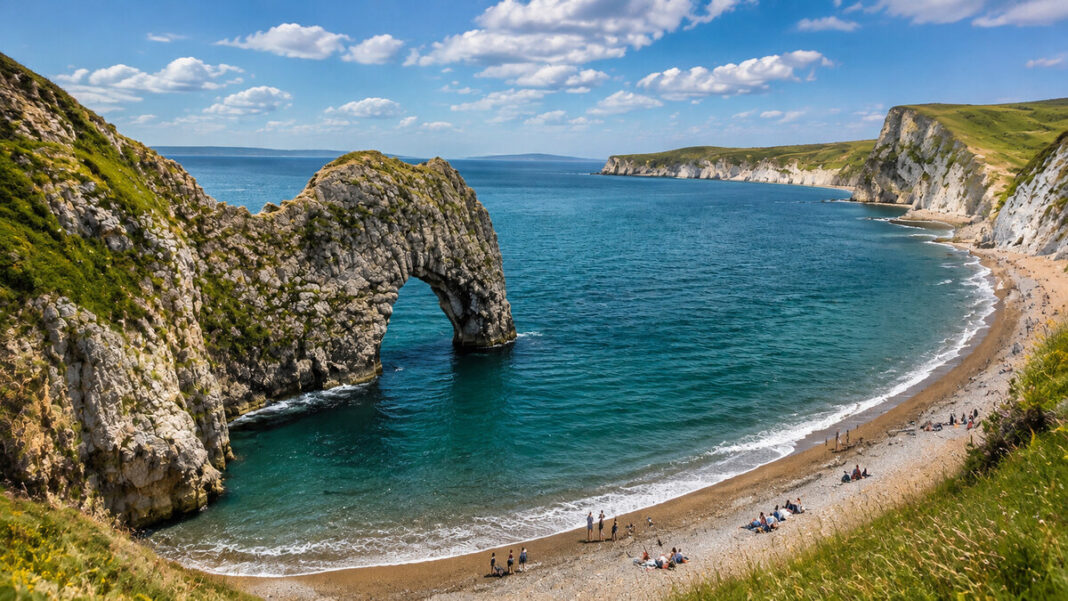

Dorset and East Devon’s Jurassic Coast is celebrating 25 years as England’s only natural UNESCO World Heritage Site in 2026, bringing renewed international attention to its 95-mile coastline, prehistoric discoveries, luxury wellness experiences and growing heritage tourism offer. Designated in 2001, the destination is marking the anniversary with exhibitions, guided walks, educational activities and conservation initiatives. Natural England reports that the coastline attracts approximately 14 million visitors annually, highlighting its importance to England’s nature-based tourism economy. The anniversary celebration took place at Lulworth Cove on 14 September 2026, with conservation organisations, local authorities and heritage partners recognising a quarter-century of joint work to protect this remarkable landscape.
The milestone comes as Dorset continues to develop its appeal beyond conventional summer seaside holidays. Fossil discoveries, dramatic coastal scenery, specialist museums, boutique accommodation and new wellness facilities are creating more reasons for visitors to explore the region. The destination offers a distinctive combination of natural history and modern hospitality, allowing travellers to experience ancient geological landscapes while enjoying contemporary leisure facilities.
A Spectacular 95-Mile Coastline Reveals 185 Million Years of Earth’s History
The Jurassic Coast stretches from Exmouth in East Devon to Studland Bay in Dorset, covering approximately 95 miles of internationally recognised coastline. Its rocks preserve nearly 185 million years of geological history, representing the Triassic, Jurassic and Cretaceous periods. This exceptional geological record earned the Dorset and East Devon Coast its UNESCO World Heritage designation in 2001.
The coastline offers several iconic natural attractions:
- Durdle Door: A remarkable natural limestone arch overlooking the English Channel.
- Lulworth Cove: A famous coastal formation known for its distinctive curved shoreline.
- Old Harry Rocks: White chalk sea stacks near Studland.
- Golden Cap: A prominent coastal viewpoint near Seatown, rising approximately 191 metres above sea level.
- Chesil Beach: An internationally recognised shingle barrier stretching along the Dorset coast.
These attractions give visitors different ways to explore the region. Walking, photography, sightseeing, geological education and coastal exploration contribute to its appeal among families, international tourists and outdoor enthusiasts. The coastline also forms part of the wider South West Coast Path experience, providing opportunities to explore individual sections and connect coastal communities through walking holidays.
Anniversary Exhibitions and Guided Experiences Put Dorset’s Heritage in the Spotlight
The 25th anniversary has created a year-long programme of activities designed to celebrate the Jurassic Coast’s natural and cultural importance. Dorset Coast Forum has brought together information about exhibitions, community activities, educational programmes and special events organised by regional partners. One notable exhibition was Changing Landscapes at West Bay Discovery Centre, which ran from 17 March to 13 September 2026. It explored the geological forces that shaped the coastline and its continuing transformation through erosion, weather and changing environmental conditions.
Advertisement
Advertisement
Other anniversary initiatives included:
- World Heritage Day: A festival at Dorset Museum on 18 April 2026.
- Look What I Found!: A Weymouth Museum exhibition exploring local fossil discoveries, accompanied by a family fossil-making workshop.
- Sensing Place: An exhibition featuring artwork and observations inspired by the Jurassic coastline.
- Jeremy Gardiner’s Strata: An exhibition of 100 paintings celebrating the coastline, running at Southampton City Art Gallery from 30 October 2026 to 30 March 2027.
These activities help visitors understand that the Jurassic Coast is much more than a collection of beautiful beaches. It is an internationally important geological landscape that continues to support scientific research, education and conservation.
Fossil Hunting Brings New Excitement to Lyme Regis and Charmouth
Fossil hunting remains one of the Jurassic Coast’s most distinctive visitor experiences. Lyme Regis and Charmouth are particularly popular with people hoping to discover evidence of prehistoric marine life along the beaches. The region has a remarkable connection with Mary Anning, the pioneering fossil collector born in Lyme Regis in 1799. Her discoveries helped transform scientific understanding of prehistoric marine reptiles and established the town’s international reputation for palaeontology.
Today, natural coastal erosion continues to expose fossils within the cliffs and beaches. Winter storms can reveal new geological material, making the colder months particularly interesting for experienced fossil enthusiasts. Social media platforms such as TikTok and Instagram have also helped bring fossil hunting to wider audiences. However, there is no verified official visitor count establishing the scale of any recent social-media-driven increase.
Visitors should follow the West Dorset Fossil Collecting Code and understand the dangers of collecting near unstable cliffs. Important precautions include:
- Check tide tables before entering beaches, particularly around Lyme Regis.
- Keep away from cliff bases because rockfalls can happen without warning.
- Avoid moving rockfalls, unstable slopes and mudflows.
- Wear suitable footwear and carry appropriate safety equipment.
- Never climb unstable cliffs or descend them using ropes to collect fossils.
- Follow local safety notices and coastal access restrictions.
These precautions matter because the same natural processes that expose fossils can also create dangerous coastal conditions. Code post pilot text only. For Dorset’s tourism industry, fossil hunting creates opportunities for educational visits, specialist guided experiences, family holidays and longer stays. It also provides an experience that distinguishes the destination from conventional beach resorts.
Advertisement
Advertisement
The Etches Collection Brings Prehistoric Sea Monsters to Life
The Jurassic Coast’s museum attractions provide another major reason to visit Dorset. Among the most distinctive is The Etches Collection, Museum of Jurassic Marine Life, in Kimmeridge. The museum houses an extraordinary collection of Late Jurassic fossils discovered largely around Kimmeridge Bay. Its most famous attraction is the remarkably complete fossilised skull of a giant pliosaur, popularly known as Sea-Rex. The skull gained international attention through the BBC documentary Attenborough and the Giant Sea Monster. It has been on permanent display at the museum since 2 January 2024 and is recognised by Guinness World Records as the most complete pliosaur skull. The prehistoric marine predator lived approximately 150 million years ago.
The museum has another important attraction for 2026. Big Sara, a 10-metre-long Allosaurus skeleton with approximately 70% of its original bones intact, went on display on 28 February 2026. The specimen is on a two-year loan and is included in the museum admission experience. These attractions strengthen Dorset’s family tourism and educational travel offer. They also allow visitors to connect discoveries made along the coastline with the scientific research and museum collections that explain their importance.
Silverlake Firefly Spa Adds a New Luxury Wellness Dimension to Dorset Tourism
Dorset’s tourism offer is also expanding through hospitality and wellness developments. One notable addition is Silverlake’s Firefly Spa and Restaurant near Dorchester. The development introduces a 25-metre heated outdoor swimming pool, cold plunge, sauna, lakeside treatment facilities and restaurant. Its setting near Firefly Lake creates an alternative experience for travellers seeking relaxation and outdoor leisure alongside coastal sightseeing.
The facility is now advertised as open, with spa packages, treatments and dining available. Access to the pool, sauna and cold plunge is subject to membership, accommodation or spa-package arrangements. The restaurant is open to the wider public. This development is important because it gives visitors another reason to spend time in Dorset beyond traditional sightseeing. Travellers can combine coastal walks, fossil discoveries and museum visits with swimming, wellness treatments and lakeside dining. The wider boutique accommodation market, including properties such as Louma Country Hotel, also reflects the interest in countryside retreats and premium stays. However, individual opening dates and operating details should be checked directly with the properties.
Christmas and Winter Travel Give Dorset Another Seasonal Tourism Opportunity
The Jurassic Coast’s appeal is not limited to warmer months. Winter provides a different experience, with dramatic coastal scenery, quieter walking routes and opportunities to explore museums and indoor attractions. Christmas also creates a wider seasonal travel opportunity. Across the world, the holiday combines religious observances, family gatherings, cultural traditions, festive food and community celebrations. In the UK, Christmas is associated with decorated streets, illuminated trees, traditional roast dinners, mince pies and seasonal gatherings.
Dorset can appeal to visitors seeking a quieter countryside and coastal escape during this period. Its accommodation, restaurants, museums and wellness facilities offer different ways to enjoy a winter break. The Etches Collection, for example, provides an indoor attraction for families interested in prehistoric marine life, although its published opening arrangements exclude Christmas Eve, Christmas Day and Boxing Day.
Advertisement
Advertisement
Christmas traditions also differ across international markets. Australia and New Zealand celebrate during summer, often with outdoor gatherings and beach activities. In India, church services, plum cakes, star lanterns and festive street decorations are important parts of celebrations in places such as Goa, Kerala and Kolkata. Japan has developed a largely secular Christmas culture, with strawberry shortcake and fried chicken among its familiar seasonal traditions. These differences create opportunities for destinations to appeal to international travellers seeking distinctive winter and Christmas experiences. However, visitors should check individual Dorset properties and attractions for their Christmas opening schedules.
Dorset’s Tourism Economy Highlights the Importance of the Jurassic Coast
The anniversary also comes at an important time for Dorset’s wider visitor economy. Dorset Council’s 2026–2031 Cultural Strategy reports that the county welcomes almost 13 million visitors annually, generating approximately £924 million in visitor spending. It also identifies a strong seasonal pattern, with 51% of visits taking place between June and September. These figures underline the importance of developing tourism experiences beyond the traditional summer period. The Jurassic Coast’s museums, walking routes, accommodation, wellness facilities and heritage attractions can help encourage longer stays and spread visitor spending across different communities.
The opportunity extends to local businesses, including:
- Boutique hotels and countryside accommodation providers.
- Restaurants, cafés and independent food businesses.
- Museums, heritage centres and educational attractions.
- Walking guides and specialist fossil-hunting experiences.
- Wellness facilities and outdoor leisure operators.
- Local transport and excursion providers.
The challenge is to grow tourism without damaging the natural landscape that makes Dorset internationally recognised.
How Visitors Can Explore the Jurassic Coast in 2026
Visitors can combine rail travel, local buses and walking routes to explore different sections of the coastline. The nearest railway station to Lyme Regis is Axminster. Dorchester and Weymouth also provide useful railway connections for exploring other parts of Dorset.
The Jurassic Coaster bus network provides another important connection. First Bus operates services linking Weymouth, Dorchester, Bridport, West Bay, Charmouth, Lyme Regis and Axminster through different routes. The X53 connects Weymouth with Axminster through several coastal communities, including Charmouth and Lyme Regis.
Advertisement
Advertisement
| Visitor requirement | Recommended information |
|---|---|
| Coastline length | Approximately 95 miles |
| Geological history | Nearly 185 million years |
| UNESCO designation | 2001 |
| Anniversary | 25 years in 2026 |
| Major fossil locations | Lyme Regis and Charmouth |
| Famous landmarks | Durdle Door, Lulworth Cove and Old Harry Rocks |
| Museum attraction | The Etches Collection, Kimmeridge |
| Wellness attraction | Firefly Spa, Silverlake |
| Warmer-season activities | Coastal walks, sightseeing and boat trips |
| Winter experiences | Fossil exploration, museums and dramatic coastal scenery |
| Bus connections | Jurassic Coaster X51, X52 and X53 services |
Essential Safety Advice for Winter Visitors
Winter offers dramatic coastal scenery, but visitors must take additional precautions.
- Check local tide times before walking along beaches.
- Stay away from cliff edges and unstable cliff bases.
- Avoid visiting exposed coastal areas during dangerous weather.
- Follow marked walking paths and local warning signs.
- Check transport timetables before travelling between coastal towns.
Natural England specifically warns about unstable cliff edges, falling rocks, mudflows and incoming tides around the coastal reserves.
Jurassic Coast’s Next Chapter Could Transform Dorset’s International Tourism Appeal
The Jurassic Coast’s 25th anniversary places Dorset firmly in the international heritage tourism spotlight. Its geological importance, fossil discoveries, coastal landmarks and specialist museums provide a distinctive visitor experience that extends far beyond conventional seaside holidays. The emergence of new wellness facilities, premium accommodation and educational attractions adds further depth to the destination. Meanwhile, anniversary exhibitions and conservation activities are helping introduce its geological significance to new generations.
The next challenge will be maintaining the balance between visitor growth and environmental protection. The coastline’s cliffs, beaches, wildlife and geological formations are its greatest assets. Protecting them will be essential to sustaining the destination’s international reputation. For travellers, Dorset offers something increasingly valuable: the opportunity to combine natural discovery, outdoor adventure, cultural heritage and contemporary relaxation within one remarkable coastal destination.