Ryan Gosling is having a moment. His latest movie, Project Hail Mary, is getting rave reviews and cleaning up at the box office. He’s signed on to headline Star Wars: Starfighter. It seems he’s going all in on science fiction. However, one of his best sci-fi movies was a box office disappointment when it was first released in 2017.
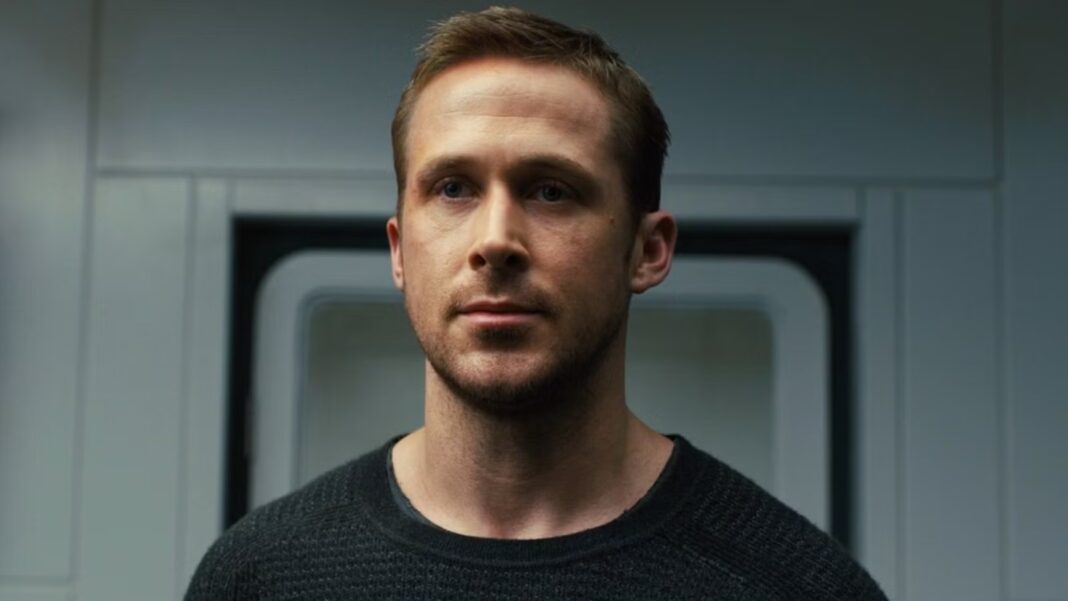
Gosling starred in Blade Runner 2049 as K, a replicant (a bioengineered, organic humanoid) who works for the Los Angeles police department as a blade runner, someone who hunts down rogue replicants and “retires” them. K (which is the first letter of his serial number, KD6-3.7) is swept into a mystery involving a replicant who seemingly was able to give birth. He’s ordered to find and kill the replicant child before it starts a war between humans and replicants. His investigation brings him into contact with a heartless CEO named Niander Wallace (Jared Leto), as well as the hero of the original 1982 Blade Runner movie, Rick Deckard (Harrison Ford).
While Blade Runner 2049 made nearly $260 million at the worldwide box office, it wasn’t enough to make it a financial success. The film cost around $150 million to produce, and movies generally need to make back around double their budget to be profitable.
Blade Runner 2049 is in good company, since the original Blade Runner movie also lost money. Critics thought the film was visually spectacular but slow-moving and remote, and many thought the same of Blade Runner 2049. However, the original film became a cult classic over time, and the same thing is happening with its sequel.
‘Blade Runner 2049’ Has Carved Out a Place for Itself in Pop Culture
Almost a decade later, Blade Runner 2049 is getting the recognition it deserves. Critics have reappraised it, with some concluding that it’s even better than the original. The movie’s visuals, aided by the Oscar-winning cinematography of Roger Deakins, have held up and are still being analyzed years later.
And it’s not just their technical fidelity that impresses people. In 2024, Alcon Entertainment, one of the production companies behind Blade Runner 2049, sued Tesla for allegedly pilfering imagery from the movie in ads for the company’s autonomous cybercabs. Alcon has a good enough case that Tesla has been unable to get the case dismissed, even years later. Clearly, the movie tapped into something.
Blade Runner 2049 has also been revisited as its predictions about our future have started to feel more prescient. In the movie, K’s girlfriend Joi (Ana de Armas) is actually an artificial intelligence projected in holographic form. While we haven’t quite gotten to that point yet, between reports of people marrying AI chatbots and Elon Musk’s Grok releasing AI “companions,” it seems more and more plausible.
‘Blade Runner 2049’ Is Much More Than a Retread of ‘Blade Runner’
While the original Blade Runner and Blade Runner 2049 use replicants as a metaphor to explore the nature of what it means to be human, the sequel takes things further. In Blade Runner, Rick Deckard is (maybe) human, and he observes how replicants try to carve out meaningful lives for themselves while keeping himself removed from them. Blade Runner 2049 tells us from the beginning that K is a replicant, even if the movie later calls that assumption into question. K’s journey is about finding out that humanity may be something you have to earn for yourself through kindness and self-sacrifice, rather than something you’re born with. After all, Niander Wallace is more callous (and less human) than many of the replicants in the movie and also Joi. As artificial intelligence technology continues to improve, we may puzzle over these sorts of ironies on a more regular basis.
Blade Runner 2049 explores these issues with the subtlety and depth that fans have come to expect from director Denis Villeneuve, who, had already scored a sci-fi hit with his movie Arrival. Villeneuve has long expressed his confusion over why the movie underperformed. Ridley Scott, the director of the original Blade Runner, opined that Blade Runner 2049‘s 2-hour and 43-minute runtime was the problem. That argument doesn’t hold up in a world where the two-hour-and-36-minute Project Hail Mary is burning up the box office. Also, Villeneuve’s own Dune movies both have monstrous runtimes — Dune: Part Two is slightly longer than Blade Runner 2049 — and that didn’t stop them from being blockbuster hits that have fans salivating for Dune: Part Three later this year.
The main problem might be that Blade Runner 2049 came along a little too early. If it had come out after Villeneuve established himself as the greatest sci-fi director of our generation with Dune, or after the generative AI boom started and got people thinking about the philosophical questions the movie asks, it may have been a huge hit from the start. As it stands, Blade Runner 2049 may have to settle for being an under-sung classic that only gets the recognition it deserves years down the line. Better late than never.

- Release Date
-
October 4, 2017
- Runtime
-
164 minutes