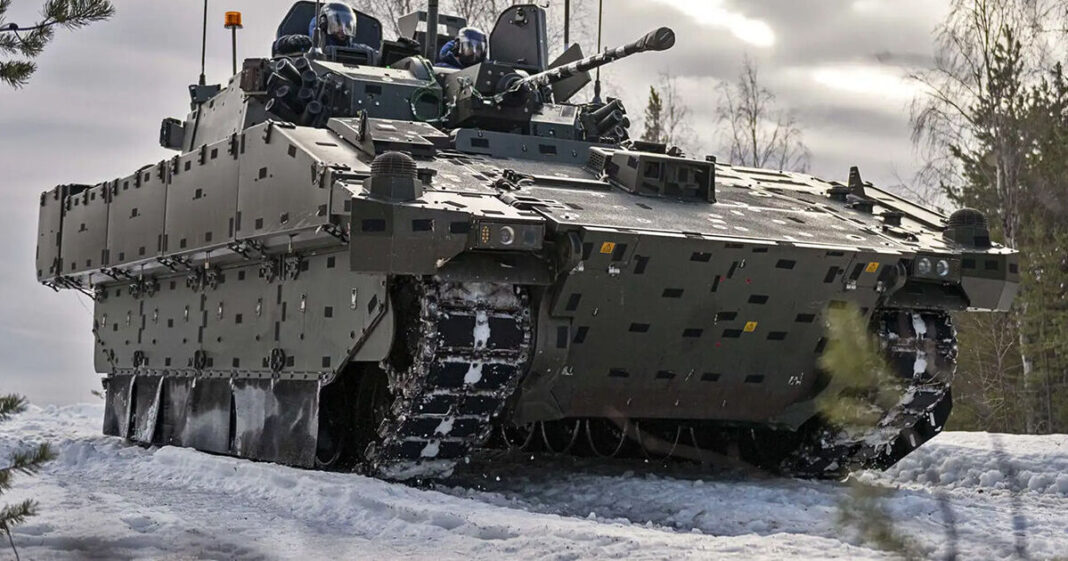
The British Army’s troubled £6.3 billion Ajax armoured vehicle programme has been dealt another significant setback after a soldier suffered vibration-related injuries during tests, prompting ministers to halt all trials. Defence minister Luke Pollard announced on December 18 that trials of the General Dynamics-built Ajax have been paused indefinitely following the incident on December 12.
The soldier reported symptoms but did not require hospitalisation and is receiving medical support. Mr Pollard said in a written ministerial statement to Parliament: “This additional report of an injury is a serious concern to me. Out of an abundance of caution and to ensure the safety of our personnel, I have directed a pause on all Ajax trials. This is in addition to the ongoing pause for training and exercising.”
The decision comes just weeks after 31 soldiers from the Household Cavalry and Royal Lancers were injured during exercises on Salisbury Plain last month, suffering hearing loss, nausea, and other vibration-related issues. Training and exercises with Ajax were suspended indefinitely following that episode.
The latest injury occurred during limited trials aimed at resolving the longstanding problems that have plagued the programme since 2018. Trials were previously halted in 2021 after hundreds of troops were exposed to excessive noise and vibration.
Rupert Pearce, the newly appointed National Armaments Director on a salary of up to £400,000, told MPs this week that the Ministry of Defence is “bemused” by the persistent issues despite the vehicle undergoing 42,000 miles of testing, making it “one of the most tested vehicles of all time.”
Mr Pearce said: “We are not giving up yet.” He revealed that four separate investigations are under way to identify the root cause. Mr Pearce warned that if the vehicle remains safe only under strict operational restrictions, it could prove “tough to put on the battlefield” without limiting its effectiveness.
Each Ajax costs around £10 million, and the programme—intended to deliver hundreds of advanced reconnaissance vehicles—has been repeatedly delayed. Suggestions to fix the vibration issues include replacing metal tracks with rubber ones.
Mr Pollard had declared the vehicles safe for operations just weeks before the latest injuries, claiming problems were “firmly in the past.”
Air Chief Marshal Sir Richard Knighton, Chief of the Air Staff, emphasised that providing safe equipment is a core responsibility, with the welfare of the soldiers his primary concern.
Ministers now face a critical decision: whether to funnel more money into fixes or pull the plug on the project entirely, risking a major capability gap for the Army.
Mr Pearce praised Ajax’s “exceptional” raw capabilities and export potential but stressed: “We have got to make sure it is safe.”