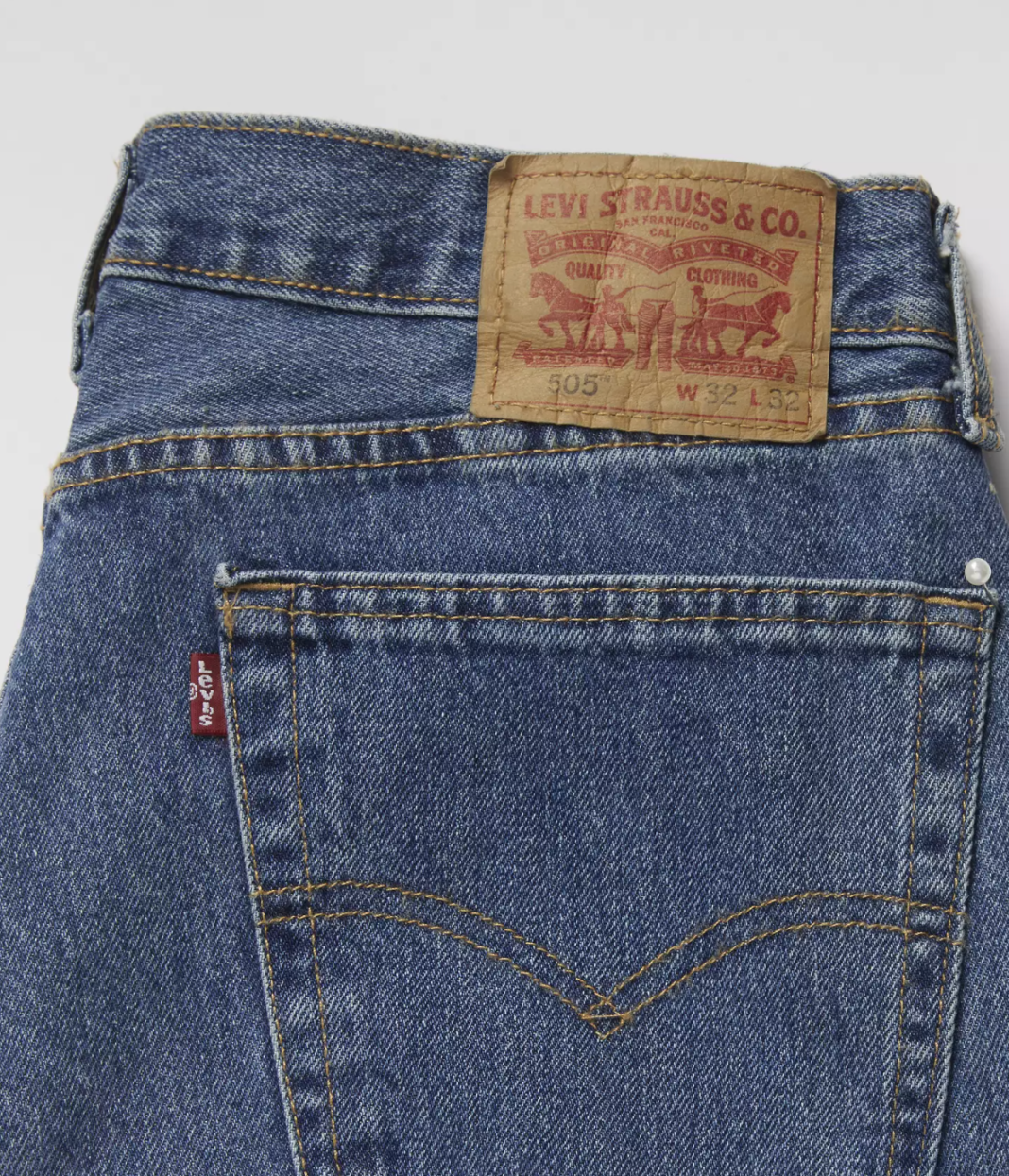
Levi’s 501, 505, 511 and 514 form the backbone of the men’s lineup. On a product page, the differences look minimal. In person, they behave like four separate patterns with distinct rises, thigh allowances, knee widths and leg openings. The top blocks are cut for different body types, and the leg shapes follow their own logic.
Most men shop these models by familiarity or guesswork, which is why a straight fit can feel slimmer than expected and a slim fit can feel more forgiving than its name suggests. The numbers only make sense once you map how each pattern is drafted.
This guide keeps the comparison strict and technical. The focus starts with the top block—waist, rise, seat, and thigh—because that’s where comfort and fit actually live. Then we evaluate the leg shape, fabric behavior, stretch, and break. Finally we layer in body-type guidance so you can match each model to your proportions instead of relying on broad style labels.
The end goal is simple: understand how these four core fits are constructed, how they differ on the body, and which one supports your build most naturally.
Levi’s 501 vs 505 vs 511 vs 514: At-a-Glance Fit Comparison

Use this table as a quick overview of how the four fits differ. Measurements are typical patterns in the 30–32″ waist range and can vary slightly by wash and production batch.
Original, Regular, Slim and Straight: How Levi’s Defines These Fits
Levi’s uses a mix of historic language and modern fit names. Understanding how each category works on the pattern level makes the comparisons easier.
501: Original Fit

The 501 is the reference point for most other Levi’s fits. It has a mid-to-high rise compared with modern slim jeans, a straight leg, and a structured top block. The button fly changes how the front sits compared with zipper models and keeps the rise feeling stable once the denim softens.
505: Regular Fit

The 505 moves toward a more relaxed, everyday straight jean. It uses a zipper fly, keeps a mid rise, and offers more room in the thigh than the 501. It’s still straight, but the emphasis is on comfort over heritage details.
511: Slim Fit

The 511 is cut as a modern slim jean. It sits below the waist, trims down the seat and thigh, and narrows the leg opening. It is not a skinny jean, but it is significantly closer to the leg than the 501 or 505.
514: Straight Fit

The 514 is a straight fit that feels more up to date than a full regular jean. It keeps a mid rise, gives moderate thigh ease and falls straight from the knee, with a leg opening that sits between the 505 and 511.
Top-Block Fit: Waist, Rise, Seat and Thigh Compared
Fit starts in the top block. If the waist, rise, seat and thigh do not suit your body, the leg shape will not fix it. Here’s how the four fits differ above the knee.
Levi’s 501 Top Block

The 501 is designed as a balanced, structured top block. The rise is higher than the 511 and 514, with the waistband sitting at or just below the natural waist for most men.
- Waist: sits at or slightly below the natural waist when sized correctly.
- Rise: mid to high relative to the other three fits.
- Seat and thigh: straight and balanced, neither roomy nor slim.
Levi’s 505 Top Block

The 505 uses a mid rise and aims for easy daily wear. It gives more room through the thigh than the 501 and feels more relaxed when you sit or bend.
- Waist: sits below the natural waist.
- Rise: mid; lower than a classic 501, higher than a low-rise slim.
- Seat and thigh: regular with a clear step up in ease versus 501.
Levi’s 511 Top Block
The 511 has the closest top block of the four. It trims down the seat and thigh, which is where many men feel the difference first.
- Waist: sits below the waist; waistband often closer to the upper hip.
- Rise: low to mid, depending on size and wash.
- Seat and thigh: slim; larger thighs will feel more contact, especially in rigid denim.
Levi’s 514 Top Block
The 514 aims for a middle ground. It gives more thigh room than the 511 but is neater than the 505.
- Waist: sits below the waist.
- Rise: mid rise, generally comfortable on most torsos.
- Seat and thigh: straight and moderate; between 505 and 511 for ease.
When you try any of these fits, evaluate the top block first. You want a flat front, no sharp pulling across the fly or upper thighs, and no gaping at the back waistband. Once that is set, the leg shape becomes a style choice rather than a compromise.
Leg Shape: Straight vs Regular Straight vs Slim vs Straight Modern
Below the knee, the cuts separate clearly. This is where the jeans start to send different style signals even in the same wash.
501 Leg Shape

- Straight from knee to hem.
- Medium leg opening that balances with most footwear.
- Feels like a classic straight jean rather than a fashion-forward silhouette.
505 Leg Shape

- Regular straight leg with a bit more room through the knee.
- Wider opening than 501, especially in larger sizes.
- Easy to wear over bulkier trainers and work boots.
511 Leg Shape

- Slim leg from thigh to hem.
- Narrowest knee and leg opening of the four.
- Creates a cleaner, closer silhouette around the lower leg and ankle.
514 Leg Shape

- Straight leg; cleaner than 505 but not as close as 511.
- Leg opening falls between 505 and 511.
- Works with a wide range of sneakers and boots without looking either wide or tight.
Rise and Where Each Fit Sits on the Body
Rise affects how a jean balances your torso and legs and how comfortable it feels when you sit.
- 501: mid-to-high rise; waistband sits at or just below the natural waist. Good if you want more coverage and a stable top block.
- 505: mid rise; sits below the waist but not low on the hips. Works for most heights.
- 511: low-to-mid rise; sits lower on the waist and shortens the rise visually. Taller men may find this exaggerates torso length if sized incorrectly.
- 514: mid rise; similar vertical balance to the 505 but with a neater leg below.
Shorter men often look best with a mid rise that does not cut across the widest part of the midsection. Taller men should avoid rises that sit so low they create a long torso and short leg effect. All four of these fits can work if the rise is chosen with those rules in mind.
Fabric, Stretch and Construction Differences
The model number tells you the shape. The fabric and construction determine how that shape feels and how long it stays that way.
Rigid, Stretch and Shrink-to-Fit
- 501: Most iconic in rigid and Shrink-to-Fit denim. These start stiff, shrink and mold to the body over time. Stretch 501s exist and offer easier break-in at the cost of some structure.
- 505: Common in midweight rigid and stretch fabrics. Stretch versions are easier for daily use if you want regular movement.
- 511: Widely available in stretch and advanced stretch blends to keep the slim top block and leg wearable. Rigid 511s look sharp but demand more patience during break-in.
- 514: Available in both rigid and stretch; the straight leg hides minor stretching and shrinkage more effectively than a slim fit.
Construction Notes
- Fly: 501 uses a button fly; 505, 511 and 514 use zippers.
- Pocket bags: Heavier pocket bags feel more supportive and last longer; lighter ones are more prone to wear at the corners.
- Stitching: Pay attention to stitching density at the crotch, seat and belt loops; these are the first places that fail on cheaper builds.
- Selvedge: Some 501, 511 and 514 runs come in selvedge denim with tighter weaving and finished outseams. The fit remains the same; the denim changes.
On-Body Silhouette: How 501, 505, 511 and 514 Look When Worn
Once hemmed to a sensible inseam, each fit presents a different on-body profile even in similar washes.
501 On-Body

- Straight through the leg, with a clear, even line from thigh to hem.
- Looks balanced with most casual footwear and workwear-inspired outfits.
- Rise and button fly give a more traditional top block shape.
505 On-Body

- Regular straight profile with more visual ease through the thigh and knee.
- Often reads as a relaxed everyday jean, especially in lighter washes.
- Works easily with bulkier sneakers and boots.
511 On-Body
- Slim from hip to hem; follows the leg more closely than the 501 or 505.
- Less stacking at the ankle if hemmed correctly due to the narrow opening.
- Pairs naturally with slimmer trainers, Chelsea boots and minimal shoes.
514 On-Body

- Straight leg that appears neater than the 505 but less close than the 511.
- Gives a tidy line over the shoe without gripping the ankle.
- Easy to style with most casual and smart-casual footwear.
Which Fit Works Best for Your Body Type?
The right Levi’s fit depends on your proportions more than the number stitched on the label. Use these guidelines as a starting point.
For Slim Builds
- 511: The most direct match if you want a slim, close profile.
- 514: A good choice if you prefer a straight leg but still want a modern look.
- 501: Works if you like a classic straight leg and slightly higher rise.
For Average Builds
- 501: Balanced choice with structure and heritage shape.
- 514: Cleaner straight fit that suits most average builds.
- 505: Best if you want more room through the thigh and seat.
For Bigger Thighs or Athletic Legs
- 505: Most forgiving fit here; regular thigh and wider leg opening.
- 514: Good compromise if you like a straighter look but need thigh room.
- 501: Can work if you size the top block correctly; rigid pairs will need break-in.
- 511: The least forgiving on large thighs; stretch fabrics help but the cut remains slim.
Matching Fits to Footwear
- 501: Balanced with everything from heritage boots to simple sneakers.
- 505: Best with chunkier sneakers, work boots and wider soles.
- 511: Works best with slim sneakers and sleek boots.
- 514: Sits comfortably in the middle; pairs with most casual footwear.
Break-In, Stretch and Shrinkage Over Time

Two pairs with the same tag can feel very different after a few months of wear. Fabric blend and weight change how each fit behaves with washing and movement.
501 Over Time
- Shrink-to-Fit and rigid 501s shrink on first wash, then mold to the body with wear.
- Expect stiff knees and seat at first that soften into more comfortable creasing.
- Stretch 501s move easily from day one but hold a slightly softer silhouette.
505 Over Time
- Midweight denim softens quickly and becomes an easy daily jean.
- Stretch versions can feel looser at the waistband and thigh by the end of the day if bought very close to the body.
- The wider leg opening disguises minor shrink and stretch changes.
511 Over Time
- Stretch and advanced stretch 511s will relax at the waistband, thighs and knees, especially if they start tight.
- Rigid 511s hold a sharper line but take longer to break in and are less forgiving on muscular legs.
- Because of the narrow opening, small changes in inseam length and shrinkage are more obvious at the ankle.
514 Over Time
- Rigid 514s soften into a comfortable, neat straight jean with consistent wear.
- Stretch versions maintain comfort through the thigh while keeping a clean leg line.
- The opening is wide enough to hide small variations after washing.
Real-World Sizing: Tagged vs Actual Measurements
Levi’s production runs are not perfectly uniform. Wash, factory and fabric can all shift measurements in small but noticeable ways.
- Measure a pair of jeans you already like: waist (flat, doubled), thigh (at crotch level), knee, leg opening and front rise.
- Compare those numbers to any size charts or product measurements available for the 501, 505, 511 and 514.
- Choose the size that gives a clean top block and comfortable rise first; then decide whether you want the straighter opening of the 501/505/514 or the slim opening of the 511.
Value and Price: Where Each Fit Sits in the Line-Up

All four fits sit in Levi’s core pricing range, with increases for selvedge, premium mills, special collaborations or heavier denims.
- 501: Often positioned as the flagship jean; rigid and Shrink-to-Fit versions usually carry the strongest heritage story.
- 505: Priced similarly but often available in more casual, everyday washes.
- 511: One of the most common slim fits in the range, frequently offered in new seasonal colors and fabrics.
- 514: A solid straight option that generally costs the same as 511 in like-for-like fabrics.
Premium pricing should reflect better fabric, tighter construction and more thoughtful detailing. The underlying fit pattern stays aligned with the model number.
Which Should You Buy: 501, 505, 511 or 514?
If you want a clear rule set to narrow things down, use this as a starting checklist:
- Choose Levi’s 501 if you want a classic straight jean with a structured top block, are comfortable with a button fly and like the idea of denim that molds with wear.
- Choose Levi’s 505 if you want a regular straight fit with more thigh room, a zipper fly and an easy everyday feel.
- Choose Levi’s 511 if you prefer a slim silhouette, wear slimmer footwear and your thighs are on the slimmer or average side.
- Choose Levi’s 514 if you want a neat straight leg that is less relaxed than the 505 but not as close as the 511.
Start from your body type and how you actually move: pick the top block that fits first, then decide whether straight or slim through the leg matches your wardrobe and shoes.
Condensed Comparison Summary
Here is a shorter table if you want to scan the main differences quickly.
Related Guides
FAQs: Levi’s 501 vs 505 vs 511 vs 514
What is the difference between Levi’s 501 and 505?
The 501 is an original straight fit with a higher rise and button fly. The 505 is a regular straight fit with a mid rise, zipper fly and more thigh room.
Is 505 looser than 501?
Yes. The 505 generally has more ease in the thigh and a wider leg opening than the 501, especially in larger sizes.
What is the difference between Levi’s 501 and 511?
The 501 has a mid-to-high rise, balanced thigh and straight leg. The 511 has a lower rise, slimmer thigh and a narrow slim leg opening.
How does Levi’s 514 compare to 501 and 505?
The 514 keeps a mid rise and straight leg but is neater than the 505 and less roomy than a relaxed regular fit. It is closer to a modern straight than a pure workwear block.
Which fit is best for bigger thighs?
Among these four, the 505 is the most forgiving, followed by the 514. The 501 can work if sized carefully. The 511 is the tightest through the thigh.
Should I choose 501, 505, 511 or 514 if I want a timeless pair?
For a classic straight jean, go 501. For a relaxed regular straight, choose 505. For a modern slim, 511 is the option. For a neat straight that suits most wardrobes, pick 514.