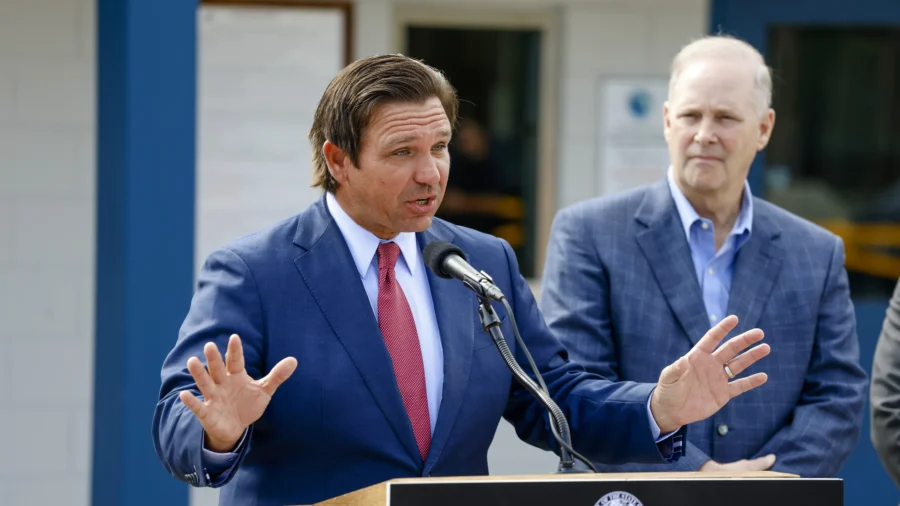
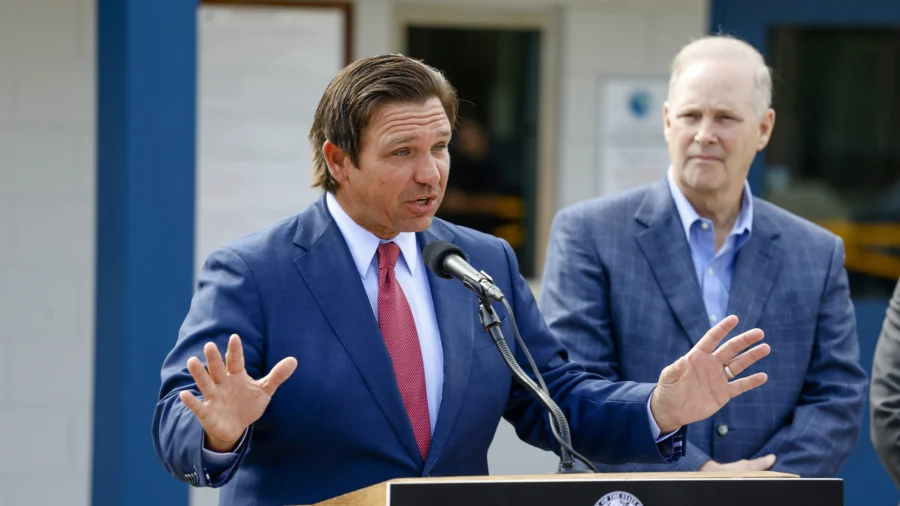
Florida Gov. Ron DeSantis said on Jan. 6 that the state’s attorney general is “looking very seriously” at bringing charges against former Venezuelan leader Nicolás Maduro, who remains in U.S. custody in New York amid a federal indictment.
“He was obviously very involved with bringing drugs, particularly to Florida,” DeSantis said. “You know what he would also do? And this is not in the federal indictment in New York: he would empty his prisons and send them to America across the border, and we’d end up with some of these people in Florida, Tren de Aragua, gang members that were in prison there, and he did that.”
The governor called this a “very hostile act” and said Florida would review its criminal statutes and consider bringing a state indictment against Maduro for “importing that criminal element.”
President Donald Trump has also accused Maduro of directing the Tren de Aragua gang. Maduro has denied the allegations.
The Florida attorney general’s office did not respond to a request for comment on the governor’s remarks by publication time.
DeSantis began suggesting that Florida may pursue a state indictment against Maduro on Monday, replying to a Polymarket social media post about the betting market’s odds no longer projecting Maduro to be found guilty on all counts in federal court.
“Double jeopardy doesn’t attach,” DeSantis added.
If Florida pursues charges against Maduro, it would follow a similar route the state took when the now-convicted attempted assassin of Trump, Ryan Routh, was indicted by the Biden administration in 2024 and DeSantis and the state’s then-attorney general filed state charges against him soon after.
DeSantis was critical on Tuesday about Maduro and his regime’s impacts on Venezuela, accusing the former dictator of destroying the country’s economy and repressing its people.
However, the governor dismissed a question about whether he would have also ordered Maduro’s capture if he had prevailed against Trump in the 2024 Republican primary and been elected to the White House.
“If ifs and buts were candy and nuts, every day would be Christmas, my man,” DeSantis said. “I mean, that’s just the nature of it.”
Still, he said it was “absolutely appropriate” for the United States to bring Maduro to justice and indict him in federal court, even if it may not result in a transformation in life for Venezuelans and an end to state-backed repression.
“I don’t think that can be imposed, you know, by the United States, but I think Maduro really was repressing, kind of the positive energy there. And so now they have a pathway to maybe get their country on a better course,” DeSantis said, adding that he thinks Venezuela can be “very, very successful” if it finds a better path forward.
Other top Venezuelan regime leaders included in the indictment—who remain at large in Venezuela—are Minister of Interior Diosdado Cabello and a former governor, Ramón Rodríguez Chacín.
The U.S. government also included Héctor Rusthenford Guerrero Flores, who is accused of being a leader of the Tren de Aragua gang, in its indictment.
Arjun Singh, Sam Dorman, and Nicholas Zifcak contributed to this report.