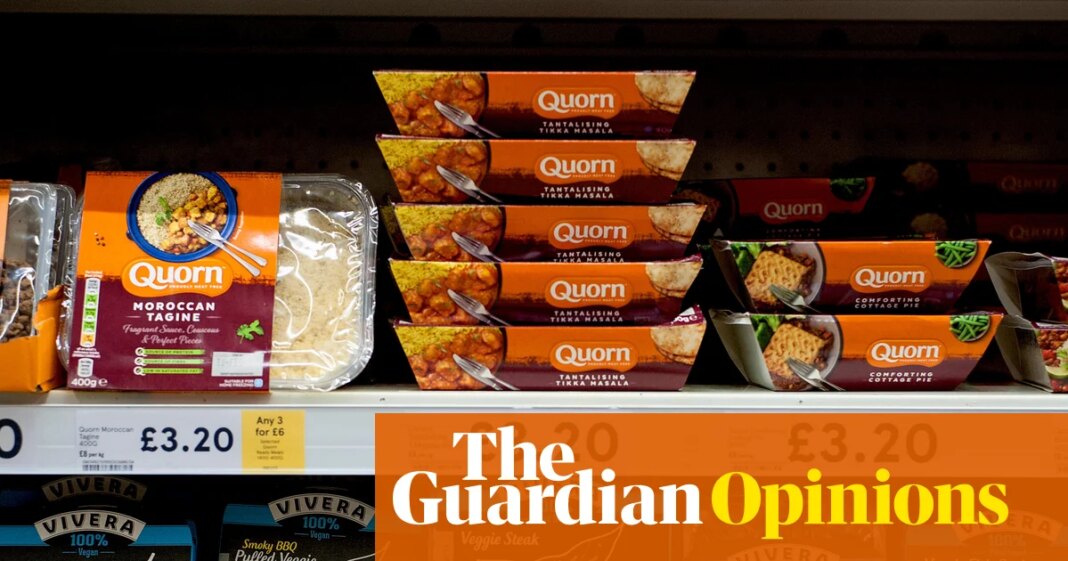
Last week, European policymakers decided that plant-based foods should no longer be marketed with terms such as “chicken”, “bacon” or “steak”. The fear seems to be that shoppers might accidentally buy veggie bacon thinking it came from an actual pig. The change applies to the UK too, because of our trade agreement with Europe.
After considerable pushback from organisations including the one I work with, the Vegetarian Society, and many food brands, words such as “burger”, “nuggets” and “sausage” – as in, vegan sausage rolls – are still permitted, provided the packaging makes clear they are plant-based. But even those allowances could yet be revisited.
The proposal arrived without an impact assessment and will affect UK exports. More worryingly, it sets a precedent. Apparently, Europe’s biggest regulatory threat is the menace of the dangerously misleading plant-based steak. But if clarity is truly the goal, there’s an obvious question: why stop at plant-based foods?
If lawmakers want absolute transparency in food naming, then meat products could just as easily be required to use their literal descriptions. After all, beef steak is cow muscle. Pork chop is usually pig rib. Bacon is often salt-cured pig belly. Chicken nuggets? Formed chicken parts. And many sausages would require far less appetising names.
Sounds absurd? That’s precisely the point.
Food names have never been strictly literal. If they were, a lot of them would need a serious rethink. There are no canines in hotdogs. There are no amphibians in toad in the hole. Ladyfingers contain no fingers. Food language is ultimately a product of culture, tradition and familiarity.
The words “burger”, “sausage” and “steak” describe formats and cooking styles as much as ingredients. A burger is simply a patty. A sausage is food shaped into a tube and cooked. These are culinary categories, not zoological claims. Plant-based foods use these familiar terms as shorthand to help shoppers understand what a product is and how to cook it.
Meanwhile, meat marketing relies on something else entirely: the pastoral myth. Packaging shows Ye Olde Red Barn, green fields and smiling animals – imagery far removed from modern industrial livestock production. We’ve all seen the cheerful pigs outside butcher shops wielding knives to slaughter their kin, or happy chickens advertising fried nuggets. The suggestion seems to be that animals are enthusiastically participating in their own consumption. If lawmakers are truly worried about consumer misunderstanding and transparency, they might start by addressing the wildly misleading imagery used in meat marketing.
In fact, consumers are far less confused than critics suggest. A YouGov survey in late 2025 found that 92% of Britons said they had never bought, or could not recall buying, a plant-based sausage or burger thinking it contained meat. Clear labels already appear prominently on packaging through certification schemes such as those run by the Vegetarian Society.
No one believes a bean burger contains beef. Nobody assumes a veggie sausage came from a pig. Shoppers are not wandering supermarket aisles in a haze of confusion, clutching tofu and wondering which end of the cow it came from. People choose plant-based products deliberately, often for environmental, ethical or health reasons.
So what problem is actually being solved?
Restrictions on plant-based terminology risk doing the opposite of helping consumers. They create barriers to innovation and make it harder for people to find familiar alternatives to foods they already know how to cook. For someone beginning to incorporate more plant-based meals into their diet, familiarity matters. Language helps people navigate change, and banning familiar words only makes that transition harder.
At a time when we face urgent challenges such as the climate crisis, biodiversity loss, food security and public health problems, encouraging more plant-based eating is widely recognised as part of the solution. Creating linguistic hurdles for plant-based foods sends exactly the wrong signal. And if we’re suddenly so concerned about names reflecting reality, then maybe it’s time to start being honest across the board. Charred cow-muscle tissue with a side of fried potato sticks, anyone?