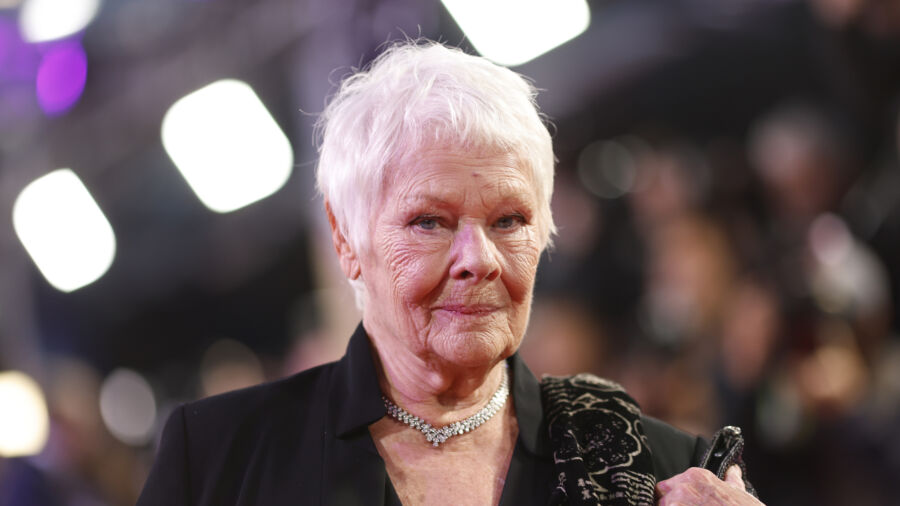
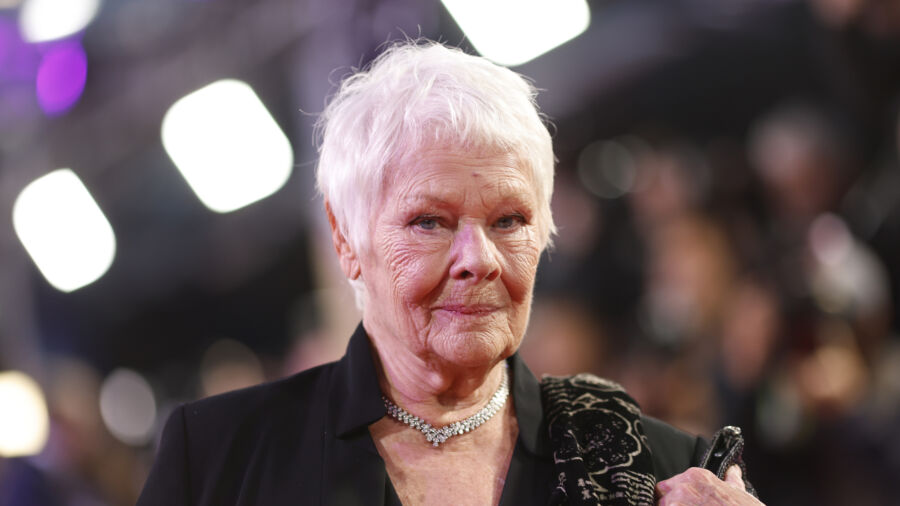
One of Europe’s leading entertainment companies announced a new talk show-style program featuring actress Judi Dench.
Dench, 90, was born in the British city of York in 1934 and made a name for herself in Shakespearean theatre plays before going on to portray “M” in the James Bond movie franchise.
“I can’t see,” Dench told the podcast host Trinny Woodall on Jan. 14. “I might walk into something and fall down. I have no eyesight.”
The 1999 Oscar winner shared in 2012 that she was diagnosed with macular degeneration.
Dench was award the Oscar for best supporting actress Oscar after playing Queen Elizabeth I in “Shakespeare in Love.”
Although macular degeneration does not cause pain and and leaves peripheral sight unaffected, the condition erodes central vision.
Dench’s resilience impresses disability experts like Kyle Ankney who says vision loss and other disabilities do not eliminate a person’s creative expression.
“Instead, it transforms into new forms,” Ankney told NTD. “Judi is a testament to the cultural shift we are witnessing. Her visibility challenges outdated assumptions and proves that disability and artistry can coexist at the highest levels.”
The 64-year old Branagh is known for directing and acting in film adaptations of “Henry V” and “Hamlet.”
The special program will feature Dench and Branagh at her home on the English countryside where they will talk about their lives and careers.
“Peppered with archive and anecdote, the program will provide personal biography and career highlights, along with lively conversation, funny insights and genuine candor and emotion,” Sky Arts head of entertainment Phil Edgar-Jones stated in the press release.
Talent and contribution are no longer defined solely by physical ability and society needs to understand that disability does not impact a person’s capabilities, according to Ankney.
“Judi’s decision to stop acting due to vision loss did not prevent her from using documentaries and hosting work to make a difference,” he added. “Society’s support, combined with openness enables individuals with disabilities to continue making valuable cultural contributions.”