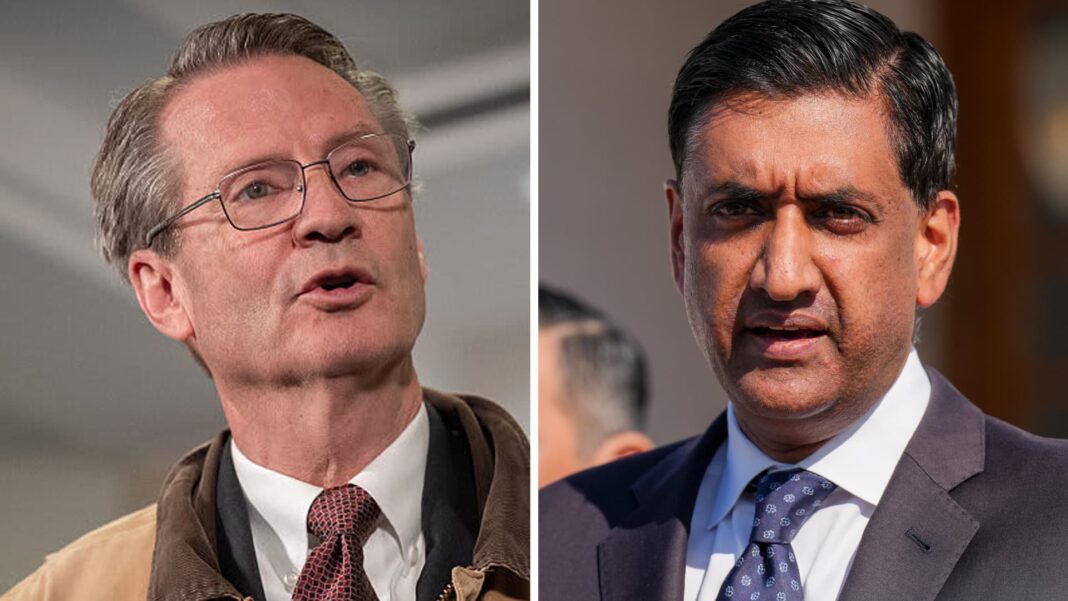
U.S. Rep. Ro Khanna, D-Calif., speaks to the media during a break in a closed-door deposition with former President Bill Clinton, outside the Chappaqua Performing Arts Center in Chappaqua, New York, Feb. 27, 2026.
Adam Gray | Bloomberg | Getty Images
Reps. Ro Khanna and Tim Burchett told CNBC this week they will introduce a new bill to commission a nationwide waste, fraud and abuse probe of state-administered programs that use federal funds.
The proposed bill, which was shared exclusively with CNBC, comes after reports of state-level welfare fraud erupted several months ago, drawing harsh condemnations from Republicans and some Democrats. The fraud allegations collided with proposals from Democrats to tax the rich to pay for expanded social services, which could send trillions of new dollars into federal coffers.
Khanna, D-Calif., who is separately leading Democrats on a bill to impose a federal wealth tax, told CNBC in December he would introduce the fraud probe as soon as he found a Republican cosponsor, after some of his longtime Silicon Valley supporters threatened to revolt over his embrace of such a tax. The bill introduction with Burchett, a conservative Republican from Tennessee, appears to make good on that promise.
“As a progressive Democrat, I fundamentally believe we need to show people that their tax dollars are going to be effective, that we’re actually going to use it to get people health care and child care and education and services,” Khanna said in an interview Wednesday. “We have to show that we’re going to be good stewards of taxpayer dollars, that taxpayers can trust that the money they’re giving is going to get to the working class.”
Despite saying his progressive ideals drive his push for an audit, Khanna insisted in the interview that the effort would be bipartisan and apolitical. Recent reports of alleged fraud were instrumental in kicking off the Trump administration’s immigration enforcement surge in Minnesota that resulted in the deaths of two American citizens.
“One of the things we both wanted to do was to make sure it’s not political,” Khanna said in the interview. “It will undermine our effort if this becomes a political bludgeon to go after Minnesota or my home state. There is an issue with federal programs that are high risk, and that is something that could happen in any state.”
Rep. Tim Burchett, R- Tenn., speaks to reporters following a closed briefing by Attorney General Pam Bondi and Deputy Attorney General Todd Blanche to the House Oversight Committee at the U.S. Capitol in Washington, March 18, 2026.
Nathan Posner | Anadolu | Getty Images
Burchett, in an interview Wednesday, agreed that the effort is geared more toward finding fraud than scoring political points.
“We need to find out, and the way you do it is an audit,” Burchett said, noting his political differences with Khanna.
“Ro is a pretty smart guy. We don’t agree on a lot, but honesty is one of those things I think we can get along with,” Burchett said.
In a statement, Burchett said, “Taxpayers need to trust that their hard-earned tax dollars are being spent and allocated wisely.”
Khanna has teamed up with Republicans before in high-profile instances. He was the lead Democrat on the law that compelled the release of files related to the late sex offender Jeffrey Epstein, a measure he cosponsored with Rep. Thomas Massie, R-Ky.
The new audit bill, dubbed the “Government Audit and Accountability of Federally Funded State-Administered Programs Act,” would require the comptroller general of the U.S. to compile a “High Risk List,” according to the text of the bill, viewed by CNBC. The list would identify the “program areas and administrative practices” that present the greatest risk to federal dollars being administered by state and local governments.
The Government Accountability Office would then be required to provide recommendations to Congress to address the high-risk areas.
In conducting the audit, GAO would scrutinize the findings of federal and state auditors, inspectors general and attorneys general, single audit reports, and other publicly available federal oversight and program integrity data, according to the bill’s text. The comptroller could also conduct independent analysis of publicly available federal program data, but would be constrained from compelling “the production of information from States or local governments or to conduct independent audits of State or local programs.”
“I don’t think there’s ever been an effort like this — to apply to all 50 states, to look at the auditing of federal funds and address people’s call for transparency on it,” Khanna said.