Published on
February 27, 2026

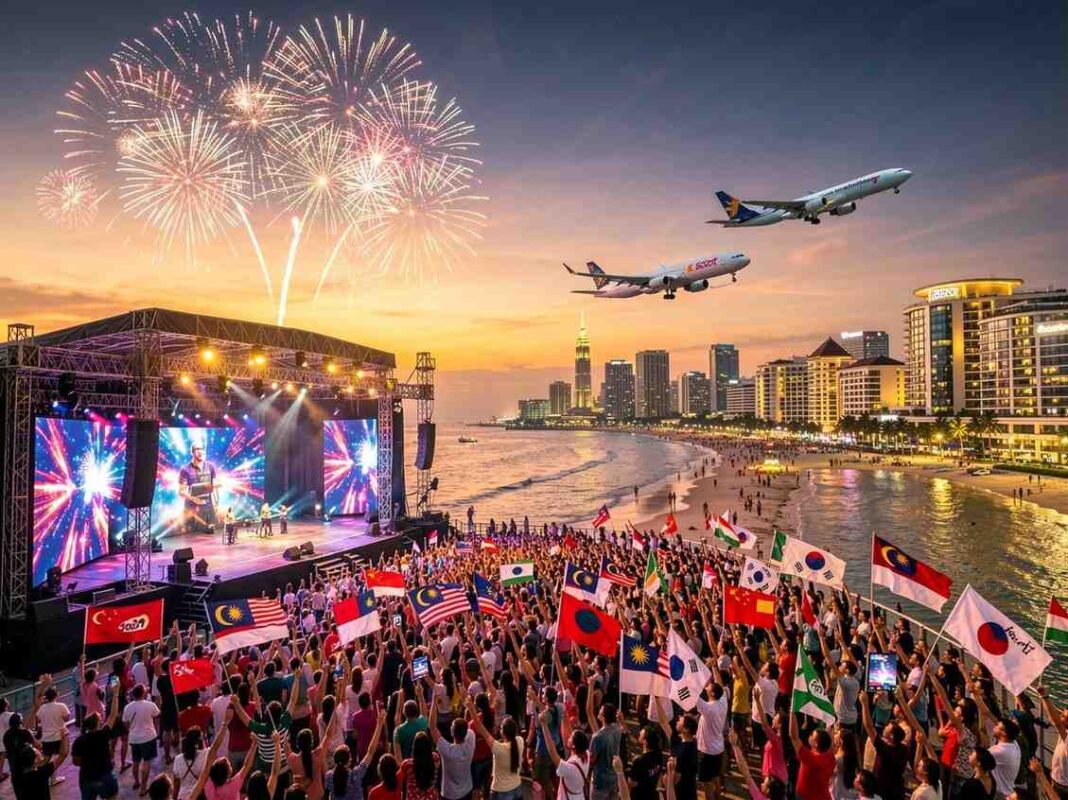
Image generated with Ai
Singapore joins Malaysia, India, China and South Korea in driving what could become one of Thailand’s most powerful entertainment-led travel surges in recent years, as Tomorrowland prepares to debut in Pattaya from December 11–13, 2026, with projected first-year economic impact of approximately 5.5 billion baht and an estimated 30 billion baht over five years. The timing is strategic and explosive. December is Thailand’s peak tourism month, and Bangkok’s main gateway, Suvarnabhumi Airport, handled more than 62 million passengers in 2025, underscoring the scale of existing demand even before a mega-festival enters the calendar. In early 2026 alone, Thailand recorded nearly six million international arrivals within weeks, with China, Malaysia, India and South Korea among its largest source markets—clear evidence that regional travel appetite remains strong. Against this backdrop, airlines such as Singapore Airlines and Scoot, alongside major regional carriers, are positioned to benefit from intensified short-haul weekend traffic, while global hotel groups including Accor and Marriott prepare for occupancy compression and higher room rates across Pattaya and Bangkok during one of the most competitive booking windows of the year. For travelers, this is not just another festival announcement. It is a high-demand December travel event that merges global entertainment branding with Thailand’s peak-season tourism engine, setting the stage for fuller flights, tighter hotel inventory and a multi-billion-baht boost to the country’s aviation and hospitality ecosystem.
Singapore Joins Malaysia, India, China and South Korea in Pattaya’s Mega-Festival Takeover — What Singapore Airlines & Scoot Mean for Weekend Getaways as Accor and Marriott Race to Lock In Room Rates
Thailand is preparing for one of the biggest entertainment-driven travel surges in its modern tourism history. Tomorrowland’s debut in Pattaya from December 11–13, 2026 is more than a music festival. It is a strategic tourism catalyst projected to generate approximately 5.5 billion baht in its first year and around 30 billion baht over five years. Officials expect roughly 150,000 attendees in year one, with daily crowds targeting about 50,000. The timing matters. December is Thailand’s peak travel month. Flights are full. Hotels are tight. Fares climb quickly. For travelers from Singapore, Malaysia, India, China and South Korea, this is not just an event. It is a high-demand travel window that requires smart planning.
Singapore Joins Malaysia, India, China and South Korea in Pattaya’s Mega-Festival Takeover as Airlines Prepare for Peak December Demand
Thailand welcomed nearly six million foreign visitors in the first weeks of 2026 alone, generating more than 290 billion baht in tourism revenue during that early period. China, Malaysia, India and South Korea ranked among the top inbound markets. Singapore remains a strong short-haul feeder with high per-capita outbound travel. When an event of this scale lands during high season, airline capacity tightens quickly.
Bangkok’s Suvarnabhumi Airport handled more than 62 million passengers in 2025, with December traditionally one of the busiest months. Add a global festival brand into that window and airlines anticipate stronger load factors. For Singapore travelers, Singapore Airlines and Scoot operate multiple daily services between Singapore and Bangkok. Flight time averages around 2 hours 20 minutes. With strong weekend demand patterns, Thursday and Friday departures typically sell out first.
Advertisement
Advertisement
Malaysia adds another layer of traffic. Malaysia Airlines and AirAsia operate dense frequencies between Kuala Lumpur and Bangkok. India connects through Air India, IndiGo and Thai Airways, offering nonstops from Delhi, Mumbai and other major metros. China contributes multiple carriers including Air China, China Eastern and China Southern. South Korea’s Korean Air and Asiana maintain consistent Bangkok service.
Airlines adjust pricing dynamically. High-demand weekends in December often show fare increases of 15 to 30 percent compared to shoulder months. Festival-driven traffic can push that even higher. Early booking is critical.
Advertisement
Advertisement
Singapore Joins Malaysia, India, China and South Korea in Pattaya’s Mega-Festival Takeover as Accor and Marriott Prepare for Occupancy Compression
Hotel markets in Thailand already operate at strong occupancy during peak season. Recent industry surveys showed national occupancy hovering in the mid to high 70 percent range heading into December. Pattaya, being a beach destination, performs strongly in winter months even without major events. Add 50,000 daily festival attendees and the impact becomes immediate.
International brands are positioned to benefit. Accor operates multiple properties in Pattaya under brands such as Pullman, Movenpick and ibis. Marriott International has a footprint across Pattaya and greater Bangkok with brands including Marriott, Renaissance and Courtyard. High demand typically drives average daily rates upward. Festival weekends can lift room rates by 20 to 40 percent depending on category.
Luxury resorts may package three-night minimum stays. Midscale hotels may enforce non-refundable policies. Boutique properties can sell out months in advance. Travelers should consider booking flexible rates early and monitoring cancellation windows for price adjustments.
Airlines Gain Yield Power During Festival Windows
Airline revenue management thrives in event-driven travel periods. Singapore Airlines and Scoot may not publicly tie capacity increases directly to a festival, but booking curves reflect demand spikes. High leisure demand during peak season allows carriers to optimize yields.
Regional travelers from Singapore or Kuala Lumpur often book short three to four-night itineraries. Indian and Korean travelers may extend stays to five to seven nights, combining the festival with Bangkok shopping or island excursions. Chinese travelers increasingly mix entertainment with premium retail tourism.
Secondary airports matter too. U-Tapao International Airport near Pattaya offers closer access to the festival site. While most long-haul flights land at Suvarnabhumi, regional charters or additional services may use U-Tapao to ease congestion.
Hospitality Industry Sees Revenue Beyond Rooms
Hotel revenue does not stop at room rates. Food and beverage spending rises during festival periods. Rooftop bars in Pattaya and Bangkok can see strong evening demand before and after festival days. Spa bookings increase as travelers seek recovery treatments. Transportation services including hotel shuttles and private transfers see higher bookings.
Event-led tourism also supports short-term rentals. However, international travelers often prefer branded hotels for convenience and loyalty benefits. Marriott Bonvoy and Accor Live Limitless members may redeem points, but blackout dates are common during peak demand.
Thailand’s Strategic Tourism Push Gains Momentum
Thailand’s tourism authorities aim for around 36 to 37 million foreign visitors in 2026, targeting roughly three trillion baht in tourism revenue. Large-scale global events align with this strategy. Entertainment tourism expands Thailand’s positioning beyond beaches and temples. It reinforces the country as a creative and festival hub in Asia.
Job creation estimates for Tomorrowland’s first year reach nearly 1,900 positions, including event operations and hospitality roles. Long-term projections of 30 billion baht over five years reflect spillover spending in transport, retail and accommodation sectors.
What Singapore Travelers Should Know Before Booking
Singapore residents benefit from visa-free short stays in Thailand. Flights are frequent and short. However, peak-season congestion means airport arrival times should be conservative. Suvarnabhumi can experience heavy queues in December evenings.
Consider flying early morning outbound on Thursday or late Sunday return to avoid the heaviest peak waves. Scoot offers competitive fares but may have stricter baggage rules. Singapore Airlines provides full-service options and lounge access for premium cabins.
Book airport transfers in advance. Pattaya sits roughly 90 to 120 minutes by road from Bangkok depending on traffic. Private transfers reduce uncertainty. Ride-hailing apps operate widely but surge pricing can apply during large events.
Malaysia, India, China and South Korea Add Regional Demand Pressure
Malaysia’s proximity makes weekend travel easy. AirAsia and Malaysia Airlines operate multiple daily departures, keeping fares competitive outside peak spikes. Indian travelers face longer flight times but strong connectivity via Delhi and Mumbai. IndiGo’s expanding international footprint increases seat supply, but December pricing can climb quickly.
Chinese outbound tourism has rebounded strongly in recent years, and Thailand remains a preferred destination. South Korean travelers maintain consistent interest in Thailand’s beaches and nightlife. A festival of this scale attracts younger demographics, pushing airline demand toward economy cabins while still supporting premium leisure travel.
Travel Tips to Manage High-Demand Travel
Book flights at least three to four months in advance. Monitor fare alerts. Choose refundable or changeable tickets if possible. Reserve hotels immediately after securing tickets. Consider splitting stays between Pattaya and Bangkok to reduce accommodation risk.
Travel insurance is advisable during peak season. Weather in December is generally dry and comfortable, making it one of Thailand’s most popular travel periods. Lightweight clothing is ideal, but festival nights can stretch long. Plan hydration and transport logistics carefully.
Beyond the Festival: Extend the Trip
Combine the event with Bangkok city exploration. Visit cultural landmarks, shop in Siam or explore riverside dining. From Pattaya, consider day trips to nearby islands or coastal towns. Multi-destination itineraries justify long-haul travel costs for Indian, Chinese and Korean visitors.
Economic Impact Ripples Across the Travel Ecosystem
Projected first-year revenue of 5.5 billion baht reflects direct and indirect spending. Airlines capture ticket revenue. Hotels benefit from occupancy compression. Restaurants, retail outlets and transport operators see incremental demand. Over five years, 30 billion baht in projected impact strengthens Thailand’s event-driven tourism portfolio.
For airlines such as Singapore Airlines and Scoot, festival-driven travel reinforces Singapore–Thailand corridor strength. For hospitality giants like Accor and Marriott, Pattaya becomes a revenue-intensive weekend. For travelers, it becomes a competitive booking window.
Plan Early. Travel Smart. Expect Crowds.
December 2026 will not be an ordinary month in Pattaya. Singapore joins Malaysia, India, China and South Korea in fueling a high-energy travel surge. Airlines will see fuller cabins. Hotels will see higher rates. Thailand will see billions in projected economic activity.
Singapore joins Malaysia, India, China and South Korea in powering a massive December travel surge as Tomorrowland debuts in Pattaya, with projections of 5.5 billion baht in first-year economic impact and 30 billion baht over five years.
With Thailand already welcoming nearly six million foreign visitors in early 2026 and December marking peak season, airlines and global hotel giants are bracing for tighter seats, higher room rates and one of the year’s most competitive booking windows.
For tourists, preparation is everything. Secure flights early. Lock in accommodation quickly. Monitor pricing trends. Use loyalty programs wisely. With careful planning, travelers can experience both a global music spectacle and Thailand’s enduring hospitality at its vibrant best.