Published on
March 24, 2026

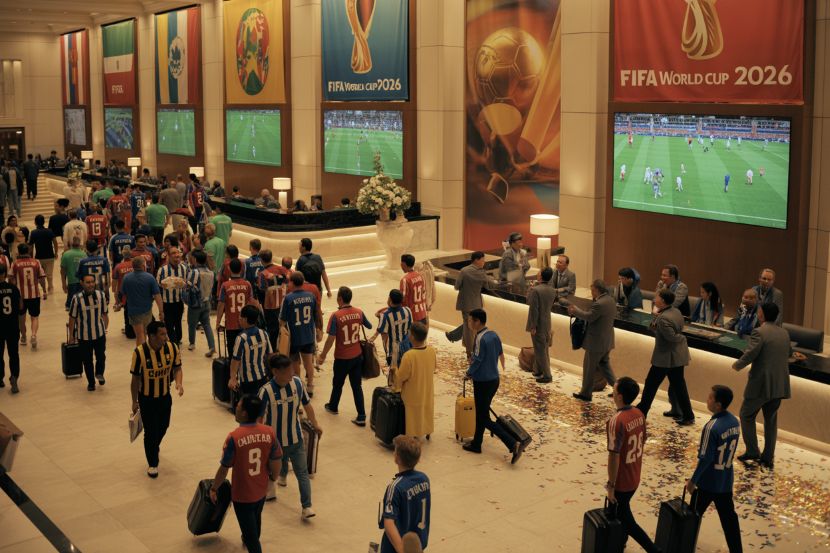
Image generated with Ai
With just under 100 days until the 2026 FIFA World Cup kicks off in the United States, the U.S. hospitality sector is adjusting expectations as the global event approaches. While the tournament still holds great potential to drive demand, a new study by OysterLink suggests that the anticipated boost may not meet the earlier, more optimistic forecasts. As hospitality operators prepare for the World Cup, factors such as softer booking trends, staffing concerns, and operational challenges are leading to more measured projections for hotel performance.
Modest Expectations for Hotel Demand
According to OysterLink’s analysis, national revenue per available room (RevPAR) is expected to see a modest increase of just 1.7% during the World Cup months. This marks a more conservative outlook compared to previous World Cup events, where the hospitality industry saw a more significant surge in demand.
While the World Cup traditionally drives substantial hotel bookings, early forecasts and booking data show a lower-than-expected demand. This trend has caused operators to rethink their strategies, moving away from aggressive event-based pricing and booking restrictions, which were common in past tournaments. Instead, many hotels are choosing to treat the World Cup more like a high-demand summer period, adjusting their rates and reopening rooms to general travelers in response to slower-than-expected booking trends.
Early Booking Trends and Strategy Shifts
Some of the host cities have reported that the previously reserved FIFA room blocks have seen minimal occupancy, with some markets reaching only 15% occupancy for these allocations. This has prompted hotels to adapt quickly, offering flexibility by relaxing booking restrictions and re-evaluating pricing models.
Operational Readiness and Workforce Concerns
One of the significant concerns highlighted in OysterLink’s study is operational readiness. In major host cities like Dallas-Fort Worth, hospitality leaders are viewing the World Cup as a “stress test” for staffing, service, and infrastructure. Despite recent job growth in the hospitality sector, there remain concerns about whether the workforce can scale quickly enough to meet the high demand during the tournament.
Several external factors are contributing to this uncertainty. International travel, which traditionally drives World Cup tourism spending, has shown signs of weakness. Visa processing delays, geopolitical tensions, and increased travel costs could limit the number of inbound international visitors. This shift might place more reliance on domestic tourists, who generally spend less per trip compared to their international counterparts.
Advertisement
Advertisement
Uneven Demand: A Two-Phase Pattern
OysterLink predicts that the demand for hotel rooms will not be evenly spread throughout the tournament. Instead, it is expected to concentrate around match days and major cities, creating a “two-phase” pattern of demand. Initially, there may be a slower buildup of bookings, followed by a surge in demand during the knockout stages of the tournament, as excitement and engagement reach their peak.
Despite the challenges, the World Cup is still expected to provide meaningful business opportunities for the hospitality industry. However, the success of operators will depend less on sheer volume and more on their ability to adapt quickly to changing conditions, as they respond to booking trends and operational challenges in real-time.
Strategic Adaptation Key to Success
While the overall demand may be more modest than anticipated, OysterLink emphasizes that there are still opportunities for hospitality businesses to capitalize on the World Cup. Success will rely heavily on operators’ flexibility and ability to adapt to the demand shifts and unpredictable market conditions that the tournament may bring.
About OysterLink
OysterLink is a prominent job platform dedicated to the restaurant and hospitality sectors, connecting over 400,000 professionals with job opportunities across the U.S. The platform also publishes insightful trend reports, interviews with industry leaders, and data-driven analyses to help businesses and professionals navigate the evolving hospitality landscape.
Advertisement
Advertisement