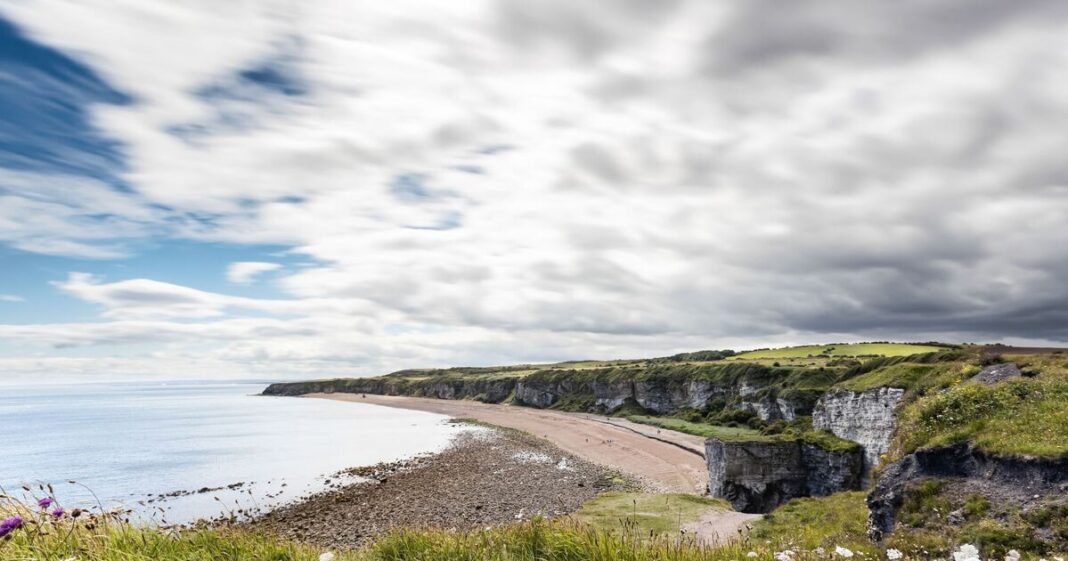

Horden is part of the rugged County Durham coastline. (Image: Getty)
The derelict streets, wind-swept by the bracing North Sea air, were once the envy of the community, teeming with life. At its peak in the 1950s some 15,000 people lived in this seaside town with about 4,000 employed in the mines.
But since the pits closed almost four decades ago, residents describe a slow and pained decline as people struggled to get well-paid, stable employment.
The population has now halved, and child poverty is double the national average. “Just push us into the sea,” one woman told the BBC.
Things have gotten so bad in this town that one local primary school can’t let its children out into the playground because of the smell of cannabis growing at nearby properties

Horden is a former mining village by the sea. (Image: Iain Buist/Newcastle Chronicle)
Horden is a village situated on the North Sea coast in County Durham, to the east of Peterlee and approximately 12 miles south of Sunderland.
Since closure of the mine in 1987, Horden’s population has fallen to around 8,500 (according to the 2001 census) and it now suffers high unemployment, higher than average health issues and problems with poor housing stock. In addition, Horden has gradually lost most of its services and amenities including Police and Fire Stations, a secondary school, many local shops and cinemas.
However its railway station reopened in June 2020 creating links to Newcastle and Whitby. Primary and nursery schools remain, including Horden Nursery School, Cotsford Primary School, Yohden Primary School and Our Lady Star of the Sea Primary School.
According to the BBC: “In an area where voting Tory was seen as a sin after their closure of the mines, Reform UK have swept in, hoovering up the votes of the forgotten and the disaffected. They won two-thirds of seats in County Durham in last May’s councils elections, with the Liberal Democrats coming second. Seven out of the eight seats in east Durham’s mining villages went to Reform UK.”

Police outside a property on Seventh Avenue in Horden (Image: Simon Greener/Newcastle Chronicle)
Horden has become an area councils send poor people to looking for a cheap place to house them. They are only told where they were heading by their taxi driver, and six hours later were dropped off in a place they’d never heard of in a county they’d never visited.
Ex-prisoners arrive here too because of the cheap rents. The properties are often owned by absent landlords, after the pit houses were sold off to the highest bidder, sometimes for as little as £15,000.
But one mother at a local church community centre, The Ark, said she “wouldn’t want to bring her kids up anywhere else”, but believes the area is being damaged by “people from out of the village” who buy houses “but don’t maintain them. There are houses that have the windows out and all the pigeons are in them.”
Another woman at the centre added: “I don’t think it’s going to get better in the near future, I really don’t.”
At the Castle Dene shopping centre in Horden whole swathes of shops are boarded up. On either side lie two run-down empty tower blocks, with broken windows and walls blackened by fire damage.
However it isn’t all bad news for Horden. Peterlee will receive £20m investment over 10 years under the government’s Pride in Place Programme.
The council’s £10.7m ‘Horden Masterplan’, developed before Reform’s victory, will see three streets near Cotsford Primary demolished and replaced with 100 new homes.
However according to the BBC Brexit has removed a key source of funding, which the area desperately needs. County Durham received £154m of EU funding between 2014 and 2020, about £22m a year. Since the UK left the European Union, it receives about half that amount, £12m annually, under the UK Shared Prosperity Fund.

Boarded up homes in Third Street in Horden. (Image: Craig Connor/ChronicleLive)
Residents remain despondent and angry. Pat, 64, told the BBC the village has been left to “disintegrate” and believes the role of the EU was misunderstood. “Everybody thought the EU was about people coming into the country. They didn’t portray what benefits we were having.”
Dawn Bellingham is one of the Reform councillors now trying to change her community. She admitted: “We’ve got our own problems, like everywhere, and we try to manage that for the people of Horden. And then there’s more people coming in on top of that.”
“We need investment. The Northern Powerhouse, or Levelling Up and all of this sort of thing didn’t seem to sweep as far as the east coast of County Durham.”
Back in the day Horden Colliery was one of the biggest mines in the country. Since then Horden has benefited from the removal of mining spoil heaps and the redevelopment of its Welfare Park (which houses Horden’s rugby, cricket and football teams).
The Welfare and Memorial Parks are both currently designated Green Flag Parks with the Welfare Park also recognised with the Green Heritage Award one of only four in the North East of England. The Colliery Welfare Park was originally funded by the miners themselves in the 1920s who paid an amount of money from their wages. At one time there was a swimming pool filled with water pumped out from the mine.
But perhaps the best thing about Horden is Horden Beach which forms part of the Durham Coastline, known for its rugged, scenic cliff walks. An online review of Horden Beach said: “Horden Beach is a tranquil seaside destination located in Peterlee. Visitors appreciate its beautiful coastline and peaceful atmosphere, making it an ideal spot for leisurely walks and family outings.
“Although the beach has its charm, some guests have noted cleanliness issues due to litter left behind by others. The area provides free parking nearby, enhancing accessibility for those looking to enjoy nature.”