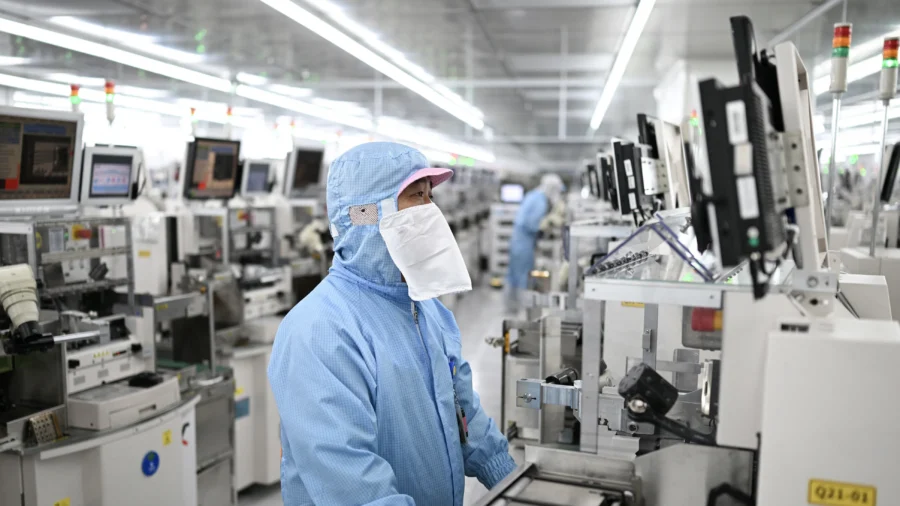
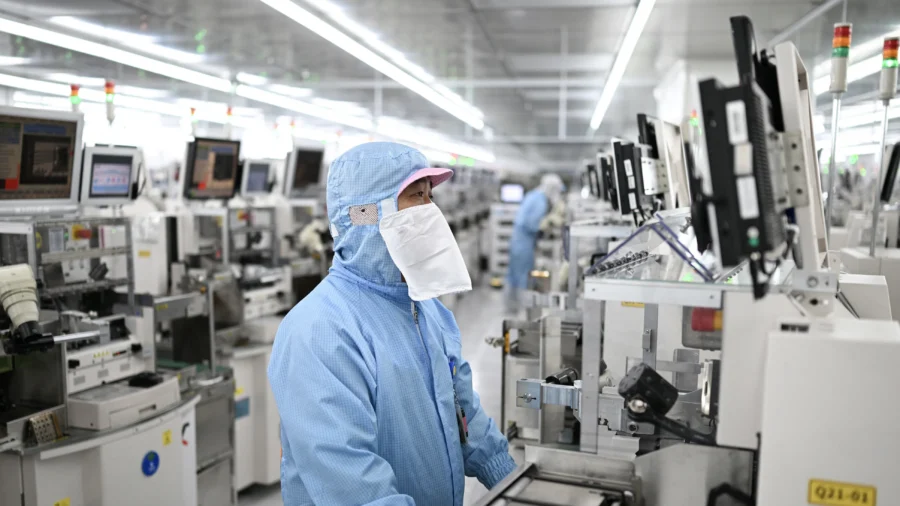
The office under the Biden administration had initiated the investigation one year ago. The USTR stated that zero percent tariffs will go into effect on Dec. 23, increasing to “a rate to be announced” in 18 months, which the office will be required to specify 30 days before the tariff goes into effect.
The investigation found that China’s targeting of the semiconductor industry for dominance involved “increasingly aggressive and sweeping non-market policies and practices” and “is unreasonable and burdens or restricts U.S. commerce and thus is actionable.”
It found that under China’s state-led, top-down economy, the regime publishes plans outlining these non-market practices. According to the investigation, China has come out with more than 100 such plans for semiconductors in the past 25 years.
The USTR noted that the Chinese regime did not cooperate with the investigation.
“China’s targeting of the semiconductor industry is unreasonable because China exerts extraordinary control over the semiconductor industry, and other economic actors, in order to achieve its targeted dominance, including through political guidance, directives, and control within state and private enterprises … [and] activities of state-owned or state-controlled enterprises,” the USTR stated in the report.
“Adherence to the objectives of China’s industrial plans is effectively mandatory.”
The USTR found that China’s non-market practices include not only state subsidies of industries, but also forced technology transfer, intellectual property theft, and discriminatory regulations.
China’s dominance of the sector also creates, accelerates, and exploits dependencies, according to the report, with the goal of increasing “the world’s dependence on [Chinese] companies, products, services, and technologies.”
The report cites Beijing’s willingness to weaponize its dominance in critical minerals, finding that China’s aim to dominate semiconductors is a risk.
“China’s targeting for dominance contributes to lost sales, chronic underinvestment in numerous segments, and a diminished U.S. industry, constituting a burden and restriction on U.S. commerce,” the USTR stated in the report.
Although China cannot manufacture the most advanced chips because of U.S. export controls on artificial intelligence technology, industry analysts say the country produces billions of larger chips that are critical to consumer electronics. Foreign companies also have chip manufacturing plants inside China.
The industry expressed concern over Chinese nonmarket practices, including state subsidies, dumping, and Chinese laws that discriminate against foreign companies.