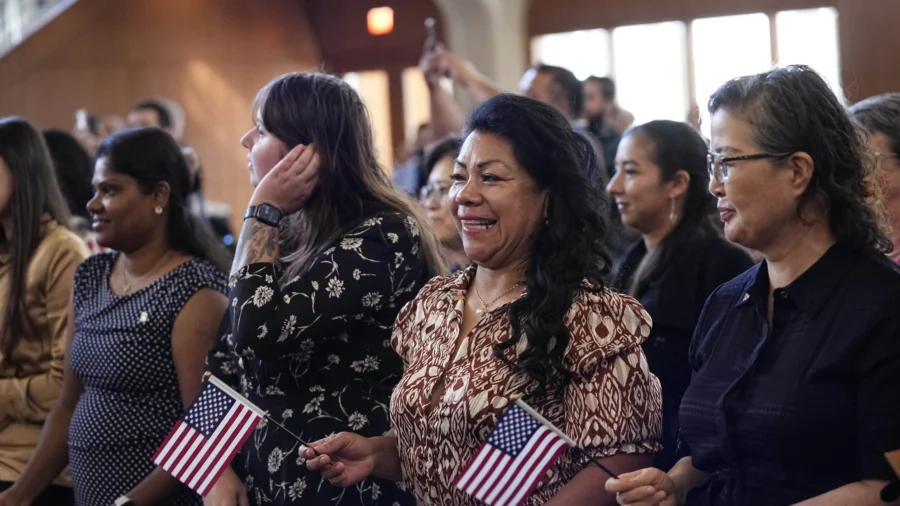
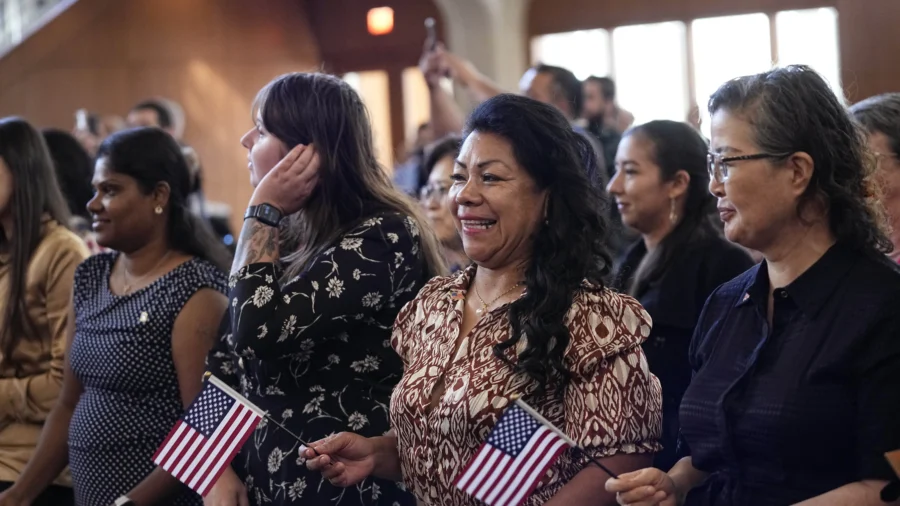
U.S. Citizenship and Immigration Services (USCIS) on Friday issued a memorandum—titled Restoring a Rigorous, Holistic, and Comprehensive Good Moral Character Evaluation Standard for Aliens Applying for Naturalization—signaling a major change in how applicants are reviewed for citizenship.
Before the early 1990s, the bars in Immigration and Nationality Act (INA) Section 101(f)—serious crimes like murder, genocide, or aggravated felonies—meant an applicant could be disqualified from naturalization. Avoiding these barred acts was necessary. However, officers would also look at the person’s overall behavior, character, and contributions, not just a checklist.
Officers also considered positive factors like rehabilitative evidence, volunteer service, and family responsibilities in weighing GMC.
After the 1990 Immigration Act and the later Illegal Immigration Reform and Immigrant Responsibility Act, new fixed bars for crimes like drug offenses and fraud created a more rigid, checklist-style review. The 2025 memo restores a holistic approach, letting officers weigh both negative actions and positive contributions when determining an applicant’s moral character.
The memo cites two immigration cases to reinforce its approach. Hussein v. Barrett emphasized weighing both negative actions and positive factors like education, work, and family responsibilities. Matter of Castillo-Perez confirmed that repeated offenses, such as multiple DUIs, can count against an applicant unless there is clear evidence of rehabilitation.
While the INA does not define “good moral character,” it includes a list of disqualifying behaviors under Section 101(f). “Although a ‘moral conventions’ test may sometimes be ‘difficult’ to apply, that does not mean it lacks discernible content,” states the policy memo.
Under the 2025 policy, USCIS officers are directed to take a totality-of-circumstances approach, giving weight to positive attributes as well as any misconduct. Factors now emphasized include sustained community involvement, family caregiving, educational attainment, stable employment, lawful residence, and compliance with taxes and other financial responsibilities.
The goal is to ensure applicants have demonstrated that they are worthy of the rights and responsibilities of U.S. citizenship, rather than simply avoiding disqualifying acts, according to the new policy.
The memo also calls for greater scrutiny of disqualifying behavior when evaluating good moral character. USCIS will pay closer attention to whether an applicant has engaged in conduct that could bar them from citizenship, as officers are expected to carefully review such behavior alongside other factors to determine if an applicant meets the standard for naturalization.
This includes permanent disqualifiers such as murder, aggravated felonies, violent crimes, persecution, genocide, torture, or severe violations of religious freedom.
Conditional bars, which officers can look at with a totality-of-circumstances approach, include controlled substance violations, multiple DUI convictions, false claims to U.S. citizenship, and unlawful voting or voter registration. The policy memo states that officers can also consider other acts that, while technically legal, deviate from community norms, such as habitual traffic violations or aggressive solicitation.
“In assessing acts that are unlawful or contrary to the average behavior of citizens of the community in which the alien resides USCIS will review all available documentation and question aliens seeking naturalization regarding the specific circumstances of their actions to determine if a particular situation or act should bar an alien from naturalization,” states the memo.
With regards to rehabilitation and reformation, the USCIS says that it will give greater attention to applicants who have corrected past mistakes, such as paying overdue child support or taxes, completing probation, or contributing positively to their community. According to the policy, this approach will allow applicants to present their full story and demonstrate “how their life aligns with a pattern of behavior that is consistent with the current ethical standards and expectations of the community in which they reside.”