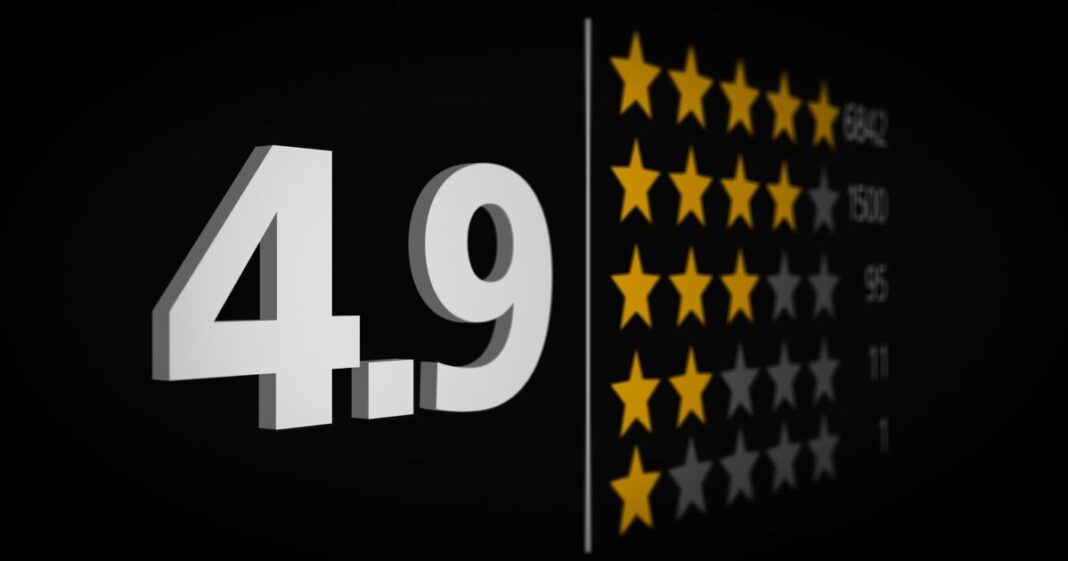

A 4.9 rating isn’t always a sign of excellence, Daniel Mohacek says (Image: Getty)
As consumers, we’ve been trained to believe that a 4.9-star review rating is the gold standard for businesses, a sign they can be fully trusted to deliver a truly excellent quality product or service – but in reality should we be treating a 4.9 score as the biggest warning sign of all?
Whether choosing a new energy provider, booking a holiday, or buying a washing machine, a rating of 5 out of 5 feels deeply reassuring.
But increasingly, that reassurance is misplaced.
TruthEngine® has analysed millions of online reviews over five years and found that in many sectors more than half of them are now fake – and AI is only making the problem worse.
We are now at the point where everyone should fundamentally alter how they use and trust ratings.
The uncomfortable truth is that a 4.9 score often isn’t always evidence of excellence, it may actually point more to evidence of deliberate manipulation to mislead consumers. In the real world, almost no product or service delivers perfection at scale.
A business that appears universally adored should raise eyebrows, not confidence.
READ MORE: Martin Lewis says to ‘always’ follow three-step process
READ MORE: HMRC issues new refund alert to Brits – ‘check if you’re owed’

Daniel Mohacek has spoken exclusively to the Express (Image: Daniel Mohacek)
Research shows customers are more motivated and more likely to leave reviews after bad experiences rather than good ones and this historically pulled ratings down.
Over the past few years, that imbalance has been artificially “corrected” by companies flooding platforms with positive reviews. What was once a skew towards negativity in online reviews has become a skew towards artificial perfection.
AI has accelerated the problem. Generating hundreds or even thousands of plausible, enthusiastic but fake reviews is now cheap, fast and increasingly difficult for consumers to spot.
The irony is that genuinely trustworthy businesses will often look less impressive: averaging in the 2 to 3-star range. While not glamorous, this score is more likely to reflect authenticity.
A mixture of praise and criticism in a company’s reviews suggests real customers, genuine experiences, and a company that hasn’t polished away every flaw.
Review manipulation matters far beyond disappointing meals or hotel stays. Every single day, consumers make important spending decisions about products and services based on online reviews that are increasingly fabricated.
The stakes are high for businesses too – knowingly faking reviews is now illegal and can carry a penalty of crippling fines. Too few know this and so many continue to manipulate their reviews.
So what should consumers do? The answer isn’t to ignore reviews entirely, but to read them differently. Be wary of companies with a 5-star rating, instead, dive into the reviews, look at the 2s, 3s and 4s where TruthEngine’s research shows the reviews are more trustworthy.
In a marketplace obsessed with stars, the smartest move may be to trust what doesn’t shine quite so brightly.