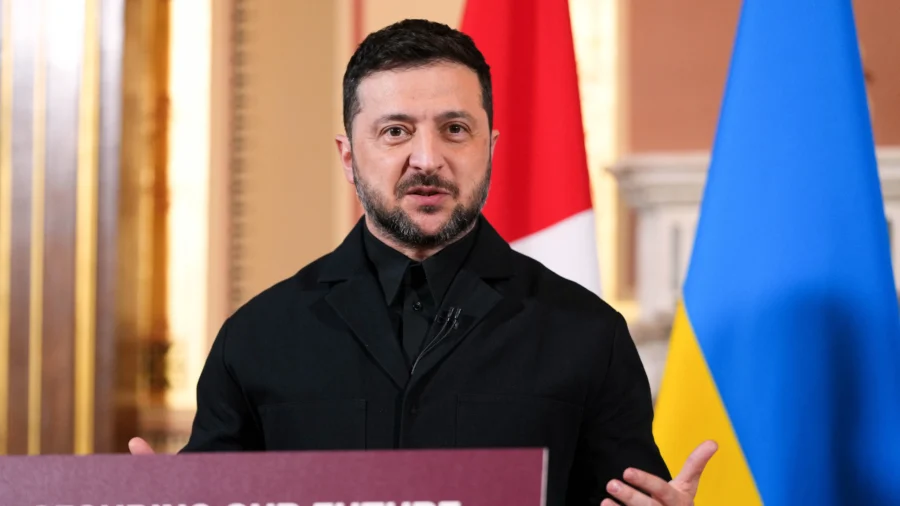
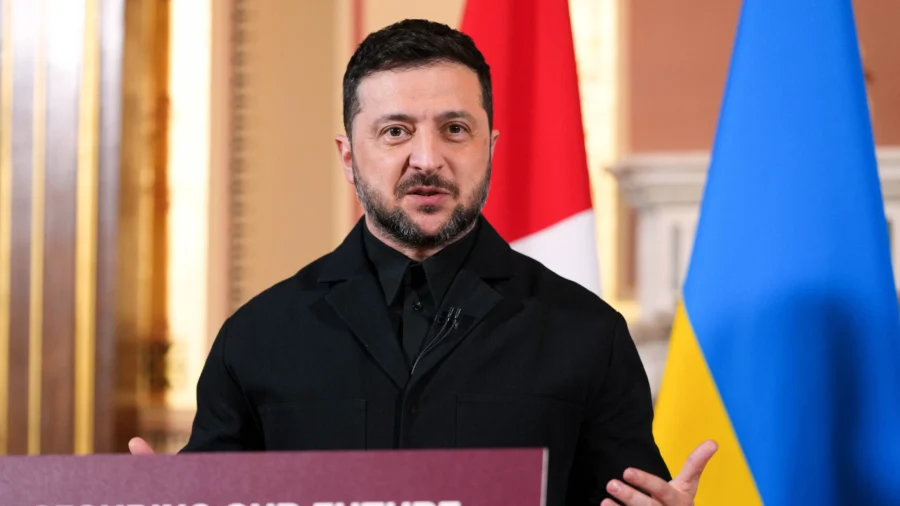
Ukrainian President Volodymyr Zelenskyy pushed for progress on his country’s accession to the European Union (EU) during a meeting with the new president of the Council of the EU on Jan. 7.
Following his meeting, the Ukrainian president said in a post on X that he was working with Christodoulides “to make as much progress as possible during this period on opening negotiating clusters and on Ukraine’s accession to the European Union.”
He added that he and the Cypriot president discussed strengthening sanctions against Russia, reinforcing air defenses, and the production and supply of drones.
Christodoulides said in a post on X that he had had a productive meeting with his Ukrainian counterpart.
“Cyprus reaffirms its steadfast commitment to Ukraine’s sovereignty and territorial integrity,” Christodoulides said. “As a country that still lives with the consequences of illegal invasion and ongoing military occupation, we fully understand what is at stake.”
He added that Ukraine will be a “central priority” of Cyprus’s EU presidency, “and will work to ensure sustained support at all levels.”
The Council of the EU is one of the key institutions of the bloc, where national ministers from each of the 27 member states meet to discuss and adopt EU law. It operates a rotating six-month presidency, with Cyprus’s president leading the institution until June 30.
EU Committed to Expansion
In its statement of priorities for this term, Cyprus said it was “firmly committed” to advancing Brussels’ agenda of expanding the bloc’s membership.
In Ukraine’s individual report, the EU praised Kyiv for its resilience and commitment to its path to membership, despite the ongoing war with Russia. However, it said that Ukraine still needed to do more to tackle corruption.
Brussels highlighted the adoption of a contentious law in July that it said dismantled “important safeguards for the independence” of Ukraine’s anti-corruption institutions.
Corruption Concerns
The EU then renewed its warning to Kyiv to tackle corruption on Nov. 13 following the uncovering and investigation of a graft scandal in the nation’s energy sector. The scandal had centered on an alleged corruption scheme involving Energoatom, a state enterprise running all four of the country’s nuclear power plants.
Guy Birchall contributed to this report.