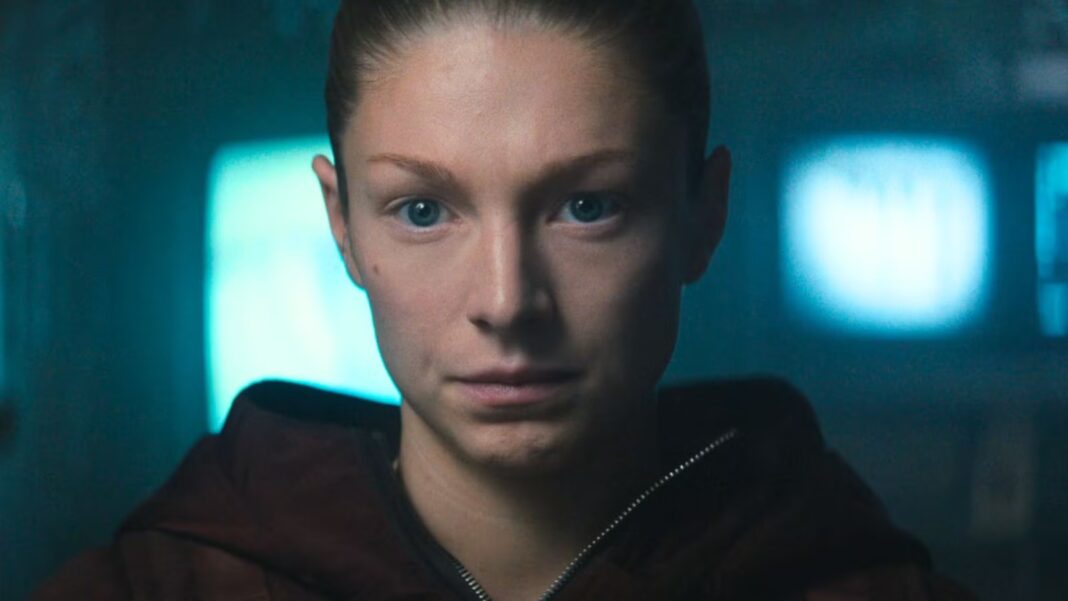
Warning! Spoilers ahead for Blade Runner 2099!Pretty much as soon as it has arrived, Blade Runner 2099 is over. With Prime Video dropping all eight episodes of the miniseries at once, the streaming platform has essentially treated the project as a gargantuan straight-to-TV movie. The story takes Hunter Shafer’s Cora and company through a philosophical sci-fi journey that does both of its feature-length predecessors justice.
However, although Blade Runner 2099 is being billed as a standalone limited series, and showrunner Silka Luisa is confirming there are no plans to make a Season 2, the finale ends with some pretty stark loose ends. It still feels intentional to wrap things up in this way, as the Blade Runner movies adopted a similar blueprint in their final moments. Still, there’s a lot to dig into, and an obvious potential for more episodes.
Why Cora Remains a Blade Runner
She Has Nowhere Else To Hide

Blade Runner 2099’s core premise is that Cora, a human, is forced to go undercover as a Replicant. Her mission, while masquerading as a Blade Runner, is to recover a memory from the late Eldon Tyrell, which holds the information on how to build the functionally immortal Nexus-1 model. By the end of the finale, “Share the Fantasy,” the memory is destroyed.
In most other stories, this would be cause for the protagonist to return to her old life. That’s not an option for Cora. Because she’d already been a fugitive from the Blade Runners for years when we first met her, the very reason she risked her life in the first place was to trade the memory for visas for her and her brother to leave LA and escape to Mexico City. It was a last-ditch option because she had nowhere else to go.
By the end of the series, nothing has really changed for her in this respect. If anything, things have gotten worse. LAPD knows her as a Replicant, and she’s left unable to live in obscurity anymore as a human. Her only real choice is to stay hidden in plain sight from the very people who are hunting her. Maybe eventually she’ll escape off-world and hide, which would mirror the catalyzing incident of the original Blade Runner movie.
Why Elias Claims Responsibility for Destroying the Replicants’ Birthing Center
His Bold Speech Gives the Humans Hope

One of the biggest worldbuilding elements in Blade Runner 2099 is that the iconic pyramid-shaped building that was once the Tyrell headquarters is now under Replicant control. It’s become the place where most Replicants are “born” and where they go to die when their pre-set time comes. Even bigger than this change of ownership is Julius (Tom Burke) blowing it up.
Julius wants to be the only source of new Replicants, all of whom he plans to be Nexus-1s like him. It’s an easy motivation to parse. What’s slightly trickier to figure out is why, out of nowhere, Elias (Lewis Gribben) takes to the airwaves in the finale to claim responsibility. His incredible monologue does explain his actions, though.
“Every home I’ve had was a prison. Somewhere I could never leave or I’d be caught. And a prisoner only has one enemy. Time. The fear of when. When will I not be able to run anymore? When will they find me? When will my time come? Replicants think our days are over. It’s only a matter of when. But I said, ‘not today.’ I destroyed their birthing center. Burned it down. I’m the one they’re looking for. But I won’t be their prisoner anymore. I took my time back. What will you do when they come and ask you, ‘when?'”
– Elias’ speech in “Share the Fantasy”
Elias makes it clear that he’s sick of hiding in the shadows under Replicant rule. Still, there’s very little he can do about it. The best he has is to make Julius’ actions look like a powerful sign of human defiance, even if it means Elias himself becoming the Blade Runners’ number one target. It’s a bold and selfless move that will surely result in his imminent demise. What’s especially dark here is that, with Cora still a Blade Runner, Elias’ actions have inevitably put him and his sister on opposite sides of the war.
Where Olwen Goes After Becoming a Nexus-1
The Birther of Worlds Leaves Earth Behind


Even though she loses Marek (Johnny Harris) during the course of the story, Olwen (Michelle Yeoh) gets the closest thing Blade Runner 2099 has to a happy ending. After being reborn as a Nexus-1, the finale reveals Olwen back among the stars as she’d always dreamed. Exactly where she goes remains a mystery, though. All we know is that she’s approaching a new planet.
The Blade Runner franchise has always been incredibly resistant to showing anything away from Earth, despite constantly referencing off-world settings. This keeps the focus on the human homeworld where the friction between humans and Replicants is the strongest. The Amazon series is a major outlier in this respect. Even brief glimpses of other planets are a massive development.
Ray Looks Primed to Reverse Engineer the Nexus-1
Tyrell’s Twisted Rebirth Appears Imminent
-
 Prime Video
-
 Prime Video
-
 Prime Video
This moment in the finale is the strongest sign that Blade Runner 2099 probably has more stories left to tell. Ray (Maurizio Lombardi) clearly looks pleased to locate Julius’ remains. Ray is desperate to find the Nexus-1 plans throughout the show, and although he fails to obtain them, recovering Julius’ body is probably just as good.
After being believed to be an independent buyer who wants to use Tyrell’s memory to bring down all Replicants, Blade Runner 2099 takes a sharp left turn near the end of the series, revealing that Ray is leading an attempt to resurrect the Tyrell Corporation. Rather than birthing new Replicants, though, Ray wants to control existing ones by possessing the one thing they want: the potential for more life.
There is also the possibility that Ray and Julius were in league with each other. Both would have wanted the birthing center destroyed for different reasons, so it makes sense that they would work together to make it happen in an uneasy alliance. Maybe the smile on Ray’s face in this scene is because Julius is dealt with, and Ray is now free to exploit Replicants in a way that Julius wouldn’t have allowed.
Why the Replicants Use Human Children for the Voight-Kampff Test
The Idea of Empathy Is Still Central to the ‘Blade Runner’ Franchise

Replicants are born as adults, and therefore have no children in the traditional sense. Rachael (Sean Young) and Deckard’s (Harrison Ford) daughter in Blade Runner 2049 is still the only exception. However, the Amazon series reveals that the Replicants do value children, specifically human ones. It’s not exactly a wholesome sort of value, though.
Greta is one of many children sold by their parents to the Replicants so that Voight-Kampff tests can be carried out on other Replicants. Because they are grown and not born, they lack genuine childhood memories, which is why Replicants lack the same level of empathy that humans do. Because the Voight-Kampff test was designed by humans to measure baseline empathy levels, Replicants struggle to accurately interpret the results and figure out if someone is human or Replicant.
The place where Greta is trained is called the Voight-Kampff Institute.
While Replicants would struggle to make adult humans fall in line and do their jobs honestly, they do successfully use human children because they are easier to train and manipulate. That said, Greta does show clear signs of dissent and rebellion by concealing Cora’s failed test results.
What the Blade Runners didn’t seem to consider is that a child having empathy can, and does, go against the very purpose they’re hired for. Plus, the fact that Olwen also fails the test further proves that empathy levels aren’t a reliable metric for identifying who’s human and who isn’t.
Mercerism Could Be Done for Good
At Least the Religion Is Finally Canon
Mercerism is a key part of Philip K. Dick’s worldbuilding in Do Androids Dream of Electric Sheep?, the book on which the original Blade Runner movie is based. Still, Ridley Scott and company left it out of the adaptation, and it didn’t appear in the sequel either. Blade Runner 2099 reveals that the religion is also part of the canon in the cinematic universe, even if it’s slightly different.
Rather than being practiced by pretty much everyone, Mercerism is presented more as a cult in the Amazon series, and it could even be that the Mercerist shown in Episode 6, “Kill the Killers,” is the last person keeping the religion alive. His death could be the final nail in the coffin for Mercerism. Alternatively, if there is more to come from Blade Runner 2099, maybe the introduction of Mercerism is a sign of a much bigger role for the religion going forward.
What the Blade Runners’ Hoods Do
It’s a Horrifying Way To Be Kept in Line

Throughout Blade Runner 2099, the fact that humans have been subjugated by Replicants since the second movie is made no more clear than by the dispassionate use of the hoods thrown over the heads of those being taken into custody. The show never directly explains what the hoods do and how they work, but it’s all relatively easy to figure out.
The initial function is to silence the unfortunate human and to keep them under control. Think of the hoods as very extreme handcuffs with a mute button. The darker side of the piece of kit is that it keeps the wearer right on the brink of suffocation. It doesn’t quite let them die, but it does keep them in a constant state of panic and distress. It’s a dark sign of the Replicants embracing the near-falsehood that they can’t feel empathy.
When the hooded individual is then taken into custody, the mouthpiece is hooked up to a tube that’s dangling from the ceiling. With the hood’s tube already rammed down the throat, there is already a clear path to the stomach to provide nutrition and hydration, so the incarcerated human doesn’t starve or die of thirst either. It’s all very abhorrent, but it stands out as one of Blade Runner 2099‘s more prominent additions to the franchise’s ambient lore.

- Release Date
-
2026 – 2026-00-00
- Network
-
Prime Video
- Showrunner
-
Silka Luisa