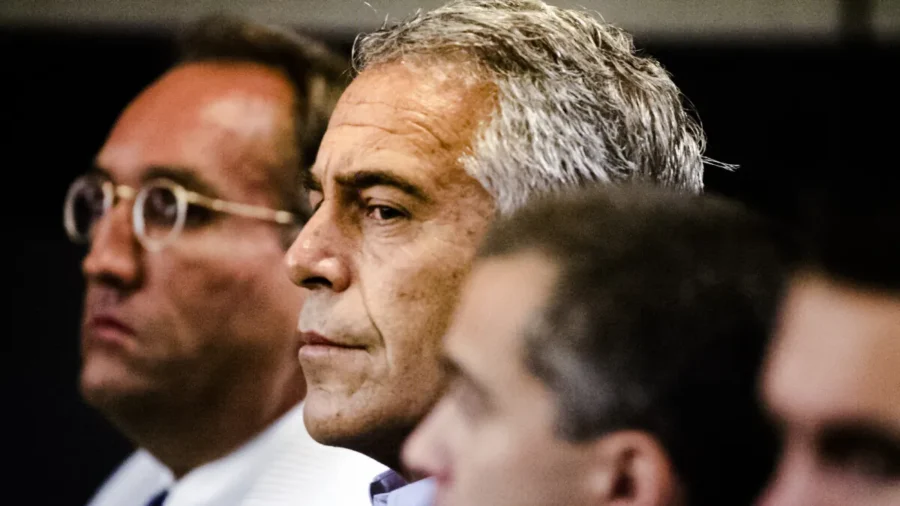
A federal judge on Aug. 20 turned down the Department of Justice’s (DOJ) request to unseal materials from the grand jury that indicted sex offender Jeffrey Epstein, ruling that officials had failed to justify unsealing the secret documents.
Grand jury materials are typically kept private. Exceptions outlined in federal rules allow the unsealing of materials, and there are special circumstances, including public interest, that can enable the unsealing outside the exceptions.
Officials with the DOJ recently asked U.S. District Judge Richard Berman, who is overseeing the case, to unseal the grand jury transcripts and exhibits from the investigation into Epstein, who killed himself in 2019 while awaiting trial, and a co-conspirator, Ghislaine Maxwell. They said that the immense public interest in the case should prompt the unsealing.
He also said that the government could release many files itself but has chosen against that path.
President Donald Trump then directed the DOJ to seek the unsealing of the grand jury materials.
“The Government is the logical party to make comprehensive disclosure to the public of the Epstein files,” Berman said. “By comparison, the instant grand jury motion appears to be a ‘diversion’ from the breadth and scope of the Epstein files in the Government’s possession. The grand jury testimony is a hearsay snippet of Jeffrey Epstein’s alleged conduct.”
The government’s assertions of public interest are also legally insufficient, the judge said.
A DOJ spokesperson declined to comment.