A critical federal home heating assistance program that provides billions in relief to low-income families every year is at risk with the government shutdown now in its fifth week.
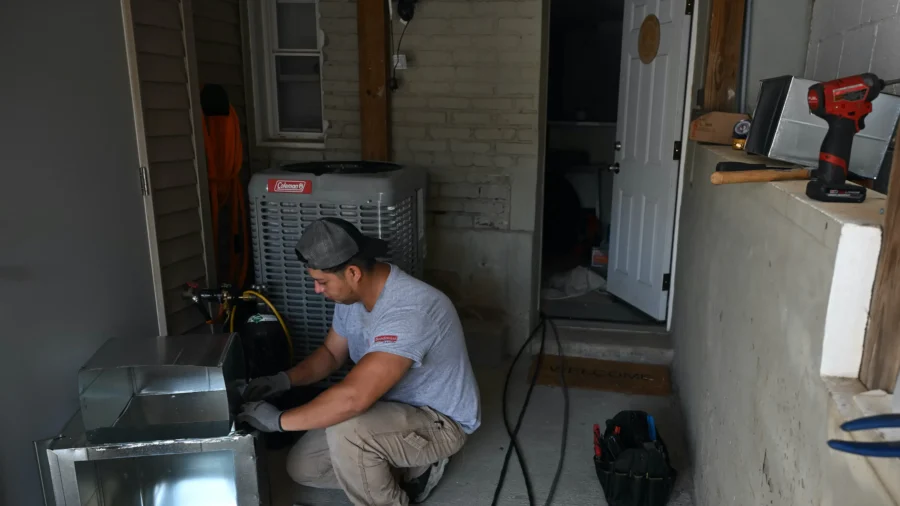
The Low-Income Home Energy Assistance Program (LIHEAP) provides $4.1 billion in funds to 5.9 million households to help heat and cool their homes, for energy crises and home weatherization, and minor energy-related repairs. Now that temperatures are dropping across the country, some states are cautioning that the funds for the program are being delayed by the shutdown.
Mark Wolfe, the executive director of the National Energy Assistance Directors Association, which represents state directors of the program, told The Associated Press, “The impact, even if it’s temporary, on many of the nation’s poor families is going to be profound if we don’t solve this problem.”
All 50 states, the District of Columbia, U.S. territories, and federally recognized tribes are served by LIHEAP.
“These are important income supports that are all potentially heading toward a cliff at the same time,” Wolfe said. “And I can’t point to a similar time in recent history where we’ve had this.”
States manage LIHEAP, which was created in 1981 and has received bipartisan congressional support.
The federal government allots funds to states each year using a formula that mostly considers state weather patterns, energy prices, and low-income population demographics.
While the White House proposed giving LIHEAP zero funds in the budget this year—saying the program was “unnecessary because States have policies preventing utility disconnection for low-income households,” effectively making LIHEAP a subsidy for utility companies, as well as a 2010 study that found fraud and abuse in the program—states anticipated Congress will fund the program for fiscal year 2026, which began on Oct. 1. Since Congress has not yet approved a full 2026 government funding bill, states have yet to receive their new allocations.
Several states, including Minnesota, New York, Pennsylvania, and Kansas, said their LIHEAP programs are facing delays during the ongoing shutdown.
Pennsylvania Gov. Josh Shapiro’s administration said it cannot front the $200 million-plus in federal aid from LIHEAP that it had anticipated for helping roughly 300,000 low-income households pay their heating bills in the state.
In Minnesota, the state’s energy assistance program is processing applications, but its Department of Commerce said the federal funds will likely not come for another month. Not until the shutdown ends does the agency plan to pay recipients’ heating bills.
“As temperatures begin to drop, this delay could have serious impacts,” the agency said. LIHEAP provides support to 120,000 households, including homeowners and renters, in the state. That may also include senior citizens, young children, and those with disabilities.
The group that helps administer LIHEAP in Connecticut said the state has enough funds set aside to pay heating costs through at least the end of November or December, but the state program faces uncertainty during the shutdown. Lawmakers in Connecticut are considering covering the shortfall temporarily with reserves from the state budget.
“Once the government reopens, ACF will work swiftly to administer annual awards,” a spokesperson said, referring to the Administration for Children and Families, a subagency in Health and Human Services.
The Associated Press contributed to this report.