Saudi crown prince to meet with Egypt’s leader after Iran-backed Houthis make gains
Egypt’s President Abdel Fattah al-Sisi is set to welcome Saudi Crown Prince Mohammed bin Salman on Tuesday, the Egyptian presidency said, against the backdrop of fighting between Iranian-backed Houthi rebels and Yemen’s Saudi-backed government.
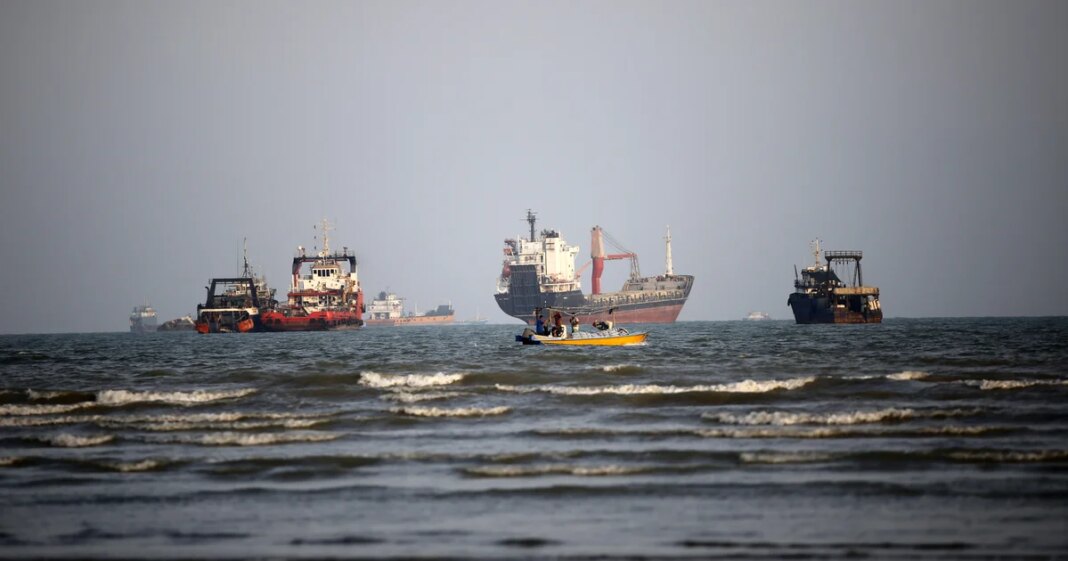
The presidency said there would be a bilateral meeting between the two leaders. The visit comes after a weeklong Houthi offensive that culminated in the group capturing Yemen’s Red Sea coast, cementing their hold on the Bab el-Mandeb Strait, through which Saudi oil transits.
Earlier, Egypt rejected a proposal from the Houthis for direct talks to coordinate maritime traffic through the waterway and the Red Sea, according to Qatari media outlet Al-Araby Al-Jadeed.
CBS/AFP
Iran’s proxies using Yemen to compound war’s impact on oil prices
Escalating fighting between Yemen’s Iran-backed Houthi rebels and Saudi Arabia, and attacks by other Iranian proxy forces on Saudi infrastructure, are increasing the threat to tanker traffic in the Middle East and driving up global fuel costs more than six months after the U.S. and Israel launched their war on Iran.
Direct clashes between the U.S. and Iran have severely reduced shipping traffic through the Strait of Hormuz since the war began, but the Houthi-Saudi tension, and attacks on Saudi infrastructure blamed on other Iran-backed groups, are also squeezing global fuel supplies in the nearby Red Sea.
Read more here.
Trump calls for countries to reimburse U.S. for Strait of Hormuz help
President Trump called for countries to reimburse the U.S. for helping oil shipments make it through the Strait of Hormuz.
“Oil is flowing through the Hormuz Strait. The Countries of the World, which have been no help to us whatsoever, should, and will, reimburse the United States of America when this SCAM Confligration is all over,” Mr. Trump said on his Truth Social platform Monday. “We are doing it much more for others, than we are for ourselves, and we have been for Generations!”
Earlier Monday, Energy Secretary Chris Wright told reporters that the number of oil shipments escorted by the U.S. Navy through the key waterway was increasing on average, according to the Reuters news agency.
Trump says U.S. open to engaging with Iran on deal
President Trump said Monday the U.S. was open to engaging with Iran on a deal.
“The failing Nation of Iran wants to make a deal, quickly and badly. I will determine whether or not the U.S.A. will choose to engage – The concept of which we are open to,” Mr. Trump said on his Truth Social platform.
Earlier this month, Vice President JD Vance told reporters the U.S. wouldn’t negotiate with Iran while ships were being attacked in the Strait of Hormuz.
Iran says barring nuclear chief from U.N. conference sets “dangerous precedent”
Iran’s Atomic Energy Organization has described the reported prevention of its head Mohammad Eslami from attending the U.N. nuclear watchdog’s ongoing conference as a “dangerous precedent” for all countries.
Spokesman Behrouz Kamalvandi said the International Atomic Energy Agency and its member states should stand against what he described as U.S. “bullying and political pressure.”
He warned that allowing political pressure to determine which officials can attend the agency’s meetings could establish a precedent affecting other member states.
The comments came after Eslami was reportedly prevented from attending the IAEA General Conference, which runs Monday through Thursday.
Kamalvandi called on the agency and its members to resist U.S. pressure and defend the rights of member states to participate in the organization’s proceedings.
Saudi crown prince meets U.S. CENTCOM chief, says Saudi state media outlet
Saudi Crown Prince and Prime Minister Mohammed bin Salman met Admiral Brad Cooper, the head of U.S. Central Command, in Jeddah on Monday, according to the Saudi Press Agency.
The meeting covered bilateral relations between Saudi Arabia and the United States, as well as the latest developments in the region, SPA reported.
Saudi Minister of State and national security adviser Musaed bin Mohammed Al-Aiban also attended the meeting.
The meeting comes days after a crucial Saudi oil pipeline came under attack, which the kingdom blamed on Iranian-backed militias in Iraq.
Bin Salman last week asked President Trump to bomb positions held by Iranian-backed Houthi troops, according to Axios, but he declined to do so.
Iran’s Strait of Hormuz authority updates list of vessels it says are in violation, warns insurers and maritime firms
The Iranian body established by the Islamic Republic regime to exert control over the Strait of Hormuz, the Persian Gulf Strait Authority (PGSA), said Monday that it had updated its list of vessels deemed to be violating its regulations, warning maritime insurers and other industry bodies against providing services to the ships.
In a post on X, the authority said insurers should refrain from providing services to the listed vessels in order to protect themselves from potential financial impacts.
The PGSA issued its list as U.S. Energy Secretary Chris Wright said the rolling weekly average of oil shipments transiting the Strait of Hormuz under U.S. Navy escort was rising and would continue to do so, according to the Reuters news agency.
Iran insists that all ships wishing to transit the strait do so in coordination with the PGSA, and it has repeatedly targeted vessels that ignore that advice and try to get through via a southern route close to Oman’s coast, through which the U.S. military has been escorting vessels.
Egypt rejects Houthi proposal for direct talks on Red Sea shipping
Egypt has rejected a proposal from Yemen’s Iranian-backed Houthis for direct talks to coordinate maritime traffic through the Bab el-Mandeb Strait and the Red Sea, according to Qatari media outlet Al-Araby Al-Jadeed.
The proposal was reportedly conveyed by a Houthi official to the International Chamber of Shipping (ICS) in London, seeking discussions with Egyptian authorities over new arrangements to protect shipping and ensure the safety of vessels transiting the strategic waterway.
The ICS subsequently contacted Egypt’s maritime chamber regarding the Houthis’ request to establish rules governing navigation and security in the Bab el-Mandeb.
A senior Egyptian source told Al-Araby Al-Jadeed the request was rejected outright by Suez Canal Authority Chairman Osama Rabie, who argued that responding to the Houthis could amount to granting implicit recognition to a group not internationally recognized as Yemen’s legitimate government.
The source said Egyptian authorities instead referred the proposal to security agencies to handle the issue outside the country’s official institutions.
Egypt’s goal, according to the source, is to prevent attacks on vessels transiting the Bab el-Mandeb, restore freedom of navigation and ensure the safety of crews regardless of nationality, while avoiding any arrangement that could allow the Houthis or another party to assert authority over the strait.
Crucial Saudi oil pipeline will be out of service for weeks, officials tell AP
A crucial Saudi oil pipeline that was struck in an attack last week will likely be largely out of service for weeks as the damage is repaired, two regional officials told The Associated Press news agency.
The East-West Pipeline, which runs across the kingdom, is key to Saudi Arabia’s strategy of shifting its oil exports to the Red Sea to avoid the Persian Gulf’s Strait of Hormuz, where Iranian attacks have stifled shipping. The 745-mile pipeline can carry up to 7 million barrels of oil a day from eastern Saudi Arabia to its Yanbu Port on the Red Sea.
A drone attack that Saudi Arabia blamed on Iranian-backed militias in Iraq forced the shutdown of the pipeline on Thursday.
The officials, who have been briefed on the matter, told the AP that repairing the damage could take three to five weeks, including at a major pumping facility. One of the officials said the line may work partially while teams carry out the repairs.
Saudi state oil company Aramco, which operates the pipeline, didn’t immediately respond to a request for comment. The government-run Center for International Communication, which oversees foreign media in the kingdom, said it was looking into an AP inquiry about how long it would take to repair the pipeline.
Iran’s foreign minister denied on Monday any involvement by the country in the attack on the pipeline.
CBS/AP
Number of oil shipments transiting Strait of Hormuz under U.S. escort increasing, says energy secretary
The rolling weekly average of oil shipments getting through the Strait of Hormuz under U.S. Navy escort is rising and will continue to do so, U.S. Energy Secretary Chris Wright said Monday, according to the Reuters news agency.
“The trend in that seven-day rolling average has been going up and will continue to go up,” he told reporters at a meeting of the U.N. nuclear watchdog, adding that on Sept. 1 there was a peak of 18 million barrels passing through on a single day.
Oman’s government said Monday that a meeting scheduled in its capital, Muscat, with officials from Iran and other regional countries on future control of the strategic waterway, was being postponed “in the interests of consensus.”
Iran cries foul over U.S. blocking its envoy from gathering of U.N. nuclear agency reps in Austria
Iran on Monday condemned the exclusion of the head of its Atomic Energy Organization from the annual gathering of the United Nations nuclear agency in Vienna, saying it constitutes “a serious breach” of Tehran’s rights as a member nation.
“By obstructing our full and effective participation, the denial of access contravenes both the letter and the spirit of the legal framework” governing attendance at meetings of the International Atomic Energy Agency, Iran’s ambassador to the agency, Reza Najafi, told delegates at its general conference.
Najafi criticized Austria, the host country of the IAEA, as well as other U.N. organizations, saying that Vienna’s decision not to grant a visa to Mohammad Eslami, “violates the host country’s obligation.”
The U.S. ambassador to the U.N. in Vienna, Preston Wells Griffith, said Austria’s request for an exemption to standing international sanctions, which would have enabled Najafi to attend, was denied after Washington lodged an objection with the IAEA committee.
“While we are focused on a diplomatic solution to the challenges posed by Iran’s nuclear program, we could not allow a U.N. designated official to travel … without any meaningful cooperation on nuclear safeguards,” Griffith said.
CBS/AP
Iran says Saudi Arabia requested postponement of regional meeting on Strait of Hormuz
Iranian Foreign Ministry spokesman Esmaeil Baghaei said Monday that Saudi Arabia had demanded the cancellation of a meeting that had been planned for Monday for Iranian, Omani and other regional delegations to discuss control of the Strait of Hormuz, “for the time being.”
Baghaei called the now-postponed meeting, which was to be hosted by Oman in Muscat, a “proper opportunity” to restore security in the region.
He said an agreement between Iran and Oman on the Strait of Hormuz had been finalized and would be announced later.
Saudi Arabia had submitted amendments to the agreement, citing concerns it could have lasting implications for the Strait of Hormuz that would negatively impact other Gulf Cooperation Council countries, a regional official familiar with the matter told The Associated Press.
CBS/AP
Iran-backed Houthis capture more territory in Yemen
Yemen’s Iran-backed Houthi rebels captured more strategic territory near the Bab el-Mandeb Strait, government and Houthi officials said Monday.
Houthi rebels deployed fighters to the Hanish islands, 100 miles north of the entrance to the strategic strait, after Yemeni government forces withdrew from the territory, according to two government officials and a Houthi official who spoke on the condition of anonymity.
The capture of the islands came after the Houthis expanded their control over the Bab el-Mandeb Strait late last week with the capture of the port city of Mokha.
The capture of the islands of Greater and Lesser Hanish came as Saudi-backed Yemeni government forces attempted to fight back over the weekend following the rebels’ swift advances around the strait.
The Bab el-Mandeb is a crucial alternative to the Strait of Hormuz for Saudi Arabian energy exports, but attacks on Saudi infrastructure and ships in the Red Sea by the Houthis and other Iranian proxy forces have severely impeded shipments through the waterway.
The Houthi-Saudi escalation adds pressure on global oil supplies and prices, which could give Iran greater leverage in its war with the United States.
CBS/AP
Iran rejects responsibility for attack on Saudi oil pipeline
Iran’s foreign minister denied on Monday any involvement by the country in the attack on Saudi Arabia’s East-West pipeline last week, which forced the crucial piece of infrastructure to shut down.
When asked about Iran’s response to the claim that the Islamic Republic regime played a role in orchestrating the attack on the pipeline from Iraqi territory, Foreign Ministry Spokesman Esmail Baghaei accused the U.S. of producing “false news.”
“The fact that, under these circumstances, the U.S. keeps fabricating a lie in order to exacerbate divisions between the countries of the region is one of the consequences of the issues that exist in our region,” Baghaei told reporters in his weekly press briefing.
No group claimed responsibility for the attack, but Saudi Arabia has previously accused Iran-backed militias in Iraq of attacking its oil infrastructure.
Fighting intensifies in Yemen after Houthis expand control of key shipping lane
The conflict in Yemen intensified on Sunday as government forces launched attacks against Iran-backed Houthi rebels along the Red Sea coast, and the Houthis fired into neighboring Saudi Arabia, which supports Yemen’s government.
Yemen’s government vowed to send more forces to the Red Sea coastal region as one official conceded a “painful” defeat last week as the Houthis captured the port city of Mokha and an island on the Bab el-Mandeb Strait. The strait is the southern gateway to the Red Sea, making it a crucial alternative shipping route for Saudi energy products with the Strait of Hormuz severely impeded by the U.S.-Iran war.
The escalation between the Houthis and the Saudi military has ratcheted up pressure on global oil supplies, pushing crude prices up toward four-month highs as it threatens to further choke Saudi Arabia’s oil exports.
CBS/AP
Oman-Iran meeting on Strait of Hormuz postponed
Oman’s foreign minister said the country had to postpone a meeting Monday in Muscat with Iran and other regional countries to discuss the Strait of Hormuz.
Iran had said foreign ministers from regional countries would meet in Oman to discuss efforts by Iran and Oman, located on the other side of the strait, to manage shipping on it. Omani Foreign Minister Badr Albusaidi said late Sunday in a post on X, however, that the meeting had been postponed “in the interests of consensus.”
Iran and Oman agreed to postpone the talks “at the request of some regional countries,” said Mohammad Ali Bak, an official in Iran’s foreign ministry who was quoted by IRNA on X.
Saudi Arabia has submitted amendments to the Iran-Oman agreement, citing concerns that the emerging deal could have lasting implications for the Strait of Hormuz that could negatively impact other Gulf Cooperation Council countries, according to a Gulf official familiar with the matter who was not authorized to comment publicly and spoke on the condition of anonymity.
Iran, Oman and mediating nation Pakistan had voiced optimism a couple weeks ago that the two states with coastline in the strait were poised to announce agreement on a new mechanism to control commercial traffic through the vital waterway.
CBS/AP
Oil prices continue to rise
Oil prices moved higher early Monday as U.S.-Iran tensions remained escalated while Iran-backed Houthi rebels stepped up attacks on Saudi Arabia.
Brent crude, the international standard, rose 3.2% to $107.94 per barrel. It was at roughly $72 a barrel before the start of the war in Iran in late February.
Benchmark U.S. crude was also up 3.2% to $103.26 per barrel.
Iran president says Tehran and UAE want to “turn the page” on war
Iran and the United Arab Emirates, whose relations have deteriorated since the start of the Middle East war, want to “turn the page,” the Iranian president claimed on Sunday.
“For the first time since the war and the incidents that occurred in the Persian Gulf, we had a constructive exchange with the crown prince of Abu Dhabi,” President Massoud Pezeshkian said a day after a meeting with Sheikh Khaled Bin Mohamed Bin Zayed Al Nahyan in India on the sidelines of the BRICS summit. “It was agreed that we would turn the page, look to the future and build it together.”
After the U.S. and Israel sparked the Middle East war by launching joint strikes on Iran at the end of February, Tehran retaliated against America’s allies in the region, with the UAE bearing much of the brunt.
In August, the UAE announced it was suspending trade and financial exchanges with Iran.
Dubai, the UAE’s largest city, is home to a deeply rooted Iranian community and is a vital economic lifeline for Iran, which is struggling under the weight of U.S. and international sanctions.
CBS/AFP