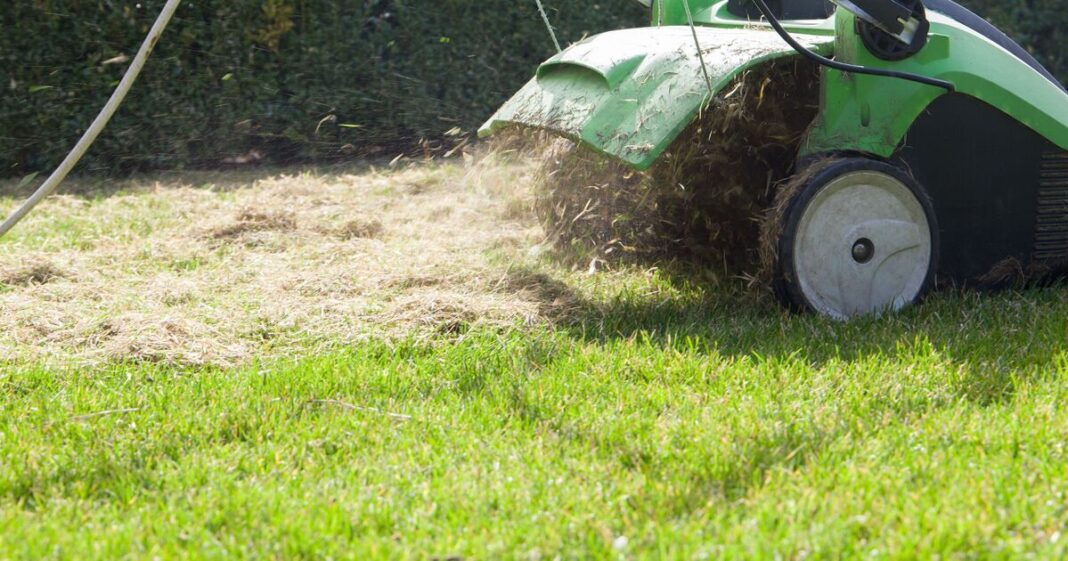

Scarifying at the right time can make a huge difference (Image: Getty)
With spring in full swing and more homeowners heading into the garden, Brits are being warned that tackling certain lawn jobs too early in April could be a costly mistake. Scarifying, the process of removing moss and dead grass from a lawn, is often seen as a quick way to refresh tired turf. However, experts have warned that doing it at the wrong time, or too aggressively, can leave lawns thin, patchy, and slow to recover, sometimes for the entire season.
Homeowners who get it wrong could end up paying twice. First in time and effort, and then again to repair the damage. While a basic lawn treatment can cost around £45, more serious recovery work involving reseeding, scarifying, and repair can quickly rise to between £225 and £750 or more, depending on lawn size and condition, according to experts at Vonhaus, a Manchester-based home and garden brand.
READ MORE: Complete these 4 spring grass jobs as gardeners issued mower warning
READ MORE: Gardeners urged to follow three-day rule before mowing lawns this spring

Timing is crucial, the expert stressed (Image: Getty)
Lawns that are scarified too deeply or at the wrong time often need additional work to recover. Homeowners may need to overseed bare patches, apply extra lawn feed, or water more frequently, all of which add to the cost. Badly damaged turf may even need partial replacement. Even small sections of replacement turf can cost tens of pounds, while full lawn replacement can run into the hundreds.
Laura Bradbury, head of e-commerce at Vonhaus, said scarifying is one of the most misunderstood gardening jobs.
She said: “People often rush into scarifying as soon as the weather improves without realising the grass simply is not ready to recover. If you scarify too early, the lawn can struggle for months, and fixing the damage usually costs far more than waiting and doing it properly.”
Ms Bradbury added: “Most of those costs are avoidable. Scarifying at the right time and at the right depth usually saves money rather than creating extra work.”
Timing is the ‘single biggest factor in whether scarifying helps or harms a lawn’, the expert added. She explained that in the UK, there are two safe windows.
Late March through April and into early May is suitable for light scarifying. As soil temperatures rise and grass enters a growth phase, it becomes better able to recover. However, spring scarifying should be gentle, focusing on surface moss and light thatch rather than deep removal.
Late August through to October is the best time for deeper scarifying, according to Ms Bradbury. The soil remains warm, rainfall is more reliable, and grass continues to grow steadily. This makes autumn the ‘ideal time to tackle heavier thatch build up and prepare the lawn for winter.’
The expert said that scarifying during summer can stress grass during dry conditions, slowing recovery and increasing the risk of long-term damage. Winter scarifying should be avoided entirely, as grass growth is minimal and any damage can linger well into spring.
A simple rule applies. If the lawn is not growing, it cannot repair itself. Ms Bradbury said this is where many people go wrong.
“If grass is dormant, scarifying simply removes protection without giving the lawn a chance to bounce back. That is when lawns end up thin and uneven well into the warmer months.”
Mowing before scarifying is essential. Cutting grass slightly shorter than usual allows the scarifier to reach the thatch properly. Long grass can cause machines to tear blades rather than lift moss, increasing stress and reducing effectiveness. Ms Bradbury recommended mowing one to two days beforehand and collecting clippings.
After scarifying, lawns benefit from light feeding, overseeding where needed, and regular watering. Recovery is fastest when scarification is done gently and at the correct time of year. Lawns that recover best are usually those treated with restraint rather than aggressively stripped back.
Scarifying does not need to be an annual job; many lawns benefit every two to three years, while heavily mossed lawns may need more frequent attention.
For homeowners noticing spongy ground, poor drainage, or slow recovery after mowing, scarifying at the right time can make a noticeable difference, Ms Bradbury explained.