Key events
Mohit Kumar, of the broker Jefferies, explains that a US-Iran deal could have a greater impact on investors’ expectations for interest rate movements this year than in the stock market.
In terms of market reactions if a deal is agreed upon, we should see another leg higher in risky assets and lower in rates. However, positioning suggest that the rates market should see a greater reaction than equities.
For equities, we are still bullish, but believe that the easy part of the rally is behind us. S&P positioning has reached just above 5, while Eurostoxx is at +2.2. Positioning is not extended yet, but beyond the relief reaction of a deal, we do not see a massive move higher from these levels. European equities can get a boost higher in the near term simply because positioning is much less crowded than in the US.
For rates, positioning is on the short side, with [US Treasuries] positioning just below -4 and Bunds close to -3. The recent rally in rates has led to some short covering in both US and Europe, but we still see more room to go. Our view remains that the front end of Europe, UK and the US are still mispriced. For the ECB, we can see one hike (in June), simply because they have to justify their inflation credibility. However, we do not see a series of rates hikes and maintain our long position at the front end of the curve.
For Fed and the BoE, we maintain the view that the next move would be a cut and not a hike. Markets have repriced in the UK with only 35bp of hikes priced for this year and less than 2 hikes till terminal. Our view remains that the BoE would be taking rates towards 3% by middle of next year and keep our long position at the front end of the curve.
For the Fed, we do not see a Warsh Fed delivering any hikes. For us, the question is when and not if there will be a cut. From a fundamental perspective, we would argue that near term inflation would be high and hence will be difficult for Warsh to deliver a rate cut before mid-terms. But there is a political element, and eventually it would depend on how soon oil prices drop below $80 and central banks start treating the latest oil price shock as a transitory effect on inflation rather than leading to second round effects. Our base case remains one of 2 rate cuts over the next 12 months.
Oil on track for one of its biggest monthly drops ever
Brent crude, the international benchmark for oil, is heading towards one of its biggest monthly drops ever as it nears a fall of 17% since the start of May.
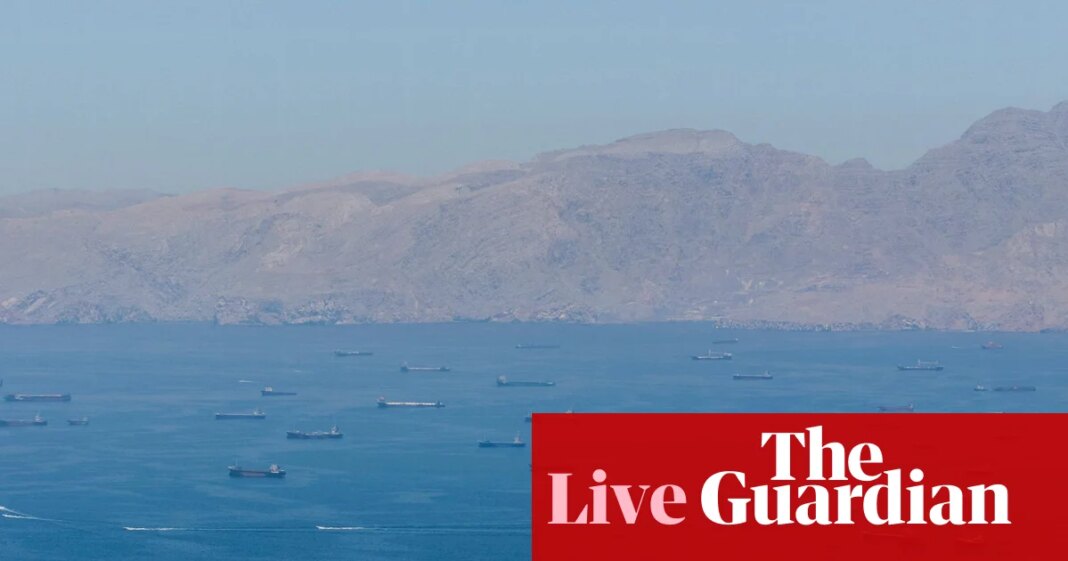
The market is hopeful that a US-Iran deal, which would extend the ceasefire by 60 days and reopen the strait of Hormuz, will materialise.
Jim Reid of Deutsche Bank notes that the details will be important, but that “US Treasury Secretary Bessent said that Trump’s three ‘red lines’ for a deal are for Iran to open the Strait of Hormuz, turn over its enriched uranium and end its nuclear program. And Bessent also posted earlier in the day that the US would ‘not tolerate any effort to impose a tolling system in the Strait of Hormuz.’”
Whilst the geopolitical headlines provided the main boost to markets yesterday, they got further support after the latest US PCE inflation print was softer than expected, easing concern around the need for rate hikes. The release showed that headline PCE was only up +0.4% in April (vs. +0.5% expected), whilst core PCE was up +0.2% (vs. +0.3% expected). So that led investors to dial back expectations for a Fed rate hike, with the probability of a hike by December down to 59% by the close, having been at 62% the previous day.
Fed officials also didn’t sound in a rush to hike either, with NY Fed President Williams saying that monetary policy “is right where we want it to be”. Admittedly, there was discussion of a hike, with St Louis Fed President Musalem acknowledging there “there is a scenario where the economy might require a rate increase”, but that was still conditional.
Introduction: Asian stocks rise and oil price slips amid hopes of US-Iran peace deal
Good morning, and welcome to our rolling coverage of business, the financial markets and the world economy.
Asian stocks are rising today amid hopes of a US-Iran peace deal and the re-opening of the strait of Hormuz.
US president Donald Trump has circulated a draft peace agreement for the war with Iran among allies including Israel.
The draft is similar to the one that has been circulating around the Middle East, under which the strait of Hormuz would be opened to commercial shipping, the US blockade of Iranian ports would be lifted and Iran would be given access to as much as $12bn (£9bn) in frozen assets.
The aim would be for commercial shipping in the strait to return to pre-war levels within 30 days. Negotiations are expected to last as long as 60 days on the future of Iran’s nuclear programme.
Stocks are rising strongly in Asia, with the Japanese Nikkei up 2.65%, Hong Kong’s Hang Seng up 0.9% and the South Korean Kospi up 3.6%.
Some of the rally in Asia is being supported by enthusiasm for AI – shares in the chip making giant TSMC are up 2.6%, while Samsung Electronics and SK Hynix are up 6% and 0.6%, respectively.
The oil price has also slipped this morning. Brent crude, the international benchmark, is down by about 1% to $93.02 a barrel as investors weigh the impact of the potential reopening of the strait of Hormuz.
The agenda
-
7.45am BST: French inflation report
-
8.am BST: Spanish inflation report
-
9.20am BST: Andrew Bailey speech at the Reykjavik 2026 economic conference
-
1pm BST: Germany inflation report
-
1.30pm BST: Canadian Q1 2026 GDP