John Wayne is a Hollywood icon with a presence so dominating that he defined two different American film genres: Westerns and war films. While Hollywood’s golden age may have produced better actors, few approached the charisma or screen presence of Wayne, who was the embodiment of America and masculinity on movie and television screens for nearly half a century.
Of the more than 150 films Wayne made in his career, just over a dozen of them are non-Western war films. Yet he remains a war movie icon because most of those productions were box-office hits and classic movies that still stand out more than 40 years after his death. I looked through his war movies to present the definitive list of the 15 best war films by The Duke.
15
‘The Wings of Eagles’ (1957)
An Authentic Portrayal of Frank Wead
Directed by John Ford and co-written by Frank Fenton and William Wister Haines, The Wings of Eagles is a war film that retells the life of Frank “Spig” Wead, with John Wayne donning the lead role. The late Frank Wead was an ardent U.S. Navy pilot who admired his work so much that he didn’t give up even after getting paralyzed due to an accident. Instead, he found a new means to express his love for aviation through screenwriting. After earning a promotion in naval aviation through pen and screen, he realized that the need to serve the greater good takes precedence over personal happiness.
The Wings of Eagles may seem like another classic from the collaboration between John Ford and John Wayne, two pioneers of the Western and war genres, but it is much more than that. Even if John Ford had not taken up this biographical war film, Frank Wead, the personality behind the story, would still go down in history as one of the most passionate writers of military-oriented stories. In some ways, the story is both tragic and moving, and with Wayne’s authentic portrayal of Wead’s life, it remains one of his best war films to date.
14
‘The Alamo’ (1960)
A Gargantuan Epic
The Alamo, produced and directed by John Wayne, is a timeless classic that touches on both Western and war themes, depicting the lopsided battle for Texas freedom in 1836. Wayne stars as Davy Crockett, the legendary frontiersman, as he arrives with a group of Tennessean soldiers to reinforce the titular fort. Richard Boone and Frankie Avalon co-star as General Sam Houston and Smitty, respectively.
This fourteen-year-in-the-making, twelve-million-dollar epic is apparently loved for many reasons, but the presence of John Wayne always takes precedence since it was heavily self-indulgent with endless scenes of The Duke’s trademark elements, like getting drunk with his pals and punching each other for fun. However, the film picks up the pace in the second half with non-stop battles between the resistance and the tyrannical army. The resulting carnage and the sacrifices made by the fighters for a better future are depicted flawlessly in the film, making it a must-see.
13
‘Reunion in France’ (1942)
Wayne Carries Things Forward
Reunion in France is an exception to this list, as John Wayne is not the main focus of the story but definitely plays a significant role in driving the story forward. In the movie, Joan Crawford plays Michele, a stunning and wealthy woman who does not believe that Germany would occupy France under Hitler’s reign until her vacation gets ruined when she comes to realize that her husband, Robert (Philip Dorn), is working with the Nazis. Enter Pat Talbot (John Wayne), an American pilot who is helped by Michele in hiding from both the Nazis and her suspicious husband.
The movie’s basic setup suggests it is a war film at its core, but it also emphasizes romance, allowing viewers to enjoy it in both forms. Nonetheless, the movie is surprisingly full of plot twists and turns, with some great performances from the main cast, who keep the story moving forward without pause. Joan Crawford, in particular, is a notable highlight, despite some feeling that the film’s script wasn’t as impressive as it could’ve been.
12
‘How the West Was Won’ (1962)
A Once-in-a-Lifetime Cast
This epic Western film, How the West Was Won, is set against the backdrop of battles and historical events, depicting the sprawling saga of a family, with gorgeous visuals and scenery throughout. The film, set in the 1800s, covers the westward expansion of the Prescott family and how these migrants were entangled in the impending Civil War for generations. The film’s scope demanded three directors and four cinematographers, with Henry Hathaway, John Ford, and George Marshall all contributing to five sprawling chapters.
While some find the movie one of Ford’s distinctive works for its Western drama, others believe it was made with the intention of assembling a once-in-a-lifetime cast, including John Wayne, James Stewart, Henry Fonda, Carroll Baker, and Gregory Peck. Although the film was not entirely Wayne-focused, he still had a strong presence, even though it featured numerous talented actors. At the Academy Awards, it would go on to earn a total of eight nominations in addition to three wins, including Best Original Screenplay, Best Sound, and Best Film Editing.
11
‘Dark Command’ (1940)
Part War, Part Western
One year after Stagecoach, which was one of the best Westerns that set things in motion for John Wayne’s career, Wayne went on to star in his first “A” film at Republic, which was carried by a strong cast that included Walter Pidgeon, Claire Trevor, and Roy Rogers. Dark Command, set in the pre-Civil War period, depicts the conflict between Northerners and Southerners over settlement in Kansas. It primarily revolves around a Texas cowboy named Bob Seton (Wayne), who inadvertently gets into conflict with Will Cantrell (Pidgeon), a local schoolteacher with lofty ambitions. When Bob wins both Will’s dream job as Marshall and the Southern banker’s daughter, Miss Mary McCloud (Trevor), Will decides to exploit the power of lawlessness to achieve his goals.
Dark Command is part Western, part Civil War, but it is undeniably one of John Wayne’s best films, which steered him on the right course in his career. The film’s basis in real events gives it an interesting historical context, and its overall quality would earn it two Academy Award nominations for Best Original Score and Best Production Design. Dark Command would also mark the second film produced by both director Raoul Walsh and Wayne after the two originally collaborated on The Big Trail, which gave Wayne his breakthrough lead role.
10
‘The Green Berets’ (1968)
A Highly Controversial War Film
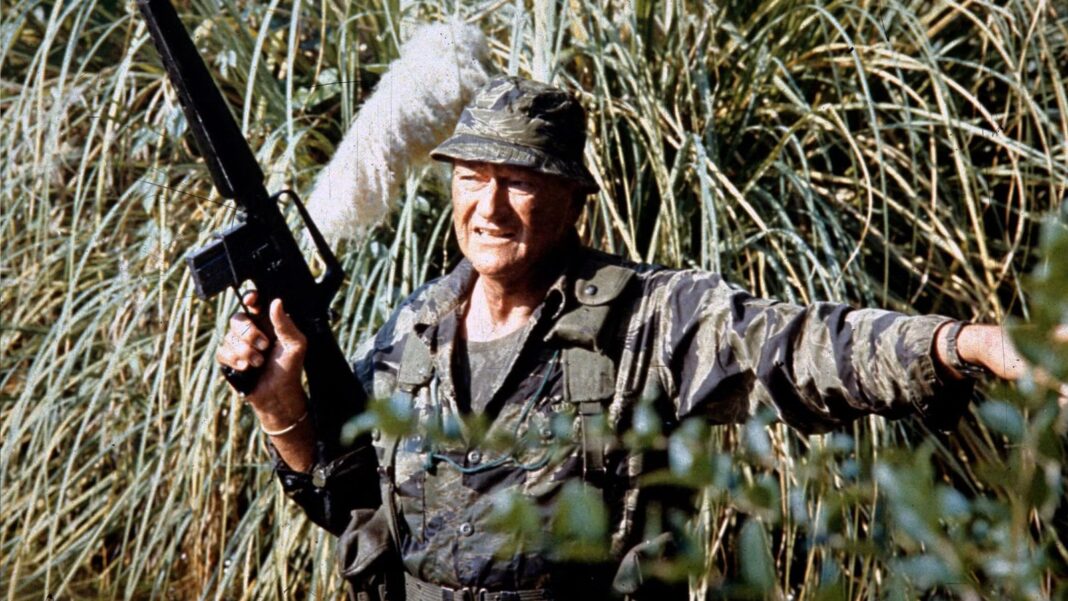
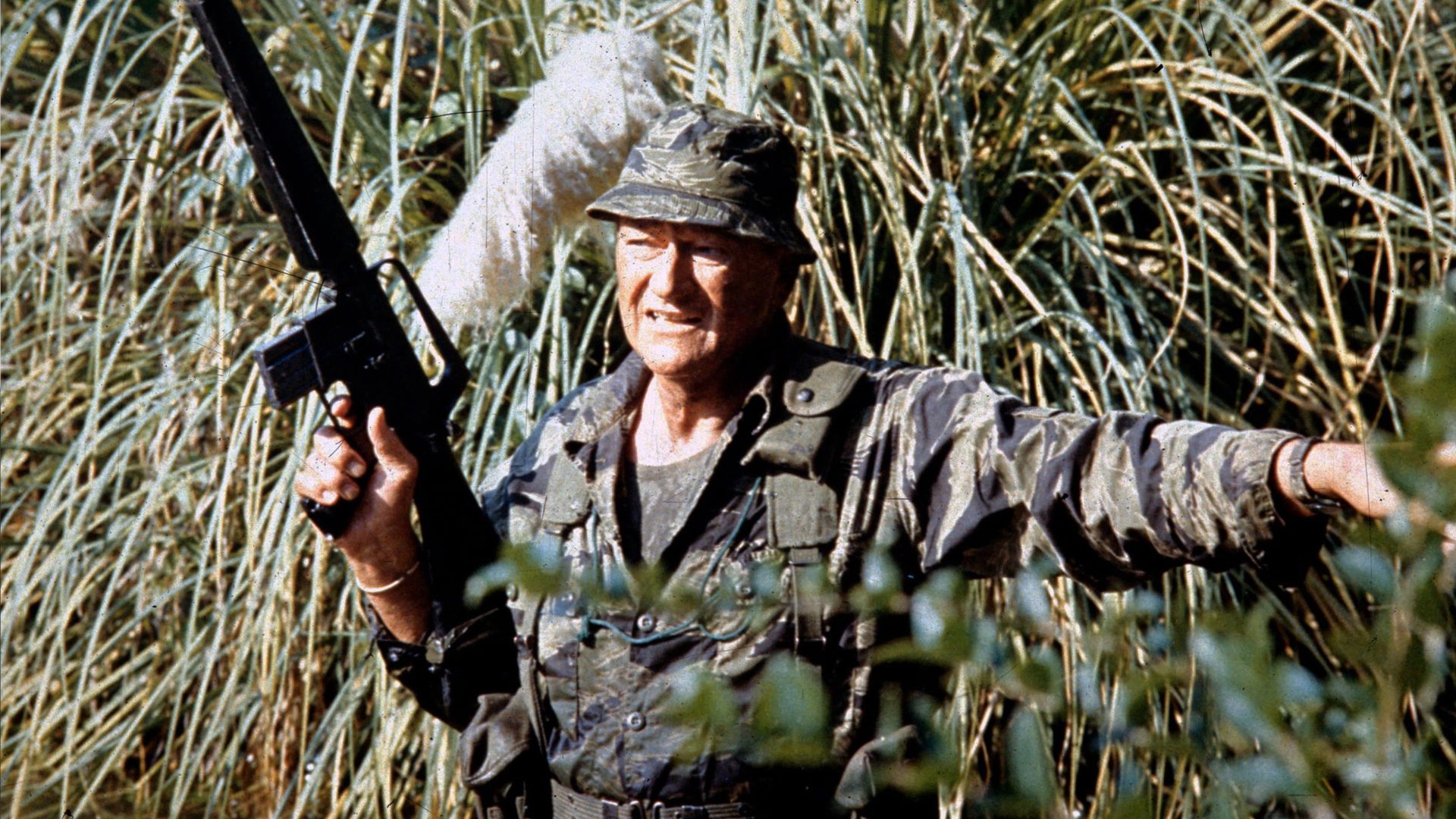
A particularly fascinating entry in Wayne’s overall filmography, The Green Berets is a 1968 war film set firmly within the then-ongoing Vietnam War. Wayne stars as Mike Kirby, a Colonel in the United States Army Special Forces, who is sent to assist the South Vietnamese with two specialized teams. As they attempt to fend off North Vietnamese forces at one of their camps, they’ll also have to formulate a plan to capture a prominent North Vietnamese general. David Janssen and Jim Hutton play George Beckworth and Sergeant Peterson, respectively.
One of Wayne’s most controversial movies, The Green Berets was The Duke’s attempt to single-handedly change public opinion about the Vietnam War. Unfortunately, Wayne took the same narrative approach to Vietnam as he did with his World War II films, and that didn’t fly in an America where public opinion had already soured on the war, following the Tet Offensive and news of war atrocities. Wayne, who co-directed the movie, took a heavy-handed, patriotic approach to the story, but critics railed against his attempt to take the moral high ground.
9
‘Operation Pacific’ (1951)
Corny, But Compelling
Operation Pacific, by The Wolf Man director George Waggner, finds John Wayne playing the lieutenant commander of an American submarine when tragedy strikes the crew. Racked with guilt, Wayne must pull it together when faced with a dangerous mission against the Japanese. Patricia Neal co-stars as Mary Stuart, with Ward Bond and Philip Carey appearing in the supporting cast.
Operation Pacific may not be the most realistic submarine movie ever, but it’s entertaining, as Wayne and his good friend Ward Bond (who plays the sub captain) have great chemistry. The two made 23 films together, including The Searchers and The Quiet Man, and Patricia Neal joined them as Wayne’s love interest. Critics didn’t care for the film, but it’s a corny crowd-pleaser that’s still worth a watch. The score by Max Steiner (Casablanca, The Searchers) remains as excellent as always, too.
8
‘Flying Leathernecks’ (1951)
Wayne and Ryan Together Again
Wayne and frequent co-star Robert Ryan (The Dirty Dozen) play Marine aviators in Flying Leathernecks, and their dynamic gives the film an interesting angle. Wayne plays Major Daniel Kirby, who is trying to whip his squadron pilots into shape as they prepare for battle in the Pacific. Ryan plays Capt. Carl Griffin, Kirby’s softhearted second-in-command, who plays good cop to Kirby’s bad cop. Their clash of personalities has consequences, and the pilots learn the real cost of going into battle unprepared.
Flying Leathernecks is one of two John Wayne films produced by Howard Hughes’ production company, the other being Jet Pilot, which highlights Hughes’ fascination with aviation. In the age of Top Gun: Maverick, the cockpit shots (obviously filmed on a stage) don’t hold up well, but they are mixed in with fast cuts of real fighter plane footage, so the scenes play with decent intensity. The film really takes off in the second half, when the pilots make their way to the battle of Guadalcanal.
7
‘Back to Bataan’ (1945)
Production Changed During the War
Back to Bataan is a fantastic, if nontraditional, World War II film, with Wayne playing an army colonel organizing a guerrilla resistance in the Philippines after the Japanese invasion. Wayne pairs up with the legendary Anthony Quinn, who plays a Filipino native who helps to rally the locals against the Japanese. Lawrence Tierney (Reservoir Dogs) appears in a supporting role, and the film is a favorite among World War II film fans.
Interestingly, the movie was filmed near the end of the war, and General Douglas MacArthur famously retook the Philippines while production was still underway, leading to changes in the film’s story and making its May 1945 release quite timely. The film’s depictions of the Japanese (and even the Filipinos) may not have aged well, so that should be taken into context when watching.
6
‘Flying Tigers’ (1942)
A Dazzling Dogfighter
Flying Tigers was Wayne’s first World War II film, and it’s a great one. Wayne had technically appeared in a couple of films set during the war (most notably John Ford’s The Long Voyage Home in 1940), but this was his first combat film. Wayne plays the leader of a squadron of volunteer fighter pilots defending China from Japan, with John Carroll and Anna Lee co-starring as Woody and Brooke Elliott, respectively.
Flying Tigers boasts some great dogfight sequences, thanks to excellent model work and fast-paced editing. The movie earned three Oscar nominations for Best Visual Effects, Best Original Score, and Best Sound. Interestingly, the film’s status as a propaganda piece is historically significant as well, since it was released shortly after the United States officially entered World War II as a combatant. It would go on to become Republic’s first-ever production to break the $1 million mark at the box office.