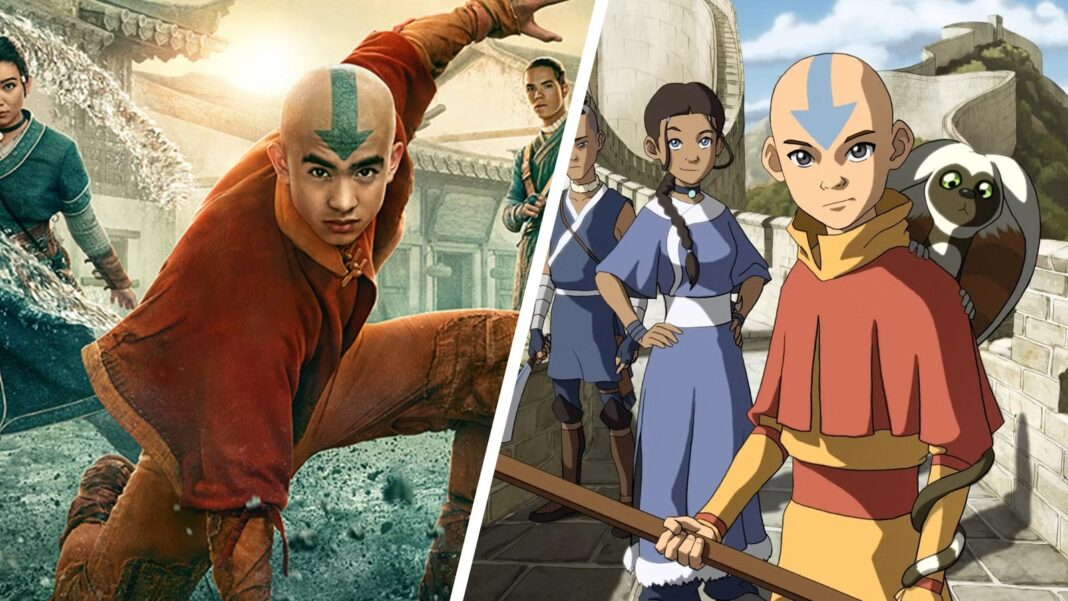
Netflix’s live-action reimagining of Nickelodeon’s celebrated animated saga Avatar: The Last Airbender received generally positive reviews upon its release in 2024, thanks in large part to a concentrated effort to maintain authenticity to the original show. While it did an admirable job of adapting the 20-episode animated series down to just eight episodes, some changes to the overarching narrative were required due to time and budget constraints. That trend continued with season 2, which followed the general storyline covered in the animated show’s second season, which explored the Earth kingdom after focusing largely on the Water tribes in season 1.
The 20 episodes of season 2 were condensed down to just seven hour(ish)-long extravagant episodes for the live-action series. While showrunner Albert Kim and his team did an admirable job including many of the best subplots from Book Two of the original show, many characters, circumstances, and settings were adjusted to fit a more seamless season-long narrative. I’ve highlighted seven of the biggest changes to the story that long-time Avatar fans know and love, some of which work far better than others.
Why You Should Trust Me: As a 90s baby I grew up with Nickelodeon’s Avatar: The Last Airbender, and fervently watched its original airing from 2005-2008. Since then I’ve come to appreciate just how uniquely perfect the series is, and can appreciate the heavy themes it tackles even more as an adult looking at it critically. In addition to consuming all the extended Avatar media (we do not speak of the 2010 live-action movie) over the last 10 years, I’ve now covered the live-action show for two entertainment outlets.
7
Aang Is Older Than His Animated Counterpart in Season 2 Thanks to a Big Time Jump
Aang actor Gordon Cormier grew significantly between seasons.

What Netflix Changes: Avatar: The Last Airbender immediately ran into a problem that many shows that feature children do: the cast aged quickly between season 1 and season 2. As a result, Aang actor Gordon Cormier emerged at the beginning of season 2 as a full-blown teenager, having already mastered waterbending in the year (in-universe) between the battle at the North Pole and where season 2 picks up. The show wisely doesn’t shy away from that fact, and Suki even notes how much taller Aang is than when she last saw him.
Why It Doesn’t Work: Part of what makes Aang so special as a character is that he both looks and feels like a small child throughout the animated series. His childish nature is a key component of his personality, and the juxtaposition between the goofy airbending prodigy and the awesome might of the Avatar state is all the more impactful because of it. It also plays a role in his relationship with Katara, who views him more as a little brother than anything for much of the show. By aging Aang, his entire character is drastically altered, and not for the better.
6
Season 2 Gives Iroh a More Prominent Role
The former Fire Nation general is a major player in season 2.

What Netflix Changes: Uncle Iroh has his moments in the second season of the animated show, but the Netflix version really gives the character a chance to shine, which is exactly what happens thanks to a stirring performance from the incomparable Paul Sun-Hyung Lee. Iroh’s past, specifically related to his infamous failure at Ba Sing Se, is briefly discussed in the original show, but it takes center stage in the Netflix adaptation.
Why It Works: Any reason for Paul Sun-Hyung Lee to get more screen time is a good one, and the way the show delves into Iroh’s deep-seated guilt over his crimes as a Fire Nation general is engrossing. The now-peaceful man is forced to come face-to-face with the atrocities he unleashed upon both the people of the Earth kingdom and upon his own soldiers, one of whom was the son he lost. It’s a welcome change for one of the very best characters from the original show, and Lee has certainly made that the case again with the live-action.
5
Major Subplots of Books 2 and 3 Are Concentrated in Ba Sing Se
The Painted Lady, the Library Quest, and Appa’s Kidnapping all occur within the walls.

What Netflix Changes: In an effort to include some of the most important and beloved side quest stories of the animated show, season 2 of Netflix’s Avatar: The Last Airbender relocates some of them within the walls of Ba Sing Se. Three of the biggest include Katara’s masquerade as the Painted Lady spirit, the quest to find Wan Shi Tong’s library, and Appa’s kidnapping and subsequent solo travels. In the live-action show, Katara helps people in the streets of Ba Sing Se as the benevolent spirit, while Wan Shi Tong’s library is moved to within the city walls. Appa is still kidnapped, but by Long Feng and the Dai Li, not sandbenders, and as a result he is simply locked away as opposed to embarking on his own journey back to Aang.
Why It Works: It’s admirable that Albert Kim and co. found a way to include the fan-favorite subplots, as the Painted Lady and Appa’s kidnapping at the very least seemed like they would be easy to leave out of the script with no real bearing on Aang’s quest to defeat the Fire Lord. The journey to Wan Shi Tong’s library is positively essential to that, however. The fact that they found a way to not only include the concepts with relative authenticity to the original show but also adapt them to serve a greater purpose to the live-action show’s plot should be considered a success.
4
Azula and Zuko’s Sibling Dynamic Is Very Different
Their motivations regarding their mother and each other are given more depth.

What Netflix Changes: In the Netflix show, Azula is tasked with bringing Zuko back to the Fire Lord to be pardoned, which is a fairly drastic change from the animated show, which saw her hunting Zuko and Iroh as Fire Nation traitors. Via brief flashbacks, the new show also alters the siblings’ dynamic with their mother, with Ursa caring for both her children equally, and attempting to flee Fire Lord Ozai with both of them, resulting in her disappearance (and presumed death or exile).
Why It Doesn’t Work: Azula’s long-standing mental instability and rivalry with her brother was originally brought about by her belief that her mother loved Zuko more, which drove her closer to her father as she grew. It’s a major key to her mindset, and how she was molded into a perfect weapon by the Fire Lord as his de facto heir. By changing this dynamic, there really isn’t a reason for Azula’s madness bubbling to the surface in season 3, which likely means the Netflix show has very different plans for her arc. There’s nothing wrong with departing from the original story in a big way like this, but the problem is the motivations of Zuko, Azula, and Fire Lord Ozai himself were pretty great to begin with.
3
Jet’s Entire Season 2 Role Changes
The former freedom fighter still gets a heroic end.

What Netflix Changes: After his vengeance-fueled near-atrocity in season 1, season 2 of the animated show saw freedom fighter Jet return as Team Avatar makes their way to Ba Sing Se. This happens in season 2 of the Netflix show as well, but this time his hatred for the Fire Nation flares up again in the form of an attack on a borough of Fire Nation defectors within the walls of the Earth Kingdom capital. While he’s captured by the Dai Li and brainwashed in the original series before helping Team Avatar find Lake Laogai, he instead accompanies them to Wan Shi Tong’s library, where he meets his end at the spirit’s talons as opposed to Long Feng’s.
Why It Works: Jet doubling down on his hatred for the Fire Nation with another attack in Ba Sing Se strengthens his redemption arc in the live-action show. His heroic actions in Wan Shi Tong’s library are a fitting end for the character, and they certainly do play as more cinematic for the purposes of the show.
2
Aang Is a Lot Angrier Than His Animated Counterpart
The live-action teenager is a lot more anxious and quick to anger.

What Netflix Changes: Aang is a teenager in season 2, and with that comes a lot of teenage angst—or Aangst (I’m sorry). He has many moments of anxiety, anger, and even distrust in his friends, which is drastically different from the goofiness of his animated counterpart. One scene in particular involves Aang tearing down his friends’ actions and blaming them for the position they’re in, backed into a corner without Appa and at the mercy of Long Feng and the Dai Li.
Why It Doesn’t Work: While acknowledging that Netflix is intentionally trying to do something different with Aang’s character, it doesn’t have anywhere near the impact or entertainment of his more childish animated counterpart. An angry teenage Aang simply isn’t a version I, or many other die-hard Avatar fans, are interested in. His immaturity and joyful spirit is a key component of what makes him such a unique protagonist, and dragging him down in the muck with other gloomy modern-day heroes doesn’t work.
1
Aang Masters the Avatar State With No Help
Aang’s work with the Guru Pathik is skipped entirely.

What Netflix Changes: When season 2 opens, Aang has already mastered waterbending, which is somewhat forgivable given that a year of show time passed between seasons. However, season 2 completely glosses over Aang’s grappling with the Avatar state, which is a massive part of his character’s journey. It doesn’t go anywhere near as deep into his insecurities over his lack of control and the damage he causes in that state, and skips his time with the guru during which he attempts to open his chakras and master the state. Part of that process involves letting go of his attachments, even to his friends (and Katara in particular), which he refuses to do.
Why It Doesn’t Work: Aang fights Azula in the crystal caves of Lake Laogai beneath Ba Sign Se seemingly in control of the Avatar state, and even demonstrates his control before Azula strikes him with her lightning. First off, that implies that Azula was capable of beating Aang in the Avatar state outright, which completely betrays what the Avatar state is and means. Second, Aang’s internal struggle as a peace-loving airbender forced to bring about destruction and death in the Avatar state is far too significant to skip entirely. It allows for a showy bit of Avatar state action in the season finale, but it’s a major miss in the reimagining.

- Release Date
-
February 22, 2024
- Network
-
Netflix
- Showrunner
-
Albert Kim