SEATTLE – “It feels exactly the same,” Tyler Adams quipped.
The build-up to the U.S. men’s national team’s World Cup round of 16 was certainly different this time around. Between playing on home soil in front of electric, sold-out crowds and a string of entertaining wins behind them, head coach Mauricio Pochettino‘s side seemed in as great a position to reach their first quarterfinal in 24 years when they met Belgium at Lumen Field on Monday.
In an instant, though, it was over – Belgium’s Charles De Ketelaere scored nine minutes in, the forward taking advantage of a team that had not hit its stride and never would. A 4-1 loss was a fair result for a group that did not actually rise to the occasion, barely taking a stab at getting into the game and booking their fourth straight round of 16 exit at the World Cup.
“Belgium, they had a good game plan and they played balls in behind us when we pressed and it caused a lot of problems, won a lot of second balls and they were good in the boxes,” Christian Pulisic said. “That’s where the game comes down to and they were clinical and it was not quite enough from us.”
Pulisic, who came off in the 59th minute after tweaking his ankle and knee in the same play, offered the natural conceit that Belgium were simply better, both on paper and on the day. It was always destined to be the case at some point during this World Cup, no matter how ambitious or hopeful people were about this version of the USMNT. He is not wrong that small things went against them, the team always trying to punch above their weight.
The moments that actually slipped away from them, though, were a step below the actual level expected of them. Hans Vanaken‘s goal to put Belgium 3-1 up in the 57th minute was the instance where it all slipped away, Matt Freese with a blunder of epic proportions to seal the deal.
“Disappointed for my involvement and error in judgment on the third goal,” Freese, whose rise from zero caps at the start of June 2025 to Monday’s game likely means his international career will be defined by that great mistake, said. “It’s part of the position. I know the guys in front of me did everything they could today to get the win and I’m so proud of them and I wish that that moment was different and wish the result was different … I felt him so close, I thought he was going to kick my leg and so I tried to get out of it.”
Freese is merely one of several players whose opportunities came and went, just as the team’s did. Pulisic is perhaps most representative of it – an injury kept him out of the second half of their win over Paraguay, the entirety of their win over Australia and much of their loss to Turkiye in the group stage. Another one meant he exited Monday’s game early, too, though against Belgium, he was also invisible on the pitch until he went down writhing in pain in the opening minutes of the second half. The dejection was obvious as he did his post-match rounds – a decade after becoming the face of his generation with a World Cup on home soil on the horizon, he did not manage to register all that much.
“I felt really good this summer playing with the guys and I thought my level was high,” he reflected. “It’s disappointing. I didn’t quite have the moments I was hoping to and to try to help us to really push and get over this next step of beating a really good team so I’m disappointed with myself, of course, but I’m going to try to stay positive. I did a lot of good things and the team did as well.”
The player whose name recognition grew the most was Folarin Balogun, who was caught in the quagmire of a suspension he graciously accepted and then was rescinded in the most controversial of ways. His spot in the lineup was unsurprising if an unwanted signal of organizational incompetence but he, too, was ineffective on Monday.
“When you know you’re given a red card and then usually the protocol is you usually don’t play the following game and then when that decision’s overturned, of course it’s going to controversial so for me, it’s something that didn’t really surprise me too much but as a player, my job is just to go out there and be focused on my job, “he said.
The team rejected the notion that Balogun’s case offered a distraction or that the moment was too big, even if it felt like the lights were too bright for them. They had no answer for Belgium but it was not simply a tactical matter – their trademark habits of the World Cup had gone out the door and it remains hard to know why.
“It’s difficult to say but I can only be honest,” Balogun said. “I don’t think we had a good game today, collectively. We played well in the other games. We were very intense, we were able to generate energy with the crowd and today we didn’t give the crowd a lot to cheer for. That’s the most disappointing thing and that’s the part that hurts the most for me personally. We have to wait four years again to be in this position, which is hurtful again.”
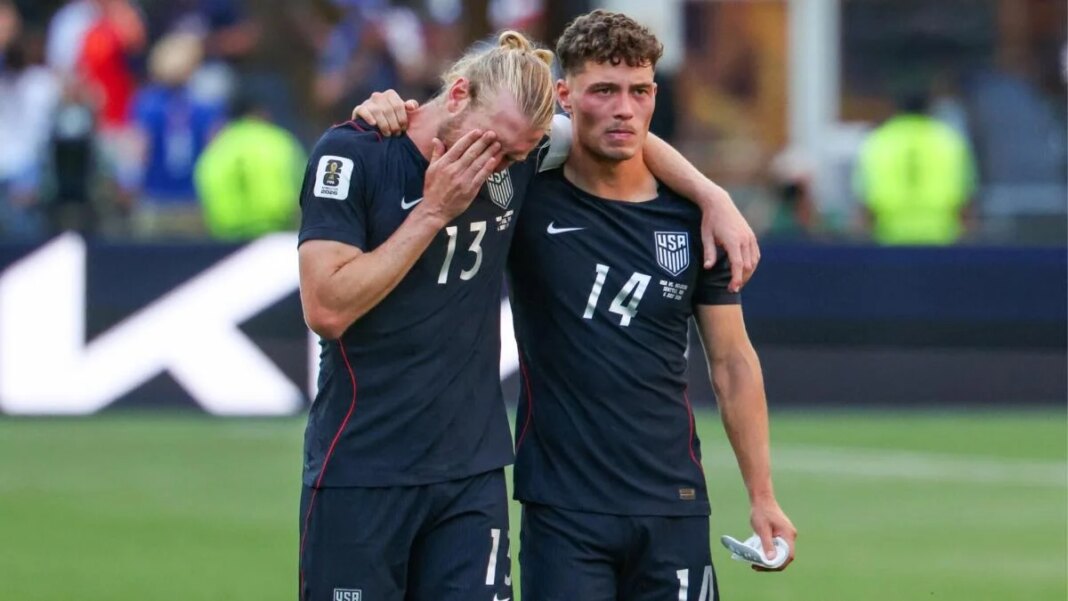
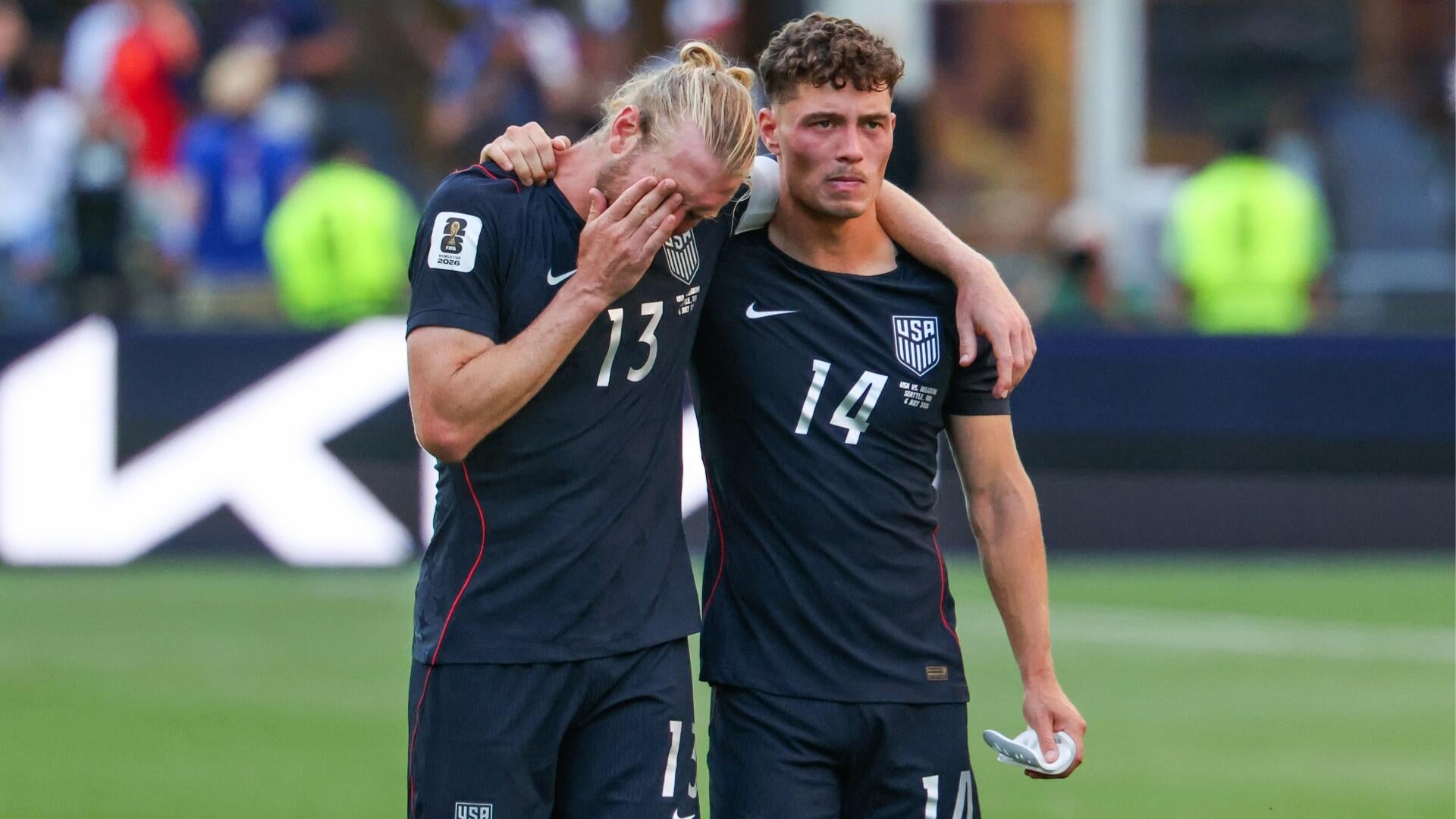
Even the team’s most honest players like Adams had no answers, spitting out platitudes about how elite sports work rather than knowing what to say as a great opportunity to make history and capture a nation’s always-evasive attention span was squandered.
“That’s a great question,” Adams said. “Wish I had the answer right now. I don’t know. I don’t know. I think that just overall, it was the small things. Second ball’s not falling to you when you feel like before, they were in the right spot and then winning them. Just little gaps that were being exploited. Just small connections in the game where in other games just felt like everything was a little bit cooler and sharper … I don’t think it was the opponent, the speed of the game, the moment, I don’t think any of that. I think it’s just small details of the game that got away from us. They get away from you like that and then obviously you’re going to lose the game.”
The peak years of the USMNT’s golden generation – or at least until another golden generation shows up – got away from them, even if not all of it was a surprise. A loss to Belgium, formidable even in their inconsistency, is not inherently the problem but the manner in which they did should weigh heavily on those who are tasked with ensuring the program improves. It is not a surprise that Freese is not of the same caliber as Belgium’s UEFA Champions League winner in goal, Thibaut Courtois.
There is no shock value when Belgium can brag about bringing Jeremy Doku off the bench when the USMNT’s best option is a rusty Gio Reyna, who, at 23 years old, still has no consistent documented history of living up to his great potential. The surprise is that, after weeks of being one of the teams to watch at the World Cup, they exited the tournament with barely a whimper.
“That just didn’t feel like it was us out there today,” defender Antonee Robinson said. “We didn’t win any individual duels. We looked like we lacked energy. We looked like we weren’t as fluid as we have been.”
Questions about the team’s mental toughness will loom large as the long road to the 2030 World Cup officially begins, just as much as queries about the strength of the talent will. Some will take positives from the fact that they won their first knockout game in 24 years with the win over Bosnia and Herzegovina but the expanded format is more responsible for that than anything else, the round of 32 feeling like a holding place before the knockouts truly begin depending on the matchup. How exactly they dig themselves out of a multigenerational hole, though, remains the big question facing the team.
“We won the game against Bosnia,” Pulisic said. “We can for sure be proud of [that] but I just think we want to have higher hopes in that. We want to be able to go and compete in some of the best in the world and we just still have that next step to climb.”