Introduction: Apollo gatecrashes easyJet sale with surprise £5.7bn takeover offer
Good morning and welcome to our rolling coverage of business, the financial markets and the world economy.
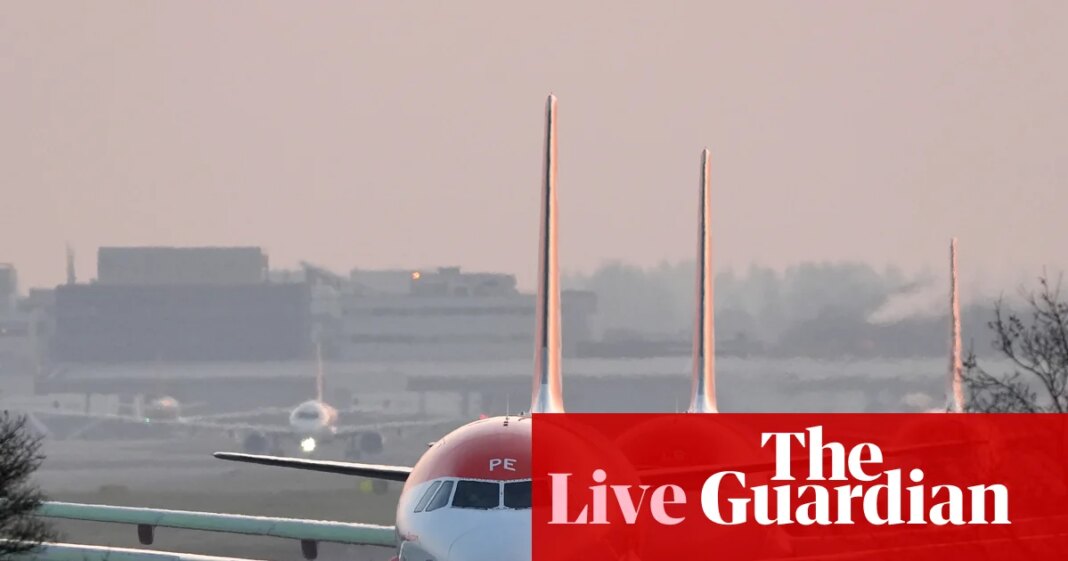
A surprise corporate twist this morning: the US private equity firm Apollo has agreed to buy the airline easyJet in a £5.7bn deal, beating a rival bid for the company by Castlelake.
EasyJet has reached an agreement in principle for an offer of £7.15 per share, and has said this morning that its board is inclined to recommend the deal to shareholders.
The airline had been set to be taken private in a £5.5bn deal with the US private credit group Castlelake, which had until 3 August to make its formal offer.
But easyJet said in a statement this morning:
The proposed cash offer delivers a superior outcome for easyJet shareholders by providing a higher cash value than Castlelake’s latest proposal of £6.90 per easyJet share, submitted on 4 July 2026.
Apollo’s offer represents a 22% premium against easyJet’s closing share price yesterday, and an 81% premium compared with its price the day before the offer period for the bid from Castlelake.
Apollo also added that it would agree to take “all necessary steps” to satisfy any EU local ownership rules. Current regulation requires European airlines to be majority owned by a European entity, Castlelake had planned around this by intending to bring two Irish airline executives on board.
Elsewhere today, Asian stock markets have been largely mixed – the Japanese Nikkei and Hong Kong’s Hang Seng are both up by about 1%. The South Korean Kospi is yet again the stand out, up by almost 3%. On mainland China however, shares are slipping – the SSE Composite is down by 0.3%.
The agenda
Key events
Oil prices have slipped today, but are still set to end the week 6% higher as investors grow uneasy about the situation in the Middle East.
Kathleen Brooks, of the broker XTB, says:
The oil price is falling due to two factors, firstly, news that the US will continue its technical talks with Iran, and confirmation that the US remains committed to finding a diplomatic solution to this crisis, and secondly, reports from the IEA that oil demand is set for its first annual decline since 2020. Global oil stocks also posted an increase in June, their first monthly increase since the war began earlier this year. The UAE also lifted oil production to a record, which suggests that oil supply is rapidly normalizing, and is unlikely to get impacted by the latest flare up in tensions.
News that oil demand will fall this year is interesting, as it is only having a mild impact on growth. The IMF lowered its 2026 global growth forecast to 3%, but growth is expected to bounce back in 2027 to 3.4%. The inflation outlook is less rosy, and the IMF raised its headline inflation forecast by 0.3% to 4.7% for this year, however, inflation is expected to moderate next year.
Thus, if we do not return to a blockade of the Strait of Hormuz, the impact from the war in the Middle East should not leave a lasting scar on the global economy, which is good news for risk assets.
Brent crude, the international benchmark for oil prices, is down 0.4% to $76.01 a barrel this morning.
The FTSE 250 index – which tracks the UK’s listed mid-sized companies – is also rising this morning, nudging up 0.1%
EasyJet is leading the way, with its shares now up 14%. The recruiter Hays is a close second, with its shares up almost 13%, after it reported better-than-expected fees for its fourth quarter and said that its profit is expected to end the year at the higher end of its forecast range. Shares in its FTSE 250 rival Page Group have also risen by 4.5%.
Reeves to launch City ‘skills compact’ committing firms to retrain staff in AI

Kalyeena Makortoff
Chancellor Rachel Reeves is to announce a new City “skills compact” that will commit firms such as Barclays and Lloyds to retraining thousands of financial sector workers for the AI revolution.
The financial services skills compact will be launched on Tuesday, during what is likely to be Reeves’s final Mansion House speech to City bosses before Andy Burnham’s expected takeover of No 10. The government-backed initiative will commit employers to improving workers’ skills and helping them “keep pace” with significant technological changes that have prompted fears of mass redundancies.
In the coming weeks, nearly 20 initial signatories, including the London Stock Exchange, Nationwide building society and the asset manager Fidelity, will start drafting rolling three-year plans aimed at training and certifying their UK staff in up to five critical skills – including AI – that they believe are essential to future-proofing their jobs.
High street footfall drops as heatwave pushes people indoors
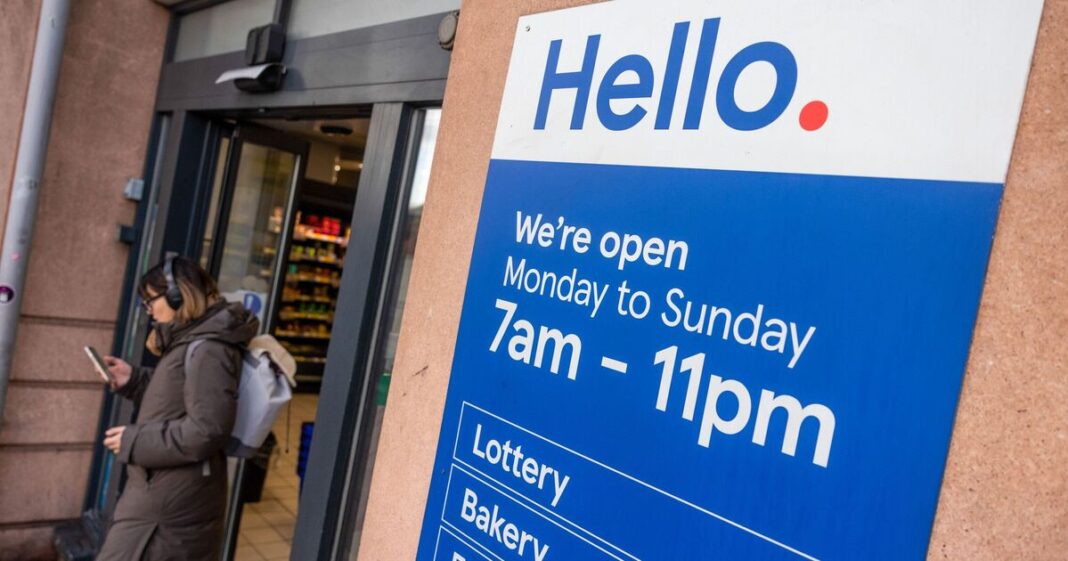
It is another baking hot day in the UK – and new data from the British Retail Consortium shows that heatwaves are hitting high street footfall, as people seek refuge from the sun by staying indoors.
Total UK footfall dropped 3.4% in June compared with the same period last year, and accelerated from a 2.6% annual drop in May, it found. The fall was even starker on high streets, which dropped 6.2% in June, down from a drop of 1.5% in May.
Scotland was the only riser, where footfall rose by 1.7% in June, the BRC found.
Helen Dickinson, chief executive of the BRC, said:
Footfall dropped in June as the record heatwave kept many shoppers indoors. High streets saw the sharpest declines, while air-conditioned shopping centres and retail parks proved more resilient.
While London and the South East – where temperatures were highest – registered the biggest decline, other regions performed markedly better. Scotland saw footfall rise, buoyed by cooler weather and the continued gradual opening of Glasgow City Centre after March’s devastating Union Corner fire.
The heatwave may have affected footfall, but retailers face a bigger challenge: rising costs. Businesses are working hard to deliver value for customers, yet higher taxes and regulatory burdens are making it harder to invest, create jobs and grow. Government action on business rates and energy costs would help unlock investment to revive our local communities.”
Neso says it will conduct internal review over cover-up allegations
Elsewhere this morning, a director at Britain’s grid operator Neso (National Energy Systems Operator) has said it will conduct an internal review over allegations of a cover-up.
Claire Coutinho, the shadow energy secretary, has alleged that bosses at Neso ordered control-room staff to hide information that showed the grid was not being run securely.
This allegedly involved ordering staff not to keep permanent records of operational decisions to ensure there was no paper trail.
Julian Leslie, director of strategic energy planning at Neso, told BBC Radio 4’s Today programme:
We take all allegations seriously and we will conduct our own internal review into those allegations to get to the root cause of those. But what I can assure everybody…is that the control room is staffed by experienced, expert engineers that take real pride in their job, that they are authorised to make the decisions they make and only authorised people can make those decisions.
In terms of recording information, obviously those engineers in the control room are dispatching the generation across the nation and that is done through computer systems where there is clear records and logs of decisions that have been made, both at our end of the computer system and at the receiving end. So our investigation will look into all of that. We will get clarity as to what actually happened very soon.
European stock markets open higher
European stock markets have opened broadly higher this morning – the UK’s blue chip FTSE 100 index is up 0.3%, led by a 11.7% rise in Vodafone after the news that the French billionaire Xavier Niel has bought a £4.4bn stake in the business.
The French Cac 40 is broadly flat, while the German Dax has slipped 0.07%. But the Stoxx Europe 600, which tracks the biggest companies across the whole continent, is up very slightly by 0.08%.
EasyJet shares pop 13% after surprise £5.7bn takeover deal
Shares in easyJet have popped 13% this morning after surprise news of a new £5.7bn takeover deal with the US private equity firm Apollo.
Aarin Chiekrie, an equity analyst at the broker Hargreaves Lansdown, notes that Castlelake could still come back with a higher bid.
Apollo said that it believes easyJet has significant long-term growth potential and supports its existing strategy of strengthening its low-cost carrier model by upgrading its fleet to newer, more efficient planes. This is an expensive task for any airline, and easyJet’s ambitions could be sped up by access to new capital and the longer-term strategic planning that’s afforded to private companies.
Apollo’s offer is now the preferred option and the one that easyJet’s management would recommend to shareholders. But the deal’s not off the runway yet, with Apollo having until 7 August to decide whether to make a formal bid. In that time, rival bidder Castlelake could still come to the table with improved terms.”
French billionaire becomes biggest investor in Vodafone with £4.4bn stake

Mark Sweney
French telecoms billionaire Xavier Niel has become Vodafone’s largest shareholder after buying a 16.21% stake for £4.4bn.
On Friday, Emirati telecoms group e&, which first took a stake in Vodafone in 2022, announced the sale of its entire shareholding for 112.5p a share.
Niel, who founded the telecoms company Iliad, has bought the stake through investment vehicle Vega at a 15% premium to Vodafone’s share price on Thursday.
Niel said that Vega, which has been set up solely to house his stake in Vodafone, intends to be a long-term minority shareholder in the telecoms company.
In recent years Vodafone has restructured its business – including selling its Italian and Spanish operations and its 50% stake in its Dutch joint venture – as well as merging with Three to create the UK’s largest mobile operator.
Niel said Vodafone is now a “compelling investment opportunity”. He said:
As a simpler, more focused business, Vodafone is ready for a new phase of growth and is well-placed to unlock substantial untapped value across its European and African operations.
We are confident Vodafone can deliver sustainable growth and strong cash flow generation over the long term and – as an anchor investor based in Europe – we are ready to contribute our deep sector expertise and operational know-how to its future success.”
The 59-year old, who has built telecoms businesses in France, Italy, Poland and Iceland, first took a 2.5% stake in Vodafone in 2022.
Niel, who is estimated to be worth $15.5bn by Forbes, has been the partner of Delphine Arnault, the daughter of France’s richest man, Bernard Arnault, for more than a decade.
His other business interests include French newspaper Le Monde, which he saved from bankruptcy, although two years ago he sold almost all of his shares for €1 to the Fund for Press Independence in a restructure to safeguard the independence of the publication.
The sudden appearance of Apollo on the scene follows multiple rounds of talks between easyJet and Castlelake. EasyJet had told investors earlier this week that it had reached an agreement in principle with the firm at £6.90 per share.
Apollo has said today regarding its chunkier offer:
EasyJet management’s operational and commercial ambitions can be substantially accelerated via the access to incremental capital and longer-term business and strategic planning that a private company setting affords.
It said easyJet investors will have the option to roll their existing stock into a “stub equity alternative”, through which Apollo’s funds would hold their investment in the business.
Introduction: Apollo gatecrashes easyJet sale with surprise £5.7bn takeover offer
Good morning and welcome to our rolling coverage of business, the financial markets and the world economy.
A surprise corporate twist this morning: the US private equity firm Apollo has agreed to buy the airline easyJet in a £5.7bn deal, beating a rival bid for the company by Castlelake.
EasyJet has reached an agreement in principle for an offer of £7.15 per share, and has said this morning that its board is inclined to recommend the deal to shareholders.
The airline had been set to be taken private in a £5.5bn deal with the US private credit group Castlelake, which had until 3 August to make its formal offer.
But easyJet said in a statement this morning:
The proposed cash offer delivers a superior outcome for easyJet shareholders by providing a higher cash value than Castlelake’s latest proposal of £6.90 per easyJet share, submitted on 4 July 2026.
Apollo’s offer represents a 22% premium against easyJet’s closing share price yesterday, and an 81% premium compared with its price the day before the offer period for the bid from Castlelake.
Apollo also added that it would agree to take “all necessary steps” to satisfy any EU local ownership rules. Current regulation requires European airlines to be majority owned by a European entity, Castlelake had planned around this by intending to bring two Irish airline executives on board.
Elsewhere today, Asian stock markets have been largely mixed – the Japanese Nikkei and Hong Kong’s Hang Seng are both up by about 1%. The South Korean Kospi is yet again the stand out, up by almost 3%. On mainland China however, shares are slipping – the SSE Composite is down by 0.3%.