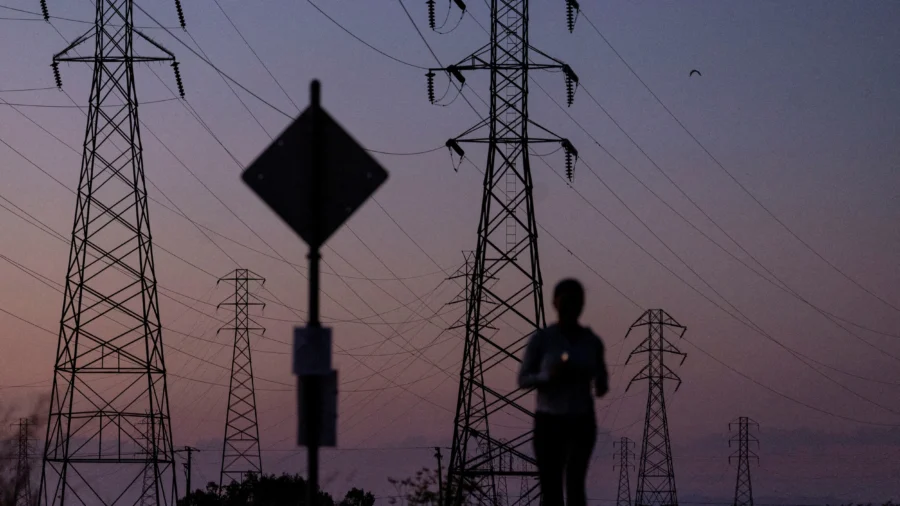
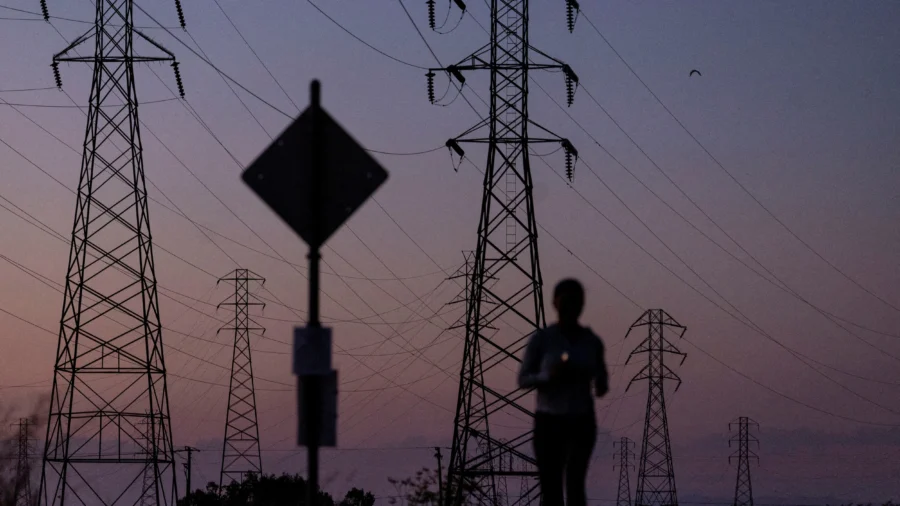
The twin alerts directed transmission and generation owners to consider postponing scheduled equipment maintenance to keep generating units online, and put neighboring grid operators on notice that electricity exports from PJM could be curtailed. Demand response programs—which compensate customers in advance for facilitating reductions in their electricity use during emergencies—were also placed on standby.
PJM forecast Wednesday’s peak demand at approximately 164,553 megawatts. That figure falls just below the all-time peak of roughly 168,158 MW recorded on July 2 during a prolonged heat wave—itself a record that surpassed the previous high of 165,563 MW set on Aug. 2, 2006. The operator said it requested a combined emergency order from the U.S. Department of Energy, effective from July 15 through July 21, for temporary relief from environmental permit restrictions and to authorize backup generation if needed.
Transmission congestion compounded the strain on Wednesday, with spot wholesale electricity prices shooting above $300 per megawatt-hour around midday, up from roughly $30 per MWh earlier in the morning. Congestion was especially concentrated near northern Virginia, home to the world’s largest concentration of data centers.
The shortfall marks the second consecutive auction in which PJM failed to meet its one-event-in-10-year reliability standard. The operator said it plans to seek approval from the FERC to hold a special “Backstop Procurement” in September to help narrow the gap.
PJM President and CEO David Mills pointed to surging electricity demand—driven in large part by data center expansion—as the central challenge.
“Demand for electricity continues to grow faster than electricity supply,” Mills said. “At the same time, PJM recognizes how this supply-and-demand imbalance impacts the reliability of the system and costs for consumers. We are working with government and industry leaders on multiple fronts to restore that balance by bringing on new generation as fast as possible and managing the growth of new load on the grid.”
Environmental advocates warned the pattern reflects a worsening trajectory.
“This year’s auction confirms an unacceptable trend: data center load growth is outpacing new electricity supply, degrading reliability, and keeping prices at the cap,” said Claire Lang-Ree, a renewable energy advocate at the Natural Resources Defense Council.
To address near-term supply constraints, PJM said it is pursuing a range of measures, including clearing backlogs in its generation interconnection queue, developing frameworks to allow large new loads such as data centers to connect to the grid while operating flexibly, and facilitating long-term bilateral supply agreements between large power buyers and generators. The operator is also pursuing an expedited interconnection track for up to 10 state-sponsored, shovel-ready generation projects.
The auction’s supply mix for committed resources was 46 percent natural gas, 20 percent nuclear, 18 percent coal, 5 percent demand response, 4 percent hydro, 2 percent wind, 2 percent oil, and 1 percent solar.