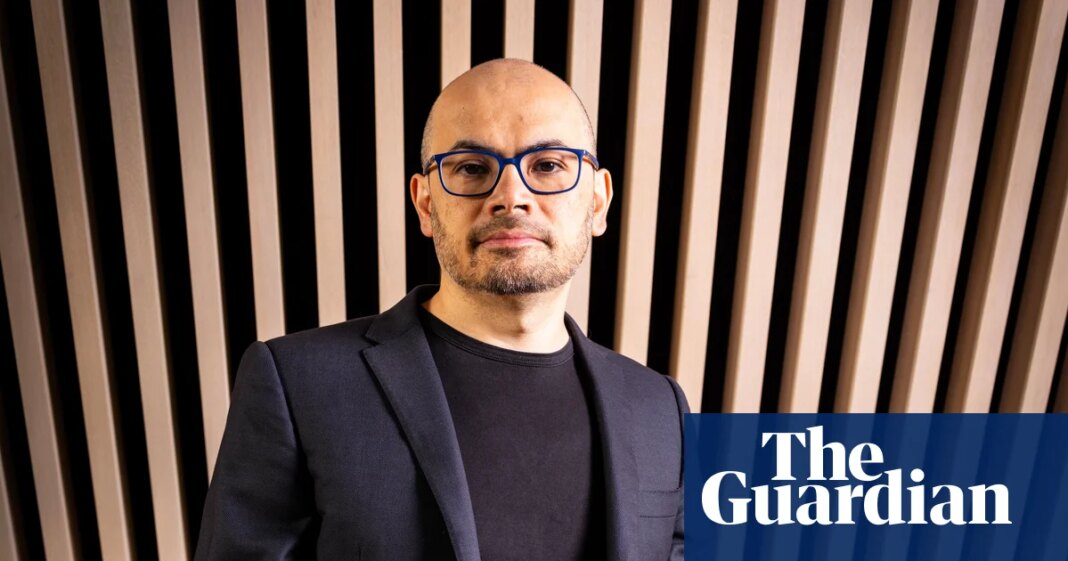
When Sir Demis Hassabis said AI had brought the world to a “pivotal moment in human history” last month, he knew another big change was imminent.
This shift was closer to home. The Nobel prize-winning head of Google DeepMind, Google’s AI unit, announced this week he was relinquishing his day-to-day duties as chief executive and becoming chair. He is also taking on the role of chief scientist at DeepMind’s parent, Alphabet.
Hassabis and DeepMind have been key players in AI’s breakthrough era. The 50-year-old co-founded DeepMind and sold it to Google in 2014, which gave him the resources to oversee a number of advances.
These included building the AlphaGo system that mastered the Chinese board game Go and developing AlphaFold, a programme that predicts the 3D structure of proteins. The latter resulted in Hassabis being jointly awarded the 2024 Nobel prize in chemistry.
A former Google executive said the leadership overhaul showed London-based DeepMind being brought firmly into the orbit of its parent in Mountain View, California. DeepMind will now be run by Hassabis’s longstanding colleague, the US-based Koray Kavukcuoglu, who will take the non-CEO role of senior vice-president of DeepMind.
“The era of DeepMind as an independent actor is over and the obvious sign of that is you have gone from a charismatic founder-leader to appointing Koray in a non-CEO leadership role. Koray is a technical character, not an inspirational figure like Demis,” said the former executive.
The ex-Google employee added that it would be “galling” for Google and Hassabis that the latest iterations of Google’s flagship AI model series, Gemini, have lost ground to rival models developed by its US rivals Anthropic and OpenAI.
Hassabis has said he was looking forward to focusing more on the “big picture” for AI and believed he was handing over operational management of a unit that was well placed for the competitive battles ahead.
Internally, DeepMind is a workplace where there have been political tensions. Employees who spoke to the Guardian said there was internal disquiet over the company’s work with the Pentagon. Earlier this year, a former Google DeepMind employee launched a legal challenge against Google, claiming they were unfairly dismissed for their views on Gaza.
That employee was involved in unionisation efforts at Google DeepMind, which have taken place against a backdrop of concern that Google’s AI could assist militaries, including the Israel Defense Forces. Another Google DeepMind employee resigned from the company in mid-July, citing Google’s work with the Pentagon and the US Department of Homeland Security.
One said to the Guardian that Hassabis’s departure was the “end of an era”.
“Now the person we were supposed to trust to get the right outcomes for humanity has stepped away,” they said. Google DeepMind “has become just another subdivision of Google”, they added.
Rosa Curling, the executive director of Foxglove, a campaign group that supported the Google DeepMind employee in their legal challenge, said: “The departure of the co-founder of a company that once prided itself on its ethical credentials is likely to cause further concern among its frontier AI staff about how their work will end up being used in the real world.”
Google has said it is committed to the “private and public sector consensus” that AI should not be used for domestic mass surveillance or autonomous weaponry without “appropriate human oversight”. While Google has declined a voluntary union recognition agreement in London, it has said it valued “the constructive and direct dialogue that we have with our employees about building a positive and successful workplace”.
On the commercial side, a new cutting-edge model, Gemini 3.5 Pro, has yet to be released amid reports it has been delayed owing to attempts to improve its code-writing abilities – a core part of the appeal of Anthropic and OpenAI’s best products.
Google’s two AI labs, London-based DeepMind and California-based Google Brain, were merged into Google DeepMind under Hassabis’s leadership three years ago. Control now appears to be moving back to the US, where Google’s co-founder Sergey Brin is reportedly playing a bigger role in AI development.
Citing the departure of the leading AI researcher Yann LeCun from Meta and Geoffrey Hinton from Google as another example of “the end of an era in the AI ecosystem”, the former executive added: “This is very clearly a sign that the science-driven agenda of leadership in these labs has given way to cold, hard commercial reality that all of these companies want to make a return on the hundreds of billions of dollars they have invested in AI.”
after newsletter promotion
The source added, however, that Google still had the benefit of being able to combine its Gemini models with an impressive suite of products, from its all-conquering search product to its cloud platform and YouTube. Thanks to its search business it also has the money to continue investing heavily in AI, having generated net income – a US measure of profit – of $132bn (£98bn) last year.
Hassabis has also taken on a more statesman-like role in recent years. The reference to a “pivotal moment” came in a blogpost in which he called for a US safety body to assess cutting-edge models, with the hope it would lead to the establishment of global standards.
The need for such a body, Hassabis argued, was pressing because the tech industry was approaching the “pivotal” point of achieving AGI, the term for a theoretical state of AI where a system can perform any human cognitive task – which also means being capable of performing white collar jobs in sectors such as law, finance and health.
A Google spokesperson said: “This is a move Demis has been thinking about for a while. He is very excited, and this will give him more time to focus on AI-driven scientific breakthroughs.” They disputed that the changes had anything to do with the performance of Gemini.
Hassabis’s move was announced alongside the departure of Jeff Dean, a veteran Google engineer and DeepMind’s chief scientist, who is leaving along with three other top researchers to form an AI startup called Discovery Loop.
According to one former Google employee, Dean’s departure could augur further personnel losses. Dean’s move also follows OpenAI’s poaching in June of Google’s Noam Shazeer, a leading figure in the field as co-author of the 2017 research paper Attention is All You Need, a crucial step in developing chatbots.
“It’s hugely problematic for Google,” said Jeremy Nixon, a former AI researcher at Google and founder of Infinity Artificial Intelligence Institute, a startup. “It’s problematic because of who Jeff will hire and because the primary reason people want to work at Google is because of him and Noam Shazeer and all these other phenomenal researchers. It’s no longer true to say that if you want to work with the greatest researchers on the planet, you go to Google DeepMind.”
Nixon added that Dean was an “angelic diplomat” who could “deal with these complex political organisations”.
Google denies it faces a post-Dean talent crisis, pointing to attrition rates for AI talent for the first half of this year being lower than they were at this time last year.
If AI is indeed facing a pivotal moment, Google has just had one.