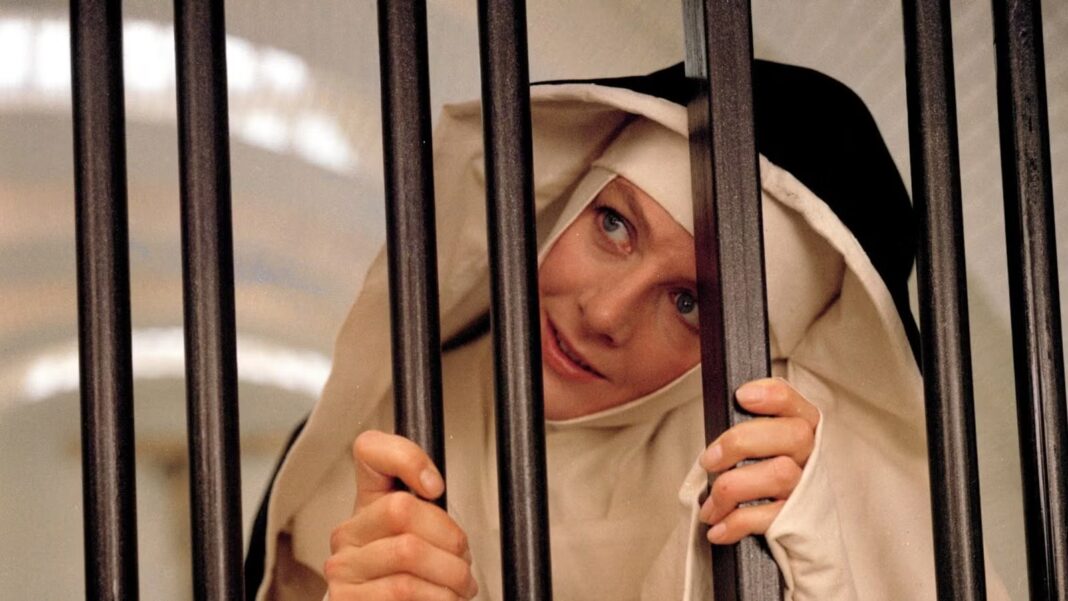
In the modern cinema landscape, with the theater-to-streaming pipeline moving quickly, few consider the possibility that a film could be lost or banned, rendering it unavailable. This has not always been the case, as a single decision by a government, studio, or producer could place a completed film into the realm of the obscure. Ken Russell’s The Devils is one of those infamous movies that faced heavy bans, and while copies of both the cut and “uncut” versions were released. However, it was not until 2026 that a studio-backed 4K restoration assembled from the original camera negative.
It has been a long time since I have been this excited about a new release; the release of Alejandro Jodorowsky’s films after settling a dispute with ABKCO left Ken Russell’s The Devils as one of my last white whales of cinema for a fully restored release. In theaters, 4K, completely uncut and uncensored from the originals, is quite the remarkable release for this once-maligned and buried horror film.
The Plight of ‘Ken Russell’s The Devils’

Ken Russell has always been a fascinating figure in British film, with an enduring creative genius and a willingness to experiment that earned acclaim for both his musicals, Lisztomania and Tommy, and scrutiny for his more challenging works, such as Altered States and Lair of the White Worm. Yet none of his projects struck a chord, angered the censors, or was condemned as much as The Devils. The battle to release Ken Russell’s The Devils has been well documented (for a deep dive, I recommend Raising Hell: Ken Russell and the Unmaking of The Devils by Richard Crouse), but before the 4K theatrical restoration, it certainly deserves revisiting.
Ken Russell’s The Devils inspiration is drawn from two sources: Aldous Huxley’s 1952 nonfiction book The Devils of Loudun and John Whiting’s 1960 stage play about the same events, based on the real trial of Urbain Grandier. Grandier (played by Oliver Reed in the film) was a 17th-century French priest burned at the stake after a convent of nuns, led by Sister Jeanne des Anges, accused him of demonic possession. That was the premise going into production, but on an impressive £2,000,000 budget (approximately U.S. $4,800,000 at the time, or $52–55 million adjusted for inflation), Russell laid in sacrilegious imagery that went well beyond anything in either source.
There are many who despise the graphic cruelty, exploitative eroticism, and sacrilegious themes of the entire movie, including Roger Ebert, who gave it zero stars. The scene most responsible for three decades of suppression is the one censors nicknamed the “Rape of Christ,” a fever-dream of a sequence that sees nuns taking down a statue of Christ in a sexually charged fervor. There is also a second, quieter moment involving a nun and a dead priest’s femur bone that is almost as notorious. All of this, of course, overlooked the movie’s artistic merit, fixating on isolated moments to attack its overall themes and dismiss it wholesale.
The BBFC excised the “Rape of Christ” sequence from every official release for over 30 years, to the point that it was nearly impossible to see. And even after the film was eventually released, it remained heavily censored. That makes the restoration, arriving 55 years after its initial “release,” all the more reason to celebrate: the boundary-pushing horror landmark is finally coming to audiences in its complete form.
The Definitive Release of ‘Ken Russell’s The Devils’ Is a Whole New Beast

Having seen the previously released “uncut” version, I can attest that the movie is quite a spectacle, with the infamous church orgy scene channeling a kind of stylized madness that swirls with both the raw visual power only Russell can command and a pervasive sense of unease as it sets the stage for Grandier’s execution. The performances are phenomenal, with both Vanessa Redgrave and beloved screen rebel Oliver Reed giving the best performances of their careers. If you have seen the movie, you are in the know about its hypnotic, macabre pull and understand its infamy.
Yet, this previous release still wasn’t the complete edition. One of the many outspoken fans of the movie, Guillermo del Toro, spoke to just how awe-inspiring and thorough the new 4K restoration is:
The restoration of the material is like cleaning the Sistine Chapel with saliva. It is insane, the epic size of the film. I mean, I’ve seen it on the big screen in Telluride at a theater – but I’ve never seen the movie until I saw this restoration.
The film is so vast, audacious, and meticulously crafted with large sets that fully immerse viewers in the period. This was already evident in previous releases, so getting that polished and finally complete NC-17-rated version is a true treat for cinema fans and filmmakers who drew influence from Russell’s work.
How to Catch ‘Ken Russell’s The Devils’ in Theaters

Ken Russell’s The Devils is an absolute must-watch for cinephiles, particularly for those who love rule-breaking cinema. The masterpiece has finally made its way to the people, as Ken Russell intended (uncensored and unrestricted), and it is every bit worth watching on the big screen. Warner Bros. Clockwork will open the film in North American theaters on October 16 for an exclusive one-week engagement with select 35mm screenings, followed by a UK release on October 30. This follows a world-class festival run, including the Cannes Film Festival (World Premiere), Il Cinema Ritrovato, TIFF (North American Premiere), and Sitges.

- Release Date
-
July 16, 1971
-

-

Oliver Reed
Father Urbain Grandier
-
Dudley Sutton
Baron de Laubardemont
-