For a historical fantasy show that spent eight seasons teaching audiences not to trust happy endings, Game of Thrones ended up needing one of its own. The problem wasn’t that certain characters died, or that the final ruler of Westeros surprised us. The bigger issue was how quickly everything happened. After years of intricate character arcs, political rivalries, and existential threats, the final season had only six episodes to stick the landing.
As a result, the HBO fantasy series with near-flawless execution suffered. Game of Thrones had 73 episodes overall, and Season 8 became the only season to fall below 90% on Rotten Tomatoes. Another sprawling medieval drama had already found a better way to end its massive story. Vikings wasn’t as culturally dominant as Game of Thrones, and it never had HBO’s enormous reputation behind it. However, it was also built on a similar canvas of war and politics, and it ran for 89 episodes across six seasons. The creators had 16 more episodes to finish a story without the meltdown Game of Thrones experienced.
‘Vikings’ Finished What It Started and Told a Concise Story
-
 History Channel
 -
 History
 -
 Netflix/MovieStillsDB
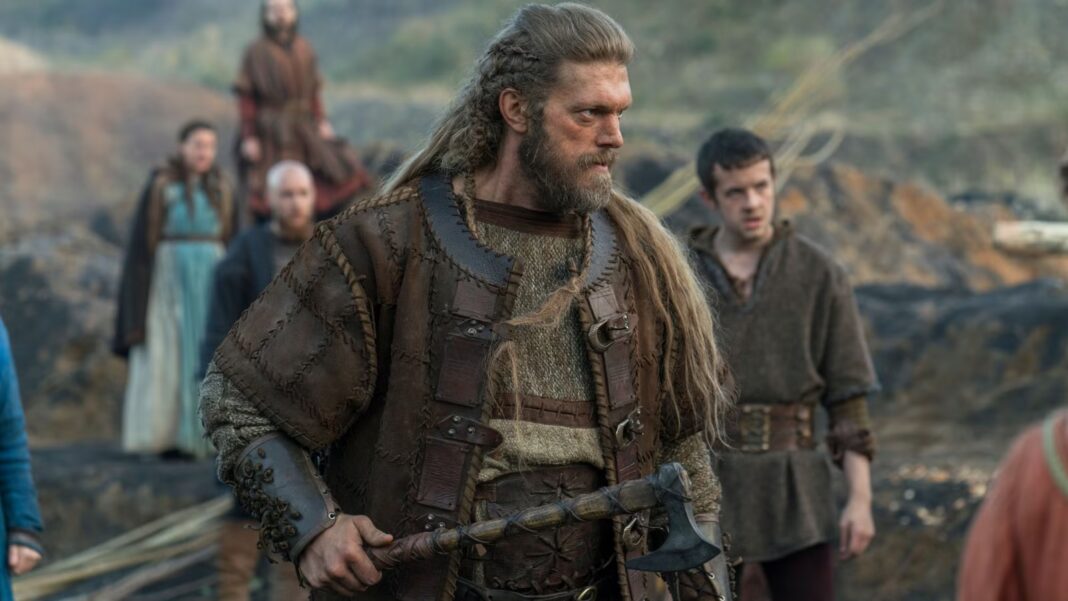
Vikings wrapped up in 2020 after six seasons and 89 episodes. Creator Michael Hirst said he wrote every episode. When the show ended, it wasn’t because History pulled the plug or ratings collapsed overnight. Hirst decided to end the series because he told the story he wanted to.
It’s a small detail, but in this context, it’s important. Game of Thrones hit a wall the moment the writers began moving past George R.R. Martin’s books. The writers had to draft an ending from scratch under a ticking production clock. Vikings never had that problem. Hirst steered the entire ship from Episode One to 89. Every character, from Travis Fimmel’s Ragnar Lothbrok down to his increasingly chaotic sons, had an arc that paid off storylines established in earlier seasons.
None of this means Vikings was entirely flawless. The later seasons juggled a sprawling cast, especially since a key character left in Season 4. By Season 6, the audience had thinned out considerably compared to its peak. But declining ratings and a messy ending are two different problems, and Vikings only had the first one. Interestingly, Rotten Tomatoes currently gives Vikings a 93% overall critics’ score, with its sixth and final season sitting at 100%.
‘Vikings’ Remains Underrated Today
The funny thing is that Vikings was never a tiny cult discovery. The show aired on History, a channel that, for decades, was synonymous with documentaries about tanks and ancient aliens. Yet the show’s 2013 premiere drew more than six million U.S. viewers, according to Nielsen reporting and the Los Angeles Times. The series eventually earned 14 Emmy nominations and won an Emmy for visual effects.
However, Vikings occupied a different part of the television ecosystem. Game of Thrones arrived on HBO as a prestige drama with a massive marketing machine and an established literary fanbase. Vikings came from History with a fragmented distribution, and the final 10 episodes premiered on Amazon Prime Video in several countries. Streaming access only scattered the pop culture conversations that shows like Game of Thrones thrived on.
Vikings is the most rewarding fantasy series to rewatch. The storytelling holds up, the ending earns its final twist, and the show’s legacy continues thanks to its Netflix sequel series, Vikings: Valhalla. If you remember the peak seasons of Game of Thrones, ripe with brutal battles and family dysfunction, Vikings has a lot of that, too.

- Release Date
-
2013 – 2020-00-00
- Network
-
Prime Video, History
- Showrunner
-
Michael Hirst