In the immortal words of Leonardo da Vinci, “Art is never finished, only abandoned.” In the case of Sir Ridley Scott, it took the supremely skilled director 25 years to sculpt his definitive sci-fi masterpiece. He went through seven versions of the futuristic thriller film before delivering his true, uncompromised vision. Now that the film is available to watch for free on YouTube, every Scott follower and serious sci-fi fan needs to see how his ultimate cut stacks up with the others.
Not to be confused with the 1992 Director’s Cut, the 2007 Final Cut of Scott’s universally adored adaptation of Philip K. Dick’s novel Do Androids Dream of Electric Sheep? Blade Runner is the ultimate version that the director wants you to see. After all, in the two decades since Scott’s Final Cut was released, the prescient themes of human obsolescence giving way to android slave labor and the exploitation of AI by mega-corporate conglomerates have only become more concerning.
Ridley Spent 25 Years Refining His Vision for ‘Blade Runner’
Arguably the greatest sci-fi thriller ever made, Ridley Scott’s movie tells the story of Rick Deckard (Harrison Ford), a Blade Runner (bounty hunter) who specializes in tracking and exterminating replicants, androids developed by the greedy Tyrell Corporation to replace humans as cheap slave labor in a decaying futuristic Los Angeles. Tasked with hunting four rogue replicants who’ve staged a mutiny and come to Earth in search of their maker, Deckard must also determine if a fifth member is a replicant or a human implanted with false memories.
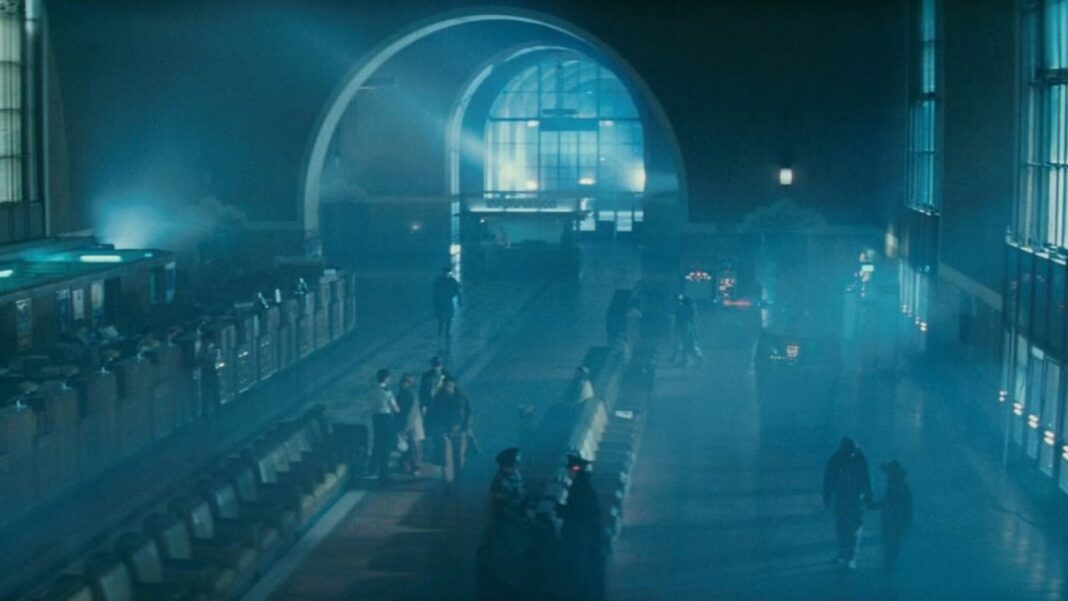
Beyond the deeply immersive, multicultural cyberpunk aesthetic drenched in rainy neon, much of Blade Runner‘s hypnotic hold stems from the fundamental mystery: Is Deckard himself a replicant? Meanwhile, the android leader Roy Batty (Rutger Hauer) longs for an extended life and expresses poetic philosophy about what constitutes being human. The movie’s themes of identity, memory, mortality, and the constant tug-of-war between compassionate empathy and cold, hard logic have never been more relevant than what society is currently grappling with regarding the efficacy of AI.
However, despite being fondly hailed as one of the most innovative science fiction films, Ridley Scott spent over two decades refining Blade Runner to his most ideal specifications. While most have not seen the 1982 test-screening work print and San Diego preview versions, Scott was extremely unhappy that producers tacked on a happy ending in the theatrical release. Although he approved the 1992 Director’s Cut, Scott didn’t work on the edits and later disowned the version. He spent another 15 years chiseling the masterpiece to his absolute liking.
The Biggest Differences in ‘Blade Runner: Final Cut,’ Explained

Released in late 2007, Blade Runner: Final Cut is 117 minutes and the only version of the all-time great cyberpunk movie in which Ridley Scott had complete creative control. The biggest difference and most significant improvement was the elimination of Deckard’s voice-over narration, which both over-explained the plot and demystified the story, and was never part of Scott or Ford’s initial vision. While the narration was a studio mandate meant to clarify things for the audience, it did more harm than good, much to the chagrin of the director and actor. Ford’s indifferent, monotonous voiceover felt rushed and out of place to begin with and completely altered the movie’s tone.
In addition to removing the tone-deaf voiceover, the other substantial change made in the Final Cut is the inclusion of Deckard’s full unicorn dream sequence. The full version entails Deckard sitting at a piano, entranced in a reverie, as he sees a majestic unicorn gallop through the forest. With deliberate close-ups of Deckard crosscut with the unicorn prancing about, the implication is that Deckard is a replicant who has been implanted with phony memories, a realization Scott hinted at for years.
Although a few instances of graphic violence were also restored and the audio/visual presentation was digitally enhanced, the removal of the VO and extension of the unicorn sequence result in Scott’s most accurate and authentic version of what Blade Runner was always meant to be.