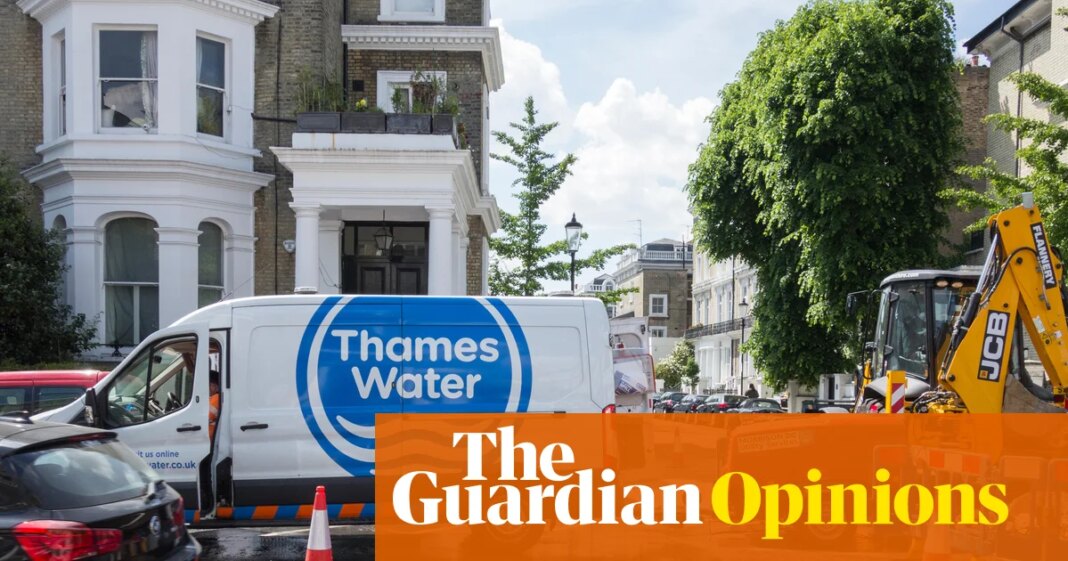
This month, a cross-party parliamentary committee said Thames Water should be placed in temporary state control and that any takeover by its creditors should be halted. The MPs were right. The “special administration” regime keeps the taps running while shareholders are wiped out, creditors take a haircut and the firm’s £19bn of debt is restructured. But it must not then be handed back to private hands. After Thames Water has failed its 16 million customers, polluted rivers, paid out billions to shareholders and repeatedly demanded higher bills, a City-friendly reprieve would only reward the outrageous behaviour that the regulatory system is meant to deter. Ministers ought to seize the opportunity to nationalise Thames Water.
In July, Andy Burnham agreed. On the campaign trail in Makerfield, he told reporters that “there’s a very strong case for public ownership [for Thames Water] to sort out its problems”. Having entered parliament and become prime minister, Mr Burnham is instead looking at letting elected mayors “oversee” private water companies. There is nothing wrong with more democratic scrutiny. However, oversight without ownership and proper control seems like a sleight of hand. Voices from different wings of the party recognise this. Mr Burnham can’t kick the decision down the road for ever.
In less than two weeks, water privatisation will be on the ballot in the Holborn and St Pancras byelection, when voters elect an MP to succeed Sir Keir Starmer. A campaign to boycott Thames Water bills has sprung up in the London constituency after repeated flooding caused by broken pipes. When asked by the Camden New Journal when the mains were last inspected, maintained or replaced, Thames Water gave “no answers”. If Labour cannot take a failing private monopoly that ruins lives into public ownership, voters may ask themselves who will?
Polls suggest comfortable majorities of Britons believe water companies should be run in the public sector. Under Sir Keir, Labour’s review of the water sector ruled out nationalisation. Some claim that new models of corporate governance could “subordinate” profits to the common good. But it’s hard to see how a failed regulatory regime will be fixed by more regulation. History has been turned on its head when British Rail is cited as proof that nationalisation is wrong. The state-owned rail firm had productive staff working in an ageing railway starved of investment. By 2011, privatised rail cost 20%-30% more. Sound familiar? Mr Burnham called water “an industry where the shareholders never lose and the bill payers never win”. Deeds, not just words, are needed.
England and Wales are outliers: 90% of the globe keeps water in public hands because others understand that a natural monopoly in water offers no competition to raise standards and leaves households as captive customers for financiers eyeing easy profits. Nationalisation comes with a price tag. But, as the Institute for Fiscal Studies acknowledges, assessing the true cost to the state requires valuing the whole deal and future cashflows, not just looking at metrics that exclude most of what is being acquired. An efficient nationalised water industry should mean cheaper bills. Currently, Ofwat allows industry’s backers to recoup £22bn over five years. A Greenwich University study calculates that nationalisation could save households up to £160 a year by accessing low-cost state financing. The upshot of public ownership is that it puts an asset on the nation’s books, whereas privatisation puts the cost on customers’ bills.