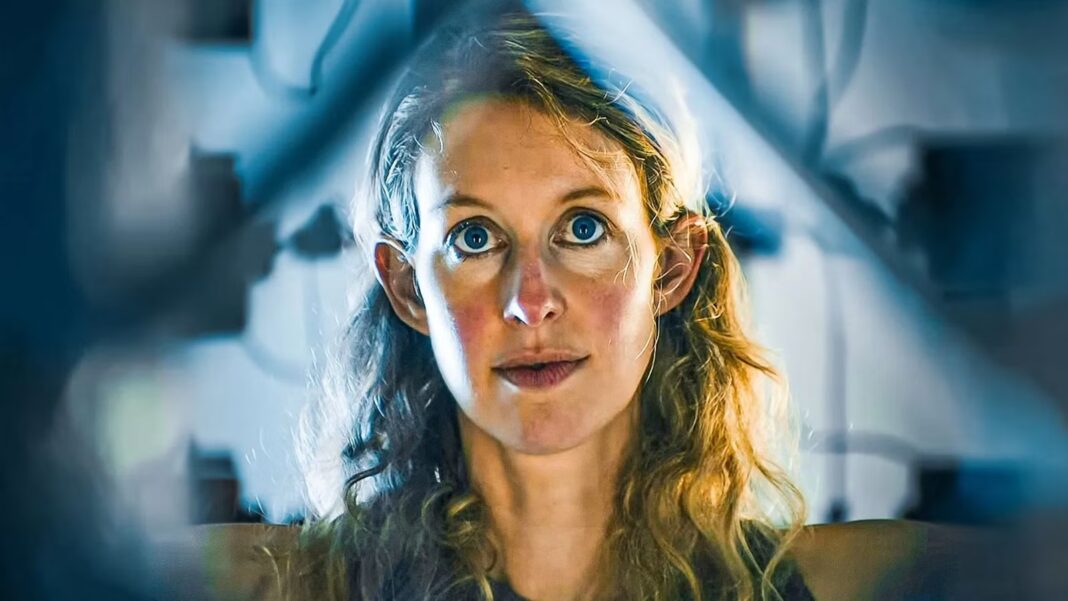
Nathan Fielder and Lance Oppenheim’s critically acclaimed documentary You Can See Everything has broken all sorts of records from a ratings perspective, as it’s emerged as one of, if not the highest-rated movies of 2026. It’s already raked in an unprecedented $15 million at the box office despite a comparatively limited release, which is incredibly impressive for a three-hour documentary. It’s also spawned an entire internet ecosystem of analysis, as viewers communicate and speculate on what is and isn’t real between Fielder, Holmes, and her fiancé, Billy Evans.
In moving in with Holmes and Evans, Fielder gets unprecedented access to the couple’s home life, and asks probing questions using his ultra-patient, awkwardly blunt interview technique. Beyond the eye-opening conversations with Holmes’ parents, Evans, and even a surprise A-list special guest that takes on a bigger role than anyone could have guessed, the movie hinges upon the one-on-one conversations between Fielder and Holmes. However, there is one question that Fielder never gets Holmes to give him a straight answer on, which is almost maddening given its importance to the film’s core concept.
We Never Find Out How Much Elizabeth Holmes Knew
One of the biggest revelations in the celebrated documentary You Can See Everything is that Billy Evans demanded from Fielder, Oppenheim, and A24 execs that he and Holmes be compensated for their participation in the film. Fielder recounts the off-camera interaction as occurring only when Holmes left the room to address her children, implying that Billy made the deal without her knowledge. Even when pressed about it directly by Fielder during his brief conversation with her in prison, Holmes appeared to maintain her distance, claiming she knew that Billy was talking to them about “something” but that the financial side of things wasn’t her concern.
In a clip that was resurfaced from Fielder’s time with Holmes before she went to prison, she even openly posits that she wasn’t participating out of any sense of financial gain, but rather to ensure her truth is made clear to the world. Fielder is never able to confirm whether she knew, and with an explanation at the end of the movie claiming Billy dropped his demands for financial compensation, it feels unlikely we’ll ever get a straight answer.
It’s frankly the most important question to come out of the movie, because it calls into question every single word she said during the three-hour runtime, recorded over a span of months. It’s the ultimate indicator of who Elizabeth Holmes actually is. Is she, in fact, a misunderstood genius whose inability to communicate effectively got her in hot water, or is she a diabolically manipulative mastermind who only participated in the documentary to further the facade of her innocence while also getting seed money to start up her next grift?
What Elizabeth Holmes Actually Went to Prison For
The crimes that Elizabeth Holmes was convicted of and the findings from her trial provide evidence that she is no doe-eyed victim of misunderstanding, but rather a con artist with a gift for deception. Holmes was charged with misleading investors, patients, and health care providers about the accuracy and ability of her company’s blood-testing machines, and was eventually convicted of three counts of wire fraud and one count of conspiracy to commit wire fraud, resulting in a prison sentence over 11 years long. Evidence of her lies was relatively overwhelming, and lays the foundation for a web of deceit far grander than the simple confusion of words that she outlines to Fielder in the documentary.
‘You Can See Everything’ Leaves Its Central Mystery Unsolved


While You Can See Everything is essentially framed around proving whether Holmes is the fraudster she has been accused (and convicted) of being, but at the end of the movie’s runtime that question hasn’t been answered. Fielder and Oppenheim’s experience with Holmes and Evans paints a picture of her as an innocent and misunderstood genius who has been wrongfully accused of deception and manipulation. It’s posited that in reality it was her former boyfriend Ramesh “Sunny” Balwani, the COO of Theranos, who did the dirty work that got her convicted while her current fiancé is the one seeking to exploit the documentary for financial gain.
However, with the late reveal that Fielder himself withheld information about Holmes from the documentary, the film establishes that even he, the supposedly impartial documentarian seeking the truth in a complicated situation, is unreliable. You Can See Everything calls Fielder’s own participation into doubt, implying that in his time with Holmes he also fell victim to her manipulation, therefore rendering everything that he said and did in the documentary essentially null and void. It calls into question whether the film is even a documentary anymore, given that nobody, including the filmmakers, seems to be telling the whole story. The big reveal is that the movie’s title is shockingly, mind-bendingly ironic, because you walk out even less sure of the facts than you were coming in—you can’t see anything, much less everything.

- Release Date
-
October 16, 2026
- Runtime
-
174 minutes
- Producers
-
Tatiana Bears, Maggie Ambrose, Jack Davis, Nathan Fielder, Lance Oppenheim