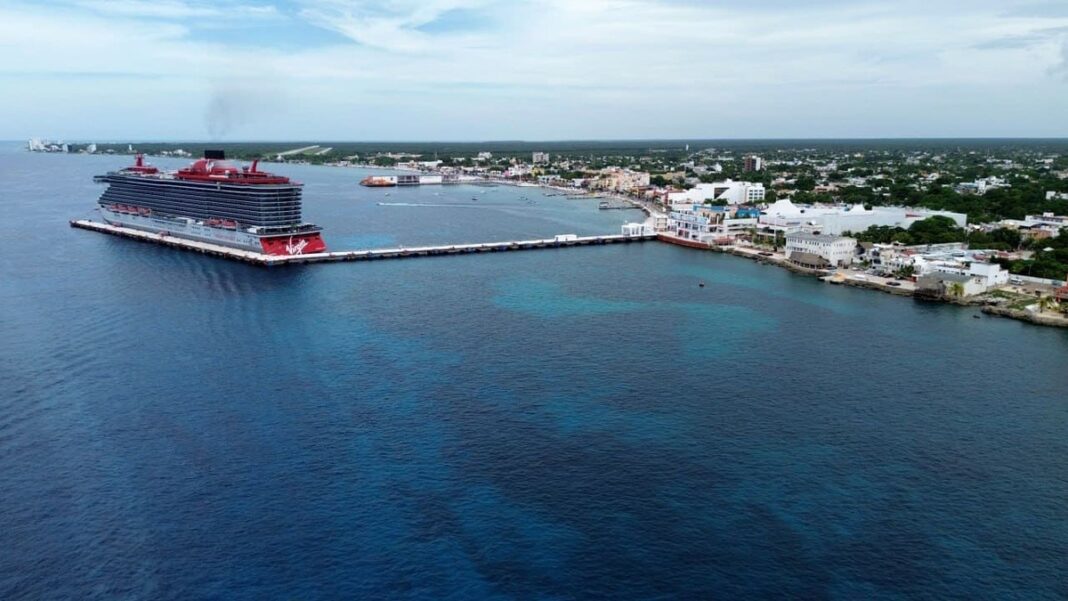

Mexico, Egypt and the United States have emerged as leading destinations in a global beach accessibility study released by ground transportation platform Mozio in 2026, with Cozumel, Sharm El Sheikh and Key West securing the first three positions worldwide. The research examined 100 popular beach destinations across several continents to determine how quickly international visitors can travel from their arrival airports to the coastline. Cozumel secured first place with an estimated five-minute transfer, followed by Sharm El Sheikh at four minutes and Key West at six minutes. Meanwhile, Myrtle Beach in South Carolina ranked 13th globally, strengthening its position among the most conveniently located mainland beach destinations in the United States. The findings highlight how airport proximity and efficient ground connections can influence travel planning, particularly for short coastal holidays.
The research places renewed attention on an often overlooked part of international tourism: the journey between landing at an airport and reaching the actual holiday destination. For travellers planning weekend breaks, family holidays or short leisure escapes, long ground transfers can consume valuable holiday time. Destinations with nearby airports may therefore offer a practical advantage beyond their beaches, hotels and visitor attractions. Mozio’s assessment focused specifically on driving distance and estimated journey time. It did not rank destinations according to luxury, hotel standards, airfare, flight frequency or the quality of their beaches.
Mexico’s Cozumel Claims Global Victory as the World’s Most Convenient Airport-to-Beach Destination
Mexico’s Caribbean island of Cozumel emerged as the highest-ranked destination in Mozio’s worldwide airport-to-beach accessibility study, demonstrating the advantages of having an international airport close to the coastline. Travellers arriving at Cozumel International Airport can reach the representative beach location after travelling approximately 1.2 miles, equivalent to an estimated five-minute drive.
This was the shortest airport-to-beach road distance recorded in the entire study. Situated off Mexico’s Yucatán Peninsula, Cozumel is known for its Caribbean coastline, marine attractions, snorkelling and diving opportunities. Its position in the global accessibility ranking provides an additional selling point for the island’s tourism industry, particularly among international visitors seeking holidays that require minimal onward road travel. The result does not establish Cozumel as the easiest destination to reach by air from every international market. Instead, it confirms that its measured journey between airport and beach performed best under Mozio’s combined time-and-distance assessment.
Egypt’s Sharm El Sheikh Records the Fastest Beach Transfer as Red Sea Tourism Gains an Accessibility Advantage
Egypt’s Sharm El Sheikh secured second position worldwide despite recording the quickest airport-to-beach driving time of every destination examined. According to the Mozio study, travellers can reach the selected beach location in approximately four minutes after leaving Sharm El Sheikh International Airport. This performance places the Egyptian Red Sea destination ahead of Cozumel when comparing journey times alone.
However, Cozumel retained the highest overall ranking because Mozio’s methodology considered both driving duration and distance. Sharm El Sheikh’s strong performance reflects the close relationship between its international airport and developed coastal visitor areas. The destination’s accessibility is particularly relevant to package-holiday providers and hotel operators arranging airport pickups for resort guests. Its ranking also demonstrates that the world’s leading beach-accessibility destinations are not confined to the Caribbean or North America. Egypt has secured a prominent position within this increasingly important aspect of coastal tourism infrastructure.
Advertisement
Advertisement
United States Emerges as a Major Contender With Key West, San Diego and Myrtle Beach Among Global Leaders
The United States established a strong presence in the international study, with several coastal destinations delivering comparatively short airport-to-beach journeys. Key West in Florida ranked third worldwide and became the highest-ranked American destination. The journey from Key West International Airport to the selected beach point covers approximately 1.8 miles and takes an estimated six minutes.
San Diego, California, secured tenth position globally, with an airport-to-beach transfer estimated at approximately ten minutes. Myrtle Beach in South Carolina followed in 13th position worldwide, becoming the third-highest-ranked American destination. Together, these locations demonstrate how different types of coastal destinations can benefit from nearby commercial airports. Key West benefits from compact island geography, while San Diego combines an international airport with an established urban coastal setting. Myrtle Beach offers a different model, with its airport positioned close to the resort district on the mainland.
Advertisement
Advertisement
Myrtle Beach Makes Global Top Fifteen as South Carolina Strengthens Its Position in American Beach Tourism
Myrtle Beach achieved one of the most notable American performances in the study, securing 13th position among the world’s leading beach destinations for airport accessibility. The destination’s representative beach location lies approximately 4.1 miles from Myrtle Beach International Airport, with an estimated driving time of 12 minutes. Its airport occupies the former Myrtle Beach Air Force Base site, close to the coastal resort area.
This location creates an important practical advantage for visitors arriving by air, particularly those travelling for shorter holidays. Unlike many highly ranked island destinations, Myrtle Beach is situated on the mainland, making its strong international performance especially notable. The study also identified two additional South Carolina coastal destinations. Folly Beach ranked 63rd worldwide, requiring an estimated 36-minute drive from Charleston International Airport.
Hilton Head ranked 78th, with an approximately 54-minute journey from Savannah/Hilton Head International Airport. These three destinations demonstrate how airport location can create considerable differences in ground transport requirements within the same state. For the state’s tourism industry, Myrtle Beach’s ranking provides a measurable accessibility advantage that can be incorporated into destination promotion and holiday planning.
Global Beach Accessibility Rankings Reveal Which Destinations Offer the Shortest Journey From Airport to Sand
Mozio assessed 100 well-known coastal destinations across the United States, Caribbean, Latin America, Europe, Africa, the Middle East and Asia-Pacific. The research used Google route data to measure driving times and distances between each destination’s selected gateway airport and a representative beach location.
Advertisement
Advertisement
The table below summarises the leading global destinations and the South Carolina locations highlighted in the findings.
| Global rank | Beach destination | Country or territory | Estimated transfer time |
|---|---|---|---|
| 1 | Cozumel | Mexico | 5 minutes |
| 2 | Sharm El Sheikh | Egypt | 4 minutes |
| 3 | Key West, Florida | United States | 6 minutes |
| 4 | George Town | Cayman Islands | 7 minutes |
| 5 | Mallorca (Playa de Palma) | Spain | 6 minutes |
| 6 | Corfu | Greece | 8 minutes |
| 7 | Montego Bay | Jamaica | Within the leading ten |
| 8 | Charlotte Amalie | US Virgin Islands | Within the leading ten |
| 9 | Mykonos | Greece | Around 11 minutes |
| 10 | San Diego, California | United States | Around 10 minutes |
| 13 | Myrtle Beach, South Carolina | United States | 12 minutes |
| 63 | Folly Beach, South Carolina | United States | 36 minutes |
| 78 | Hilton Head, South Carolina | United States | 54 minutes |
Source: Mozio airport-to-beach accessibility research. The rankings use a combined driving-time and distance score, rather than journey time alone.
The results show that Mediterranean and Caribbean destinations perform particularly well within the leading group. George Town in the Cayman Islands, Mallorca in Spain and Corfu in Greece join Cozumel, Sharm El Sheikh and Key West among destinations where the selected beach can be reached within approximately eight minutes.
Why Island Geography and Airport Planning Give Some Beach Destinations a Major Advantage
One of the strongest geographical patterns in the research is the concentration of island and compact coastal destinations near the top of the rankings. Cozumel, Key West, Mallorca, Corfu and Mykonos all benefit from relatively short distances between their airports and selected beach locations. In many island destinations, the limited amount of available land means airports, roads, settlements and coastal tourism facilities are located relatively close together.
However, airport proximity is not determined by geography alone. Road layout, local development, the position of the terminal and the location of public beach access also influence actual journey times. Myrtle Beach provides an important mainland example, demonstrating how airport placement close to an established resort corridor can produce a similarly short transfer. The comparison underlines that accessibility is partly a product of infrastructure planning.
Costa Rica and the United States Reveal the Other Side of the Rankings With Lengthy Coastal Transfers
While several beach destinations can be reached within minutes of leaving the airport, other coastal locations require substantially longer road journeys. Manuel Antonio in Costa Rica recorded the longest driving time in Mozio’s study. Visitors face an estimated journey of two hours and 49 minutes, despite the destination being approximately 98 miles from its selected gateway airport. Mountainous terrain and road conditions contribute to the lengthy transfer.
Advertisement
Advertisement
North Carolina’s Outer Banks recorded the greatest airport-to-beach road distance, at approximately 120 miles, with an estimated driving time of two hours and 20 minutes. Rehoboth Beach in Delaware and the Hamptons in New York both recorded estimated journeys of two hours and 14 minutes. These results illustrate how a popular beach destination can remain attractive while requiring significant onward ground travel.
Maldives, Bora Bora and Boracay Require Additional Sea Transfers That Change the Airport-to-Beach Experience
Not every beach destination can be assessed using conventional road travel. Mozio examined three locations separately because visitors must complete an additional journey by sea or air after arriving at their gateway airport.
These destinations were excluded from the numerical road-accessibility ranking because their transport arrangements are not directly comparable with car journeys.
| Destination | Country or territory | Typical additional transfer |
|---|---|---|
| Malé | Maldives | Approximately 10-minute speedboat journey |
| Bora Bora | French Polynesia | Approximately 18-minute boat transfer |
| Boracay | Philippines | Approximately 30-minute ferry crossing |
Source: Mozio. Transfer times are indicative and depend on the specific onward journey and destination.
How Mozio’s Global Study Measures Airport-to-Beach Accessibility Across One Hundred Destinations
Mozio developed an accessibility index designed specifically to compare ground transport requirements after landing. The company selected 100 well-known beach destinations and identified the primary commercial gateway serving each representative beach location. Google driving data was used to determine estimated travel time and road distance.
Of the 100 destinations assessed, 97 received numerical rankings, while Malé, Bora Bora and Boracay were placed in a separate category.
Advertisement
Advertisement
The overall accessibility score was calculated using two weighted measurements:
- Driving time — 60%: The estimated time needed to travel from the airport to the selected beach.
- Driving distance — 40%: The length of the road journey between the same locations.
The researchers normalised the results into an index ranging from zero to 100, with higher scores representing easier airport-to-beach journeys. Importantly, the study did not measure direct flight availability, public transport frequency, taxi prices, hotel inventory, airport processing times or beach quality. Therefore, the rankings should be interpreted as a comparison of ground-transfer efficiency rather than a comprehensive assessment of tourism accessibility.
Faster Transfers Offer New Opportunities for Airlines, Hotels, Tour Operators and Short-Stay Travellers
The research provides a useful perspective for the wider global travel industry. For airlines, the proximity of a destination airport to major coastal attractions can become an additional consideration when communicating the benefits of a route. However, fast road access does not automatically mean a destination is cheaper, easier to reach internationally or better connected by air. A location with a longer transfer may still offer more convenient flight schedules, direct connections or accommodation choices.
The most useful comparison therefore combines flight availability, airport transfer costs, transport reliability and overall journey time. Mozio operates in the global ground transport sector, connecting travellers and travel businesses with transport providers across more than 190 countries and approximately 3,500 airports. Its findings reinforce the commercial relevance of reliable onward transfers as part of the wider travel booking experience.
Global Beach Tourism Enters a New Era Where Every Minute Between Airport and Coast Matters
The results show how dramatically ground transport requirements can differ between popular coastal destinations. Cozumel leads the overall ranking through its combination of short distance and journey time, while Sharm El Sheikh records the fastest individual transfer. Key West provides the strongest American result, followed by San Diego and Myrtle Beach.
At the other end of the rankings, destinations such as Manuel Antonio and the Outer Banks require considerably longer journeys. As airlines, hotels and tourism businesses compete to deliver smooth visitor experiences, accurate transfer information can become an increasingly useful part of travel planning. The central finding is straightforward: the journey to a beach holiday does not end when the aircraft lands. Ground transport remains an essential part of the visitor experience, and destinations with short, reliable airport connections can offer travellers more time to enjoy their stay.