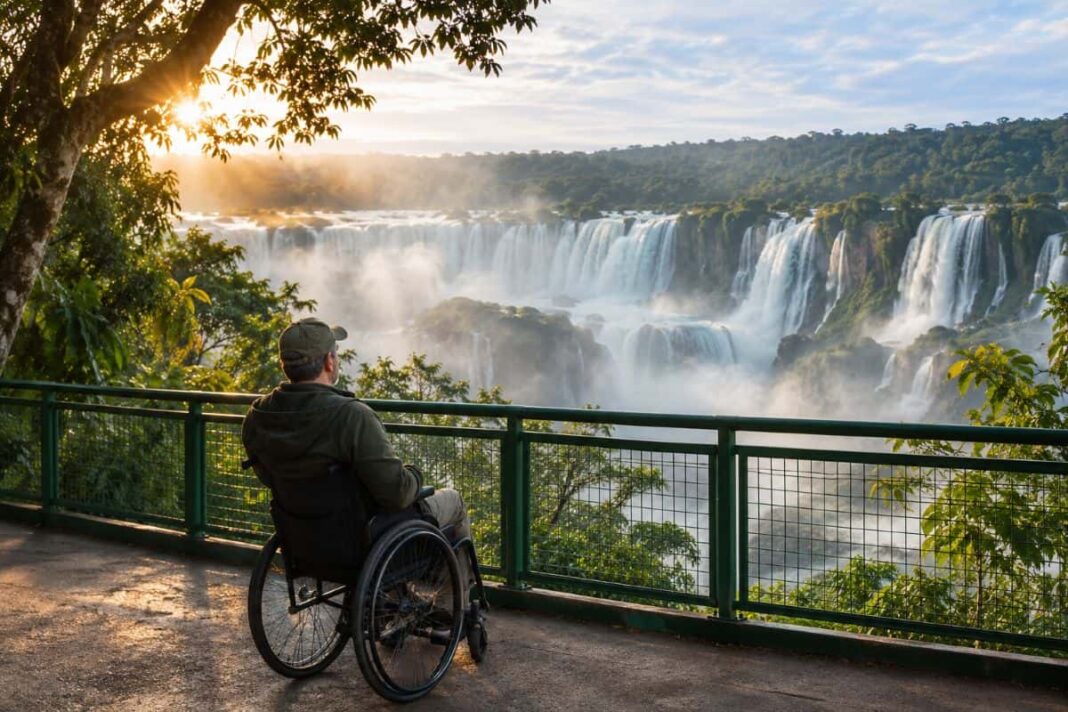

Brazil is famous for big forests, rushing waterfalls, high mountains and bright blue sea. For many years, these places were hard to enjoy for people who use wheelchairs or have limited mobility. This is changing. More parks and destinations are adding ramps, adapted buses, special chairs and safer paths.
Accessible outdoor travel means more than putting in a ramp. A visitor must be able to arrive, move around, use a toilet, see the views and enjoy the place with safety and dignity. Brazil still has work to do. Many wild routes have steep ground, steps and rough surfaces. Yet some destinations now offer real ways for more people to be close to nature.
Here are five Brazilian destinations leading this important change.
Iguaçu National Park, Paraná: Feel the Mighty Power of the Falls
Iguaçu National Park is one of Brazil’s best choices for accessible outdoor travel. It is home to the world-famous Iguaçu Falls. The huge curtain of water, green forest and mist create a striking scene.
The park has adapted buses for visitors who use wheelchairs. It also provides wheelchairs at the Visitor Centre and Porto Canoas area. Accessible toilets, ramps and lifts support visitors at key points in the park.
The best route for many wheelchair users is Porto Canoas. This area has a viewpoint and a panoramic lift leading towards the falls walkway. It offers a close and powerful view of the water. Visitors can also stop near the Hotel das Cataratas station to see an early viewpoint.
However, travellers should plan with care. The main Falls Trail has steps and a long route of about one kilometre. It may not suit people with limited mobility. The park clearly advises some visitors to use the accessible stops instead. This honest guidance matters. It helps people enjoy the falls without facing an unsafe route.
Iguaçu shows how a famous natural attraction can welcome more people while protecting its forest.
Fernando de Noronha, Pernambuco: A Tropical Island With Wider Access
Fernando de Noronha is a dream-like island group off Brazil’s north-eastern coast. It has clear water, sea turtles, cliffs and sandy beaches. It is also becoming more open to visitors with disabilities.
The marine national park has elevated paths at selected attractions and viewpoints. These paths help wheelchair users reach parts of the landscape with their own equipment. The destination also has a Juliett chair. This special all-terrain chair can help people move through natural spaces that normal wheelchairs cannot cross easily.
At Baía do Sueste, an amphibious chair gives some visitors the chance to enter the sea with support. This is a major step. For many people, a beach visit is not complete if they can only watch the water from the sand.
The Sancho area also includes an accessible trail and adapted equipment for visiting nature. Still, Noronha is an island with hills, sand and changing weather. Not every beach or trail is accessible. Visitors should ask about the exact route, equipment and staff support before they travel.
Itatiaia National Park: Waterfalls and Forest for More People
Itatiaia National Park lies between Rio de Janeiro and Minas Gerais. It protects Atlantic Forest, mountain landscapes, rivers and waterfalls. It is also becoming an important example of accessible nature travel in Brazil.
One of its strongest features is an accessible waterfall. The park has created a safer route for wheelchair users to get close to the water. An amphibious chair can help visitors enter the waterfall area. A nearby accessible parking space cuts the distance to the falls to around 100 metres.
The park also has an accessible trail from the Visitor Centre to the food area. It offers a sensory garden with a concrete path. These features may sound simple, but they can change a full day in nature. They let people move with more freedom.
Itatiaia also supports visitors with visual impairments. The Dom Pedro Augusto trail has Braille signs and a guide cable. These tools help people explore the forest through touch, sound and smell, as well as sight.
The park’s work proves that adventure does not only mean hard climbing. Nature can be thrilling when more people can safely take part.
Advertisement
Advertisement
Serra dos Órgãos National Park: Mountain Views Beyond Barriers
Serra dos Órgãos National Park sits in the mountain region of Rio de Janeiro state. It is known for sharp peaks, deep forest and the famous Dedo de Deus, or God’s Finger, rock formation.
The park has more than 200 kilometres of trails. Many are difficult. The famous Petrópolis-Teresópolis crossing has steep climbs and descents and is not an accessible route. But the park also has a suspended trail that welcomes wheelchair users.
This trail gives visitors a chance to be among Atlantic Forest plants and enjoy mountain views without tackling the toughest ground. The park also offers a Juliett chair for adapted outdoor movement.
That contrast is important. Serra dos Órgãos does not pretend every part of a mountain park is easy to reach. Instead, it creates a place where more visitors can share part of the experience. This is a fairer way to develop nature tourism.
Chapada dos Veadeiros, Goiás: Cerrado Beauty With a More Open Route
Chapada dos Veadeiros National Park offers a very different Brazilian landscape. It is in the Cerrado, a vast tropical savannah filled with waterfalls, rocky land and wide skies.
The Corredeiras attraction is the key accessible option in the park. It has a walkway that leads to the site and accessible internal transport. This gives people with reduced mobility a practical way to enter part of a destination known for dramatic natural beauty.
The wider park remains wild. Many walks are long, uneven and demanding. Yet the Corredeiras route shows that protected areas can make careful changes without losing their natural character.
Brazil’s accessible travel story is growing. These five destinations show what is possible when parks invest in thoughtful design, trained staff and useful equipment. Visitors should always contact each destination before booking. They should check adapted transport, chair availability, route conditions and whether assistance needs advance planning. With good preparation, Brazil’s great outdoors can become a place of wonder for far more people.
| Destination | State | Main outdoor appeal | Accessibility features |
|---|---|---|---|
| Iguaçu National Park | Paraná | Iguaçu Falls, rainforest and panoramic viewpoints | Adapted park buses, wheelchairs, ramps, lifts, accessible toilets and viewpoints |
| Fernando de Noronha | Pernambuco | Beaches, sea life, cliffs and island scenery | Elevated paths at selected sites, Juliett all-terrain chair, amphibious chair and accessible Sancho trail |
| Itatiaia National Park | Rio de Janeiro and Minas Gerais | Atlantic Forest, waterfalls and mountain scenery | Accessible waterfall route, amphibious chair, nearby accessible parking, sensory garden, Braille signs and guide cable |
| Serra dos Órgãos National Park | Rio de Janeiro | Mountains, forest and views of Dedo de Deus | Wheelchair-accessible suspended trail and Juliett all-terrain chair |
| Chapada dos Veadeiros National Park | Goiás | Cerrado landscapes, rocky terrain and waterfalls | Accessible internal transport and walkway at the Corredeiras attraction |
Brazil’s accessible outdoor travel movement is giving more people a fair chance to enjoy its forests, mountains, waterfalls and beaches. Iguaçu, Fernando de Noronha, Itatiaia, Serra dos Órgãos and Chapada dos Veadeiros show that small but meaningful changes can transform a visit. Adapted transport, ramps, accessible paths and specialist chairs can turn a distant view into a real experience. These efforts do not remove every barrier, and visitors must plan carefully. Yet they offer hope and a clear lesson: nature tourism becomes stronger when everyone can take part safely, freely and with dignity in Brazil’s extraordinary protected natural places today.
Advertisement
Advertisement
Advertisement