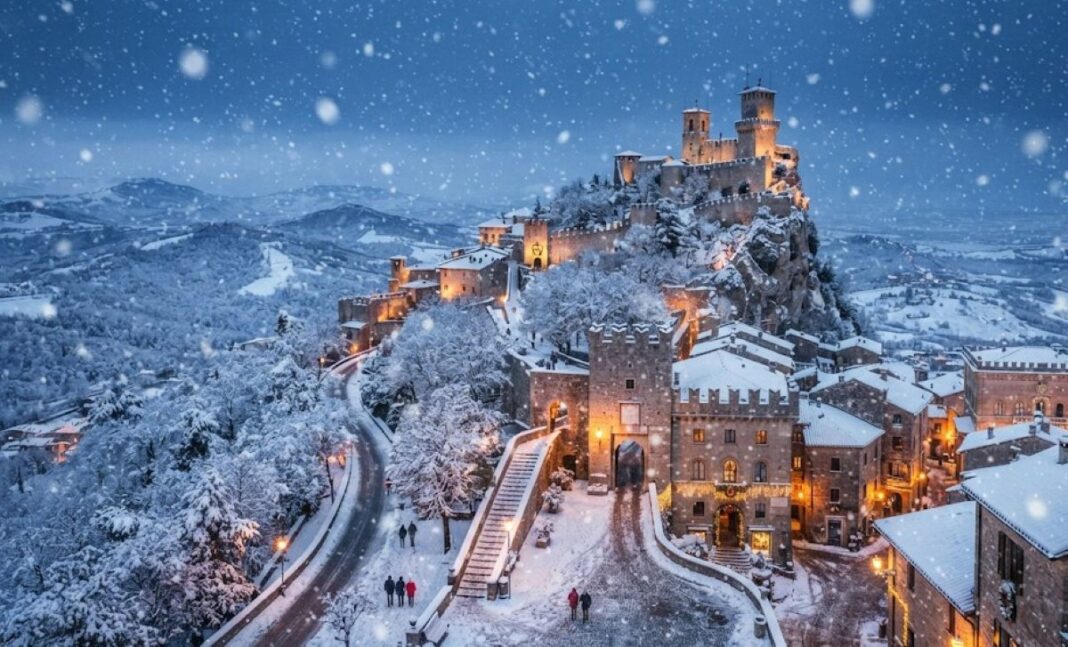

Have you ever felt that irresistible pull to wander off the beaten tourist track and discover a secret Europe most travellers miss entirely? Picture yourself stepping away from the dizzying crowds of Mount Titano into the quiet, magical embrace of San Marino’s hidden heartlands. Here, amidst ancient stone pathways and whispering winter woods in Domagnano, Fiorentino, Acquaviva, and Chiesanuova, time seems to pause just for you. It is an intoxicating, soul-stirring escape where authentic heritage and raw, untouched beauty awaken your deepest sense of adventure, proving that the true magic of this ancient republic lives far beyond its famous medieval towers.
Why Is Domagnano Rapidly Emerging as the Ultimate Northern Gateway and Archaeological Haven for Curious Travellers in San Marino?
Advertisement
Advertisement
Nestled strategically along the bustling SS72 highway corridor, Domagnano proudly serves as the ultimate northern gateway and a thriving residential and productive hub within San Marino. When eager visitors cross the Italian border into this vibrant community, they immediately encounter a rich tapestry of local heritage tourism and engaging community-led events that set a welcoming tone for their journey. Furthermore, this dynamic municipality holds immense historical significance, famously renowned for extraordinary archaeological discoveries such as the magnificent Lombard Treasure of Domagnano.
Beyond its bustling thoroughfares and historical allure, Domagnano offers a captivating blend of modern convenience and deep-rooted Sammarinese culture that endlessly fascinates holidaymakers. Local community initiatives and festive gatherings breathe incredible life into the winter season, ensuring that every traveller feels like an insider rather than a passing tourist. As a result, the undeniable impact of travel and tourism here fosters a profound appreciation for preserved history while driving sustainable economic growth. Ultimately, this northern anchor proves that Domagnano is much more than a transit point—it is a compelling destination in its own right.
Advertisement
Advertisement
How Does Fiorentino Offer an Unmatched Journey Through Medieval Fortresses and Slow-Paced Agro-Tourism in Southern San Marino?
Perched gracefully among the picturesque south-eastern hills, Fiorentino invites adventurous holidaymakers to embark on an unmatched journey through ancient medieval fortresses and tranquil landscapes. This remarkable municipality boasts a rich rural atmosphere where time seems to slow down, allowing every visitor to fully absorb the serene beauty of the Sammarinese countryside. Moreover, Fiorentino provides exceptional archaeological context regarding the early feudal defenses of the territory, making it an absolute paradise for history buffs and slow-paced agro-tourism enthusiasts.
Advertisement
Advertisement
Walking along the ancient pathways of Fiorentino reveals deep historical layers that vividly recount the defensive strategies of early settlers in San Marino. Local farms and rustic estates open their doors to winter travellers, offering warm hospitality and authentic culinary traditions that warm the soul on chilly days. Consequently, the steady influx of mindful tourism preserves these fragile rural ecosystems while supporting independent regional producers. Therefore, Fiorentino stands as a shining beacon of sustainable heritage preservation and peaceful winter exploration.
What Makes Acquaviva an Exceptional Sanctuary for Nature Lovers and Legend Seekers Exploring the Western Slopes of San Marino?
Advertisement
Advertisement
Clinging dramatically to the rugged western slopes near the imposing Baldasserona cliff, Acquaviva emerges as an exceptional sanctuary for nature lovers and legend seekers alike. Steeped in the foundational myths of the Republic, this captivating municipality is historically tied to the legacy of Saint Marinus, imbuing every rocky outcrop with sacred historical significance. Additionally, its dramatic topography features rugged cliffs, peaceful nature trails, and expansive green open spaces that actively beckon outdoor and hiking enthusiasts during the cooler winter months.
Exploring the breathtaking terrain of Acquaviva offers a refreshing contrast to traditional urban sightseeing, allowing visitors to connect deeply with the raw elements of San Marino. The crisp winter air invigorates hikers as they navigate winding trails that overlook stunning valleys and historic landmarks. Furthermore, the positive impact of ecological tourism ensures that these vital green spaces remain protected for future generations to cherish. Ultimately, Acquaviva delivers an unforgettable blend of legendary heritage and exhilarating outdoor recreation.
Why Is Chiesanuova Captivating Eco-Tourists and Rural Trekkers Seeking Pristine Ancient Pathways in Southwestern San Marino?
Positioned peacefully on the rugged south-western slope, Chiesanuova is rapidly captivating eco-tourists and rural trekkers who yearn to wander across pristine ancient pathways and dense woodlands. This tranquil municipality serves as San Marino’s premier destination for eco-tourism and nature-based outdoor recreation, offering a sublime escape from the fast-paced modern world. Furthermore, its rolling hills and sheltered valleys create a microclimate ideal for invigorating winter walks and peaceful contemplation amidst untouched natural beauty.
Advertisement
Advertisement
Wandering through the enchanting forests of Chiesanuova reveals a side of San Marino that few international travellers ever get to witness firsthand. Local conservation efforts, championed by passionate community leaders, ensure that the delicate balance of flora and fauna remains completely undisturbed. Consequently, responsible travel and tourism initiatives empower visitors to enjoy guilt-free exploration while directly contributing to regional environmental preservation. In conclusion, Chiesanuova represents the pinnacle of green, sustainable adventure in the heart of Southern Europe.
How Do National Tourism Records Documenting Over 2.1 Million Annual Visitors Impact Decentralised Microstate Development Beyond Mount Titano?
Official tourism intelligence reports and the Ufficio del Turismo note that San Marino surpassed 2.1 million visitor arrivals, marking a historic high point not witnessed since 2008. While the historic capital center captures a high volume of day-trippers from the Emilia-Romagna Riviera, state planners are directing regional growth targets toward the Castelli. National tourism receipts for the microstate have stabilized near $262 million, creating an economic surplus that the government is actively channeling into municipal infrastructure. Rather than concentrating all foot traffic on Mount Titano, current regional initiatives leverage this broader economic momentum to distribute tourist density evenly across peripheral administrative zones. Consequently, local enterprises in the outer municipalities are experiencing enhanced revenue streams during non-peak winter months.
Furthermore, strategic administrative forecasting aims to extend the average visitor stay—historically resting under two nights—by promoting localized itineraries. By tying national marketing campaigns directly to the unique cultural assets of the outer Castelli, the republic transforms fleeting excursionists into overnight exploratory travellers. Ultimately, this macro-level surge provides the financial foundation necessary to elevate regional tourism products across the board.
Economic Diversification and Regional GDP Contributions Across San Marino’s Nine Administrative Municipalities
Tourism accounts for a substantial share of San Marino’s $2.3 billion GDP, with decentralized municipal strategies designed to lift regional micro-business revenues by over 10% during the shoulder and winter seasons. The economic framework of the Republic of San Marino relies heavily on tertiary sector contributions, yet historical data indicates an imbalance where capital-center attractions overshadow peripheral districts. By empowering local municipal administrations (Giunte di Castello) to curate their own winter heritage and agro-tourism initiatives, the state is correcting this distribution imbalance. Local artisan workshops, rural guesthouses, and family-run taverns in outer zones now capture direct economic value from incoming travellers.
Advertisement
Advertisement
In addition, targeted public-private investments support digital booking platforms for regional trails and heritage sites, ensuring seamless access for independent explorers. This decentralized fiscal model safeguards local communities against sudden shifts in capital-center foot traffic. Therefore, expanding the economic footprint across all nine municipalities reinforces the long-term macroeconomic stability of the entire microstate.
Leveraging the 2026 National Events Calendar to Drive Winter Footfall into Domagnano and Surrounding Sectors
The Sammarinese government rolled out an ambitious calendar featuring nearly 100 official events for the tourism cycle, with northern access corridors like Domagnano registering increased weekend engagement numbers. Strategic event planning has become a cornerstone of San Marino’s strategy to maintain visitor engagement outside the traditional summer window. In northern municipalities like Domagnano, community-led winter festivals, historical reenactments, and localized exhibitions act as powerful magnets for cross-border visitors arriving via the SS72 highway. These carefully scheduled happenings encourage travellers to pause their journey north and immerse themselves in localized cultural programming.
Moreover, synchronizing municipal event schedules with broader national tourism board promotions ensures high visibility across digital channels. Visitors seeking authentic, crowd-free cultural experiences find these community-driven gatherings deeply appealing during the colder months. Consequently, Domagnano successfully transitions from a transitional border zone into an active, vibrant destination checkpoint.
Preserving Archaeological Heritage: The Strategic Value of Antiquities in Domagnano and Fiorentino for Cultural Explorers
Cultural heritage assets—highlighted by centuries-old artifacts such as the Lombard Treasure of Domagnano and medieval fortifications in Fiorentino—drive a specialized segment of heritage tourists whose daily expenditure averages 15% higher than standard excursionists. Cultural preservation serves as a vital pillar for attracting discerning travellers who prioritize historical depth over mainstream entertainment. Domagnano’s association with internationally renowned archaeological finds provides educational institutions and history enthusiasts with compelling reasons to explore beyond the capital. Similarly, Fiorentino’s medieval fortress foundations offer tangible links to the early defensive architectures of the Sammarinese territory.
Advertisement
Advertisement
State-backed curation and improved informational signage across these archaeological sites ensure that visitors receive an enriching, self-guided educational experience. Protecting these fragile historical touchpoints while opening them to mindful travellers creates a balanced ecosystem of conservation and enjoyment. Ultimately, these localized treasures anchor San Marino’s reputation as a sophisticated repository of European history.
Slow Agro-Tourism and Rural Land Preservation across Fiorentino’s South-Eastern Hills
Rural development frameworks across San Marino protect over 20 square kilometers of agricultural and green landscape, with agro-tourism networks in the south-east experiencing steady year-on-year interest. The south-eastern hills of Fiorentino present a tranquil counter-balance to the urban density of coastal Italian towns, offering sprawling vineyards, olive groves, and traditional farm estates. Winter agro-tourism here focuses on culinary heritage, featuring olive oil pressings, seasonal wine tastings, and farm-to-table dining experiences rooted in Sammarinese and Romagnolo traditions. This slow-paced model attracts mindful travellers seeking respite in quiet, pastoral environments.
Furthermore, sustainable farming incentives ensure that the natural topography and biodiversity of the hillside remain pristine. By supporting local agricultural producers through direct tourism receipts, the municipality preserves traditional land-use methods that have defined the region for centuries. Therefore, Fiorentino’s agro-tourism sector exemplifies how environmental conservation and economic vitality can seamlessly coexist.
Ecological Topography and Outdoor Recreation Metrics in Acquaviva’s Protected Green Corridors
With safety indices ranking the microstate exceptionally high at 96/100 and an average daily traveler budget of approximately €85, outdoor enthusiasts find Acquaviva’s maintained trail networks an accessible, secure alpine-style escape. Clinging to the dramatic western slopes near the historic Baldasserona cliff, Acquaviva offers terrain that tests and rewards active outdoor adventurers. Winter microclimates across the western escarpments provide crisp, clear conditions ideal for trekking, nature photography, and geological exploration. The municipality has invested in trail markers and eco-friendly viewing platforms to protect sensitive cliffside ecosystems while facilitating public access.
Advertisement
Advertisement
Safety and accessibility remain paramount, with local authorities maintaining clear routes that connect historical legend sites with natural viewpoints. This infrastructure supports independent hikers who prefer self-guided outdoor recreation over crowded commercial resorts. Ultimately, Acquaviva proves that compact sovereign territories can offer world-class green spaces through meticulous environmental stewardship.
Biodiversity Conservation and Eco-Tourism Expansion in Chiesanuova’s Southwestern Woodlands
Environmental monitoring programs in San Marino cover extensive protected forest zones, with Chiesanuova retaining over 35% of its municipal surface area in natural woodland and green vegetative cover. Chiesanuova represents the green frontier of Sammarinese eco-tourism, characterized by untouched oak and chestnut woodlands that thrive on the south-western slopes. Local community leaders and environmental councils enforce strict low-impact tourism guidelines, restricting motorized vehicle access along ancient pathways to protect native flora and fauna. These measures ensure that the delicate ecological balance remains entirely undisturbed during peak visitation windows.
For the modern eco-traveller, these preserved corridors offer an immersive wilderness experience within easy reach of urban amenities. Educational trekking loops provide insights into local reforestation efforts and watershed protection. Consequently, Chiesanuova stands out as a model for sustainable rural tourism management in Southern Europe.
Digital Infrastructure and Smart Tourism Data Integration Supporting Decentralised Exploration in 2026
State-level digital upgrades integrate real-time visitor tracking and multilingual mobile resources, supporting the republic’s tourism board in managing crowd distribution across all nine administrative districts. As global travel patterns shift toward smart destination management, San Marino has embraced digital tools to direct tourist flows away from bottleneck areas. Official portals and interactive municipal apps provide real-time updates on parking, museum hours, and regional event schedules across Domagnano, Fiorentino, Acquaviva, and Chiesanuova. This technological integration empowers independent travellers to plan customized, multi-destination itineraries with ease.
Advertisement
Advertisement
Moreover, aggregated data collection enables the Secretariat of State for Tourism to measure seasonal shifts accurately and adjust promotional campaigns dynamically. By removing friction from regional navigation, digital infrastructure enhances the overall visitor journey while ensuring equitable economic distribution. Ultimately, smart tourism integration secures San Marino’s position as a forward-thinking European microstate destination.
How Do 2026 Digital Penetration Rates of Over 87% and High-Speed Fiber Networks Optimise Multi-Destination Visitor Itineraries Across Peripheral Municipalities?
DataReportal’s 2026 indicators reveal that San Marino maintains a robust internet penetration rate standing at 87.0% with roughly 29,200 active online users, supported by median fixed download speeds exceeding 96.19 Mbps. The rapid evolution of smart tourism infrastructure allows the Republic of San Marino to efficiently distribute tourist traffic across all administrative districts. Visitors exploring peripheral zones benefit from seamless digital access, real-time transportation scheduling, and interactive mapping portals. This technological backbone ensures that independent travellers can navigate between historical sites without experiencing digital friction.
Furthermore, tourism authorities leverage these connectivity metrics to deploy targeted mobile marketing campaigns and dynamic crowd management updates. By directing digital traffic away from congested capital zones, the microstate enhances the quality of exploration across regional sectors. Ultimately, advanced telecommunications serve as a critical catalyst for sustainable, tech-enabled regional travel.
In What Ways Do San Marino’s Exceptional 96/100 Safety Index and Stable Demographic Frameworks Create an Ideal Environment for Extended Winter Stays?
Demographic profiles indicate a stable resident population of approximately 33,564 citizens, paired with national security ratings that position the republic among the safest microstates globally, encouraging longer visitor durations. Safety and stability remain foundational pillars for travellers seeking peaceful, restorative winter getaways away from major European urban centers. San Marino’s low crime rates and high community cohesion provide an exceptionally secure backdrop for families, solo explorers, and wellness tourists alike. This sense of security empowers visitors to explore hidden valley pathways and rural tracks with complete peace of mind.
Advertisement
Advertisement
In addition, the local demographic environment characterized by a strong emphasis on community traditions and hospitality fosters authentic human connections. Local residents actively engage with visitors, offering deep insights into traditional crafts, regional folklore, and seasonal customs. Consequently, the microstate offers a deeply reassuring and immersive travel experience that prioritizes well-being.
How Do Traditional Sammarinese Foodways and Specialized Winter Culinary Experiences Drive High-Yield Gastronomic Tourism Across Regional Districts?
Culinary tourism accounts for an increasing share of regional visitor spending, with specialized food and wine experiences generating higher daily per-capita contributions compared to standard sightseeing tours. Gastronomy plays an essential role in expanding San Marino’s tourism appeal beyond traditional sightseeing landmarks. Regional dining establishments and rural farm-to-table venues focus on authentic seasonal ingredients, traditional chestnut-based delicacies, and locally produced wines. These culinary offerings provide visitors with a tangible connection to the agricultural history of the surrounding hills.
Furthermore, winter culinary events and olive oil pressings highlight the rich flavors of the microstate’s artisanal producers. By integrating food culture into regional itineraries, tourism planners successfully attract discerning culinary travellers who seek genuine local flavors. Ultimately, gastronomic innovation reinforces the economic viability of independent businesses outside the capital core.
What Infrastructure Developments Support the 43-Kilometre Cammino del Titano and Regional Hiking Networks for 2026 Active Explorers?
Comprehensive regional trail frameworks include extensive trekking paths such as the 43-kilometre Cammino del Titano loop, which connects all nine municipal territories into an integrated outdoor recreation grid. Outdoor recreation has emerged as a major growth sector for winter tourism, attracting hikers who prefer active exploration over passive sightseeing. The expansion and meticulous maintenance of multi-kilometric trail networks provide safe, clearly marked routes through diverse topography ranging from dense woodlands to open ridgelines. These paths encourage visitors to spend multiple days engaging with the natural landscape.
Advertisement
Advertisement
In addition, investments in eco-friendly trail markers, resting stations, and informational signage ensure minimal environmental disturbance while maximizing visitor enjoyment. This commitment to outdoor infrastructure positions the microstate as a premier destination for sustainable, low-impact trekking. Consequently, active tourism diversifies visitor demographics and supports year-round economic activity.
How Do State-Backed Financial Incentives and Public-Private Collaborations Guarantee Long-Term Economic Sustainability for Decentralised Municipalities?
National economic strategies channel government surpluses and targeted investments into decentralized municipal projects, aiming to lift regional micro-business revenues and ensure balanced economic growth. The long-term success of San Marino’s decentralized tourism model relies heavily on robust cooperation between state authorities and local municipal administrations (Giunte di Castello). Public funding supports the restoration of historical buildings, the upgrading of regional pathways, and the promotion of community-led cultural initiatives. This coordinated fiscal approach ensures that economic benefits are shared equitably across all territories.
Furthermore, public-private partnerships facilitate the creation of modern booking platforms and promotional networks for independent service providers. By empowering local stakeholders to manage their own tourism offerings, the government fosters authentic entrepreneurship and innovation. Ultimately, these strategic fiscal frameworks secure the resilience and prosperity of San Marino’s tourism economy for years to come.
The Final Horizon
Stepping away from the stone towers and letting the quiet hum of San Marino’s valleys wrap around you changes everything. In Domagnano, Fiorentino, Acquaviva, and Chiesanuova, you are not just a visitor ticking boxes; you become part of an enduring, living story. These hills hold a warmth and a timeless peace that stays long after you leave, whispering that the most unforgettable journeys are the ones where you finally slow down, breathe deep, and let the real magic find you.
Advertisement
Advertisement
Frequently Asked Questions
- Does San Marino have commercial ski resorts for winter sports enthusiasts?
No, due to its compact land area of 61.19 square kilometres, modest altitude, and Mediterranean-influenced microclimate, the Republic of San Marino does not possess commercial alpine ski resorts, chairlifts, or dedicated downhill ski infrastructure. Instead, official winter tourism campaigns focus on cultural heritage, festive programming, and decentralized regional exploration across its nine municipalities.
- What is the significance of Domagnano within San Marino’s tourism strategy?
Located along the SS72 highway corridor, Domagnano acts as a vital northern gateway for visitors entering San Marino from the Italian border. It significantly diversifies the microstate’s tourism portfolio by offering localized heritage tourism, community-led winter events, and a rich connection to historical discoveries like the Lombard Treasure of Domagnano.
- How do Fiorentino and Chiesanuova differ in their winter tourism offerings?
While Fiorentino focuses on medieval fortress history, rural landscapes, and slow-paced agro-tourism in the south-east, Chiesanuova on the south-western slope specializes in dense woodlands, pristine ancient pathways, and eco-friendly nature-based outdoor recreation.