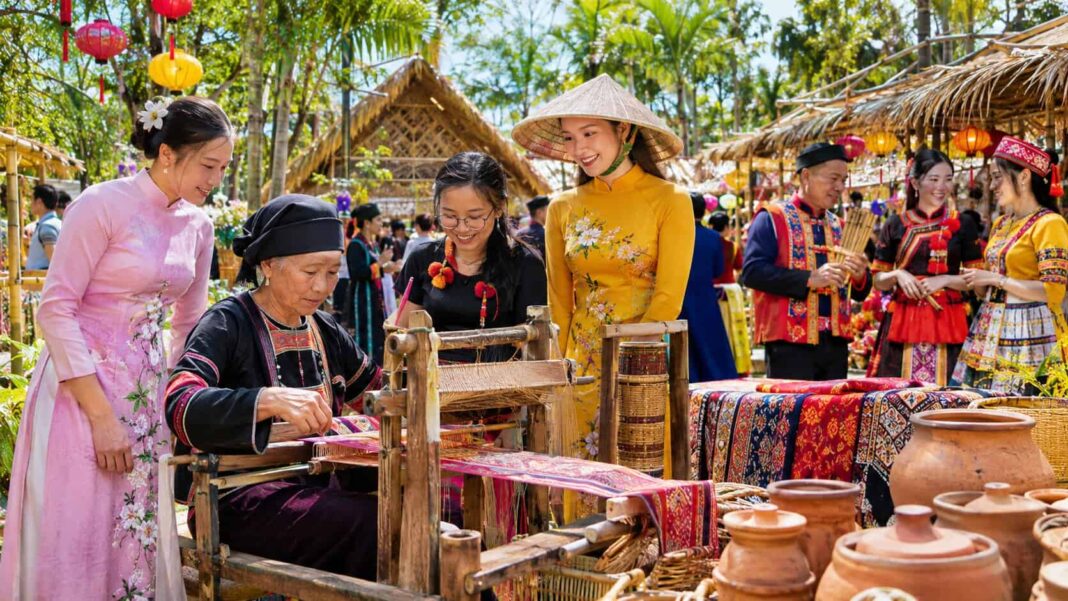

Vietnam is placing its cultural heritage at the centre of tourism development as the country hosts its first Vietnam Culture Festival from 23 to 27 November 2026, bringing together cultural traditions, artistic performances and heritage experiences from all 34 provinces and cities. According to the Vietnamese Government, the festival coincides with Vietnam Culture Day on 24 November, while more than 400 cultural activities are scheduled nationwide. The celebrations come amid strong international tourism growth, with Vietnam welcoming approximately 19.54 million international visitors between January and October 2026, representing an increase of 13.8% compared with the corresponding period last year. The initiative highlights the country’s ambition to strengthen cultural tourism, preserve traditional craftsmanship and develop a more diversified visitor economy.
Vietnam Launches Nationwide Cultural Celebrations to Strengthen Its Tourism Identity
The first Vietnam Culture Festival represents an important initiative to showcase the country’s diverse cultural traditions and regional identities. Bringing together all 34 provinces and cities, the programme provides opportunities to promote traditional craftsmanship, artistic expression, local heritage and community-based cultural experiences. The celebrations include seven categories of traditional crafts, highlighting the importance of preserving skills passed down through generations. For the tourism industry, such initiatives provide opportunities to develop experiences that extend beyond conventional sightseeing. Connecting cultural heritage with tourism could also support local artisans, small businesses and communities while introducing international visitors to Vietnam’s distinctive traditions.
Advertisement
Advertisement
Vietnam Culture Day Marks an Important Step in National Heritage Development
Vietnam’s recognition of 24 November as Vietnam Culture Day reflects the government’s growing emphasis on cultural development. According to the government announcement of 24 April 2026, the date has been recognised as a public holiday. The initiative forms part of a wider policy framework that places culture alongside economic and social development. The government’s cultural development direction also includes a budget allocation target of at least 2%. These measures demonstrate Vietnam’s ambition to strengthen cultural institutions, preserve traditional practices and encourage greater public participation in cultural activities. Tourism businesses could benefit from opportunities to develop products connected with national celebrations and regional heritage.
Vietnam Welcomes More Than 19.5 Million International Visitors
Vietnam’s cultural celebrations coincide with substantial growth in international tourism. According to the Vietnam National Authority of Tourism, the country recorded 19,535,396 international arrivals between January and October 2026, representing annual growth of 13.8%. October alone contributed approximately 1.85 million international arrivals. Domestic tourism also remained an important component of the visitor economy, with approximately 133 million domestic trips recorded during the first ten months. Total tourism receipts reached approximately VND 945 trillion. These figures demonstrate the economic importance of tourism and provide a strong foundation for developing additional cultural, heritage and community-based travel experiences.
| Tourism indicator | January–October 2026 |
|---|---|
| International arrivals | 19,535,396 |
| International arrival growth | 13.8% |
| October international arrivals | 1,854,682 |
| Domestic tourism trips | 133 million |
| Total tourism receipts | VND 945 trillion |
Source: Vietnam National Authority of Tourism.
International Aviation Drives Vietnam’s Growing Visitor Economy
Air transport continues to dominate Vietnam’s international tourism connectivity. Official figures show that approximately 16.25 million international arrivals entered the country by air during the first ten months of 2026, accounting for 83.2% of total international arrivals. Land transport contributed approximately 3.03 million arrivals, while maritime transport accounted for 255,206. These figures highlight the importance of international aviation alongside cross-border transport and maritime connectivity. Maintaining accessible transport networks remains important for distributing tourism opportunities across Vietnam’s coastal destinations, cultural centres and regional communities.
Advertisement
Advertisement
| International entry method | Arrivals | Market share |
|---|---|---|
| Air transport | 16,253,092 | 83.2% |
| Land transport | 3,027,098 | 15.5% |
| Maritime transport | 255,206 | 1.3% |
| Total | 19,535,396 | 100% |
Source: Vietnam National Authority of Tourism.
Asian and European Markets Strengthen Vietnam’s International Tourism Growth
Asia remained Vietnam’s largest international tourism source region during January–October 2026, contributing approximately 14.61 million arrivals. Europe followed with approximately 3.22 million, while the Americas accounted for around 1.04 million. Oceania contributed approximately 602,700 arrivals, and Africa recorded around 59,900. Individual markets including Cambodia, India and the Philippines also made notable contributions, generating approximately 787,120, 744,567 and 579,199 arrivals respectively. Vietnam’s diverse international visitor markets provide opportunities for tourism businesses to develop cultural experiences suited to different travel preferences. However, these national arrival figures do not establish attendance at the Vietnam Culture Festival.
Advertisement
Advertisement
An Giang Emerges as an Important Tourism Growth Centre
An Giang Province has recorded substantial tourism growth, strengthening its position within southern Vietnam’s visitor economy. According to provincial government statistics, An Giang welcomed approximately 25.07 million visits between January and October 2026, representing an increase of 17.6%. International visits reached approximately 2.16 million, rising by 56%, while tourism revenue increased by 38.1% to VND 63.063 trillion. October alone generated approximately 1.587 million visits and VND 5.141 trillion in tourism revenue. These results highlight the province’s expanding tourism activity, although provincial visit counts differ from national international arrival statistics and should not be directly compared.
| An Giang tourism indicator | January–October 2026 | Annual growth |
|---|---|---|
| Total visits | 25.07 million | 17.6% |
| International visits | 2.16 million | 56% |
| Tourism revenue | VND 63.063 trillion | 38.1% |
Source: An Giang Provincial Government.
Phu Quoc Dominates An Giang’s Expanding Tourism Economy
Phu Quoc continues to play a central role in An Giang’s tourism performance. During the first nine months of 2026, the island welcomed approximately 8.57 million visits, representing annual growth of 30.5%. International visits exceeded 1.92 million, increasing by 60.2%, while tourism revenue reached VND 45.976 trillion, up 47.7%. During the same period, An Giang recorded approximately VND 57.922 trillion in total tourism revenue. Based on these figures, Phu Quoc accounted for approximately 79.4% of provincial tourism revenue. This concentration highlights opportunities to diversify tourism development across other destinations, including cultural, religious and nature-based attractions.
An Giang’s Cultural and Natural Attractions Offer Opportunities Beyond Island Tourism
An Giang possesses a diverse tourism portfolio extending beyond Phu Quoc’s coastal resorts. Destinations including Chau Doc, Sam Mountain, Tra Su, Nui Cam, Oc Eo–Ba The, Ha Tien and Rach Gia offer opportunities to develop religious tourism, archaeological experiences, ecological travel and regional cultural discoveries. The Festival of Ba Chua Xu Goddess at Sam Mountain received UNESCO intangible cultural heritage recognition in 2024, highlighting the international significance of local traditions. Developing complementary tourism experiences across these destinations could help distribute economic opportunities more widely while supporting cultural preservation and reducing dependence on a single major tourism centre.
Advertisement
Advertisement
UNESCO Heritage Strengthens Vietnam’s Global Cultural Tourism Appeal
Vietnam’s nine UNESCO World Heritage properties provide important foundations for its cultural and nature-based tourism development. The country’s heritage resources reflect centuries of architectural achievement, religious traditions, historical development and distinctive natural landscapes. Connecting protected heritage sites with traditional festivals and community experiences could strengthen Vietnam’s international destination identity. However, sustainable development requires careful management to protect cultural authenticity and environmental quality. The nationwide culture festival provides an opportunity to raise awareness of these resources without assuming that the event has already generated measurable increases in tourism arrivals or visitor spending.
Vietnam Targets Greater International Cultural Influence by 2045
Vietnam’s external cultural strategy towards 2030, with a vision extending to 2045, outlines the country’s ambition to become one of Asia’s leading cultural and creative centres. The strategy provides a wider framework for promoting Vietnamese heritage, strengthening international cultural exchanges and developing creative industries. Tourism can complement these objectives by introducing international visitors to local traditions, regional gastronomy, craftsmanship and historical attractions. Greater cooperation between cultural institutions, tourism authorities and local businesses could support the development of distinctive visitor experiences while preserving the traditions that contribute to Vietnam’s national identity.
Why Vietnam’s Cultural Festival Matters for the Future of Tourism
Vietnam’s first nationwide Culture Festival represents an opportunity to connect cultural preservation with long-term tourism development. With international arrivals increasing by 13.8% and tourism receipts reaching VND 945 trillion during the first ten months of 2026, the country has a substantial visitor economy through which to promote its cultural resources. Regional destinations such as An Giang demonstrate the potential for combining coastal holidays with religious heritage, traditional craftsmanship and ecological experiences. Nevertheless, the festival’s specific economic and tourism impact remains unmeasured. Its long-term contribution will depend on effective destination management, community participation and the responsible preservation of Vietnam’s cultural heritage.