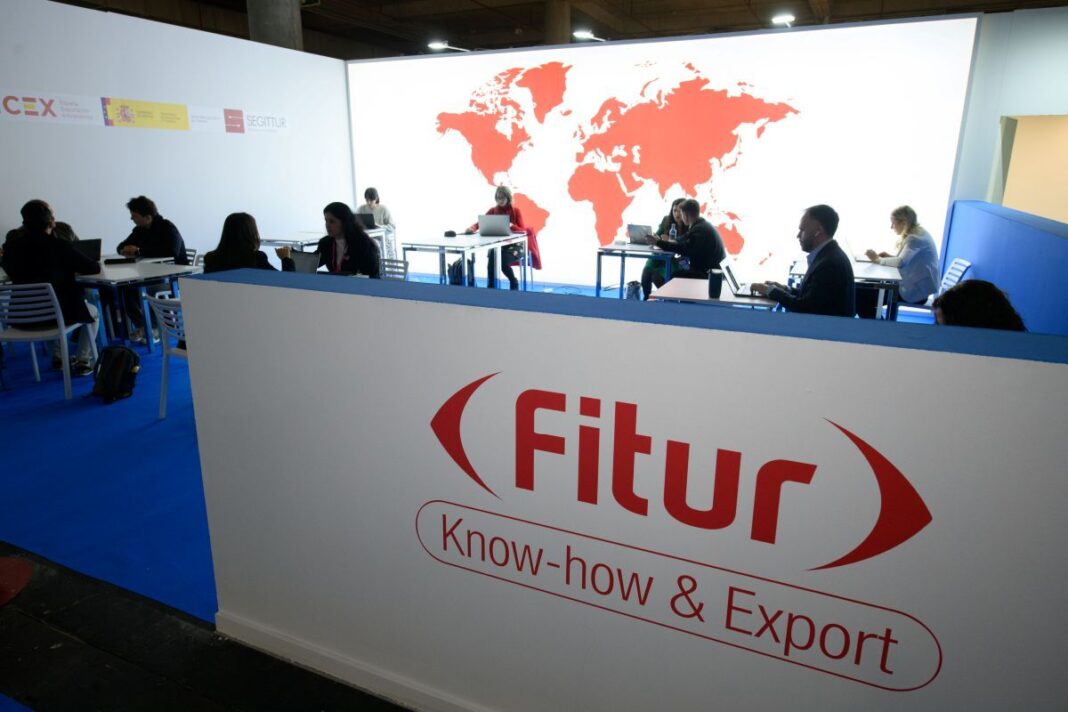

FITUR Know-How & Export 2027 will convene in Madrid, Spain, from 20 to 22 January 2027, positioning the Spanish capital at the centre of global travel digitalisation. Organised jointly by FITUR and the state-owned innovation agency SEGITTUR, with institutional backing from ICEX España Exportación e Inversiones, the 15th edition will occupy the Knowledge Hub inside Hall 12 at IFEMA MADRID. The three-day professional forum runs during the trade-only window of the 47th International Tourism Trade Fair, which spans 20 to 24 January 2027.
The announcement from IFEMA MADRID confirms a decisive pivot toward public digital infrastructure and applied artificial intelligence. Forty specialist technology companies will exhibit operational tools designed for municipal authorities and private hospitality operators. Simultaneously, the fair will host the fourth edition of the Artificial Intelligence Solutions in Tourism Awards. For international delegates, destination managers, and airline executives, the 2027 gathering represents a critical checkpoint for how European tourism manages data, sustainability, and passenger volume.
The wider 47th International Tourism Trade Fair is expanding its physical footprint by two additional exhibition halls, bringing the total venue capacity to eleven halls. Puerto Rico has been designated as the official Partner Country for the 2027 edition. Following a record-breaking 2026 fair that drew 255,000 attendees and generated an estimated €505 million economic impact for Madrid, institutional organisers are preparing for unprecedented commercial and logistical density.
Key Event Metrics and Institutional Structure
FITUR Know-How & Export 2027 operates as the dedicated technology transfer and internationalisation forum within the broader IFEMA MADRID trade exhibition. It bridges Spanish public-sector digital engineering with global destination procurement.
| Operational Parameter | Official 2027 Specification | Institutional Authority |
| Know-How & Export Dates | 20 – 22 January 2027 (Trade Days) | FITUR & SEGITTUR |
| Main FITUR 2027 Dates | 20 – 24 January 2027 (47th Edition) | IFEMA MADRID |
| Dedicated Location | Knowledge Hub, Hall 12 | IFEMA MADRID |
| Exhibiting Tech Firms | 40 specialist technology companies | FITUR / ICEX |
| Flagship Competition | 4th AI Solutions in Tourism Awards | SEGITTUR / FITUR |
| Total Fair Footprint | 11 exhibition halls (2 new halls) | IFEMA MADRID |
| 2027 Partner Country | Puerto Rico | IFEMA MADRID |
| Prior Year Benchmark | 255,000 attendees; €505m Madrid impact | IFEMA MADRID (2026 data) |
The institutional triad behind the Knowledge Hub reflects Spain’s coordinated industrial strategy. IFEMA MADRID provides the commercial marketplace and international buyer network. SEGITTUR, operating under Spain’s Secretary of State for Tourism, supplies the regulatory and technical architecture. ICEX España Exportación e Inversiones facilitates the international export of Spanish travel-tech solutions to foreign governments and regional tourism boards.
The Smart Destinations Platform Takes Centre Stage
The Smart Destinations Platform (PID) is a public digital infrastructure engineered by SEGITTUR to unify municipal tourism management and real-time data analytics. Funded with a €130 million allocation from Spain’s Recovery, Transformation and Resilience Plan, the platform represents one of Europe’s largest state-backed travel digitisation programmes.
Advertisement
Advertisement
At the 2027 Knowledge Hub, the PID will anchor the technical agenda through dedicated operational sessions. SEGITTUR will deploy interactive screens across its stand to demonstrate live platform modules, allowing destination directors to inspect how municipal data feeds into central decision-making dashboards. According to SEGITTUR’s published deployment framework, the Secretary of State for Tourism has analysed more than 20 distinct tourism use cases to ensure the central node meets practical local requirements.
- Interoperability standards: Ensuring regional councils can connect legacy municipal software to the national central node without costly rebuilds.
- Demand forecasting: Providing local authorities with predictive analytics to manage seasonal visitor surges before infrastructure reaches saturation.
- Service digitisation: Automating heritage ticketing, local transit integration, and visitor information flows across connected municipalities.
- Public-private governance: Establishing clear data-sharing protocols between hotel chains, transport operators, and city councils.
Deployment of the PID began in 2021 following extensive consultations between public administrators and private technology vendors. By January 2027, the sessions in Hall 12 will shift from theoretical architecture to verified roll-out progress, offering international observers a working blueprint for national tourism infrastructure.
Understanding the Linx Tourism Data Space
The Linx Tourism Data Space is a governed digital ecosystem designed to enable secure, interoperable data exchange across the tourism value chain. Running prominently alongside the PID in the 2027 conference programme, Linx addresses one of the industry’s most persistent bottlenecks: fragmented, siloed commercial data.
Historically, airlines, hotel groups, online travel agencies, and municipal boards have guarded their operational datasets closely. This fragmentation prevents destinations from accurately measuring carbon footprints, predicting crowd congestion, or optimising regional rail links. The Linx framework introduces a standardised taxonomy—aligned with UNE 178503 specifications—allowing organisations to act simultaneously as data providers and data consumers.
For small and medium-sized travel enterprises, this architecture lowers the technical barrier to entry. Rather than building proprietary data lakes, participating firms connect via lightweight API endpoints. Competitive advantage therefore shifts away from raw server infrastructure toward data quality, domain expertise, and strict governance compliance.
Fourth Edition of the AI Tourism Awards
The Artificial Intelligence Solutions in Tourism Awards will celebrate its fourth consecutive edition during FITUR Know-How & Export 2027. The competition formally recognises technology firms that deliver measurable operational answers to structural industry challenges.
Advertisement
Advertisement
Unlike speculative startup showcases, the FITUR and SEGITTUR evaluation criteria prioritise deployable solutions. The 40 exhibiting technology companies in Hall 12 will present live applications spanning six core verticals:
- Applied Artificial Intelligence: Automated multilingual concierge systems, dynamic revenue management engines, and predictive maintenance for hospitality assets.
- Smart Management: Integrated municipal dashboards tracking water consumption, waste collection, and crowd density in historic centres.
- Data Analysis: Granular sentiment tracking and card-spend analytics that map visitor dispersal beyond primary urban hubs.
- Digitalisation: Paperless check-in ecosystems, digital identity wallets, and automated B2B contracting tools for tour operators.
- Sustainability: Carbon-accounting software aligned with European Union corporate reporting directives and circular economy models.
- Traveller Experience: Hyper-personalised itinerary builders and accessible navigation tools for passengers with reduced mobility.
The awards serve as a commercial barometer for venture capital and public procurement officers alike. Winning solutions frequently secure pilot contracts across Spain’s Smart Tourist Destinations network before scaling into Latin America and the wider European Union.
Conference Programme and Sector Challenges
The 2027 conference schedule inside Hall 12 directly confronts the structural pressures facing global tourism. Organisers have structured the panels around six institutional pillars: tourism quality, smart tourist destinations, training and talent, artificial intelligence, the circular economy, and new tourism experiences.
Workforce retention and digital upskilling occupy a prominent slot in the 2027 agenda. Across Europe, hospitality and aviation sectors continue to report acute shortages in technical and front-line personnel. Sessions dedicated to training and talent will examine how automated workflows can relieve administrative burdens rather than displace human service roles.
Simultaneously, the circular economy track will address regulatory compliance. European destinations face mounting pressure to decouple visitor growth from environmental degradation. Panels will showcase verifiable methods for reducing single-use plastics, optimising hotel energy grids, and integrating local agricultural supply chains into resort procurement.
Broader Context of FITUR 2027 Expansion
FITUR Know-How & Export operates within the wider ecosystem of the 47th International Tourism Trade Fair, which runs from 20 to 24 January 2027. IFEMA MADRID has confirmed that the 2027 edition will expand to eleven exhibition halls to accommodate rising international demand.
Advertisement
Advertisement
The Knowledge Hub in Hall 12 enters its second consecutive year as the fair’s central intellectual forum. Beyond Know-How & Export, the broader exhibition divides the global market into geographical zones—Europe, the Americas, Africa, Asia-Pacific, the Middle East, and Spain—alongside ten specialised vertical sections:
- FITUR TechY: Focused on hotel technology, innovation, and digital transformation.
- FITUR Cruises: Dedicated to blue tourism, port sustainability, and community impact.
- FITUR 4all: Championing accessible and inclusive travel infrastructure.
- FITUR Talent & FITUR Woman: Addressing workforce development and female executive leadership.
- FITUR Screen, Sports, Lingua, LGBT+, and Experience: Targeting high-yield niche travel segments.
During the first three days (20–22 January), access remains strictly restricted to accredited trade professionals, institutional delegations, and media. On 23 and 24 January, IFEMA MADRID opens the exhibition floors to the general public, replicating the format that attracted 155,000 professionals and 100,000 public visitors in 2026.
Legal and Immigration Rules for Delegates
International executives, UK-based travel buyers, and non-EU exhibitors travelling to Madrid for FITUR 2027 must navigate tightened European border controls. Spain operates within the Schengen Area, meaning third-country nationals—including British passport holders—remain strictly bound by the 90-day-in-any-180-day stay limit.
Delegates attending the 20–22 January professional days should verify their passport validity well ahead of departure. Under Schengen Border Code regulations, passports must have been issued within the past ten years and remain valid for at least three months beyond the planned date of departure from Spain.
Furthermore, travellers arriving at Adolfo Suárez Madrid-Barajas Airport (MAD) must account for the European Union’s Entry/Exit System (EES) biometric registration protocols. First-time non-EU arrivals undergo fingerprint and facial biometric capture at automated border kiosks, which can extend immigration processing times during peak morning arrival banks. Business travellers conducting paid consultancy or on-stand installation work outside standard trade-fair attendance exemptions should consult the Spanish Ministry of Foreign Affairs or their local consulate regarding short-stay business visa requirements.
Airline Liabilities and Winter Disruption Rights
January travel into central Spain carries distinct operational risks, including winter fog across the Iberian plateau and northern European storm systems. Delegates flying from the United Kingdom or European Union hubs to Madrid are protected under UK261 and EU Regulation 261/2004, respectively.
Advertisement
Advertisement
If a flight into Madrid-Barajas is cancelled or delayed by more than three hours due to airline-controllable factors—such as technical faults or crew scheduling failures—passengers are entitled to fixed statutory compensation ranging from £220 (€250) to £520 (€600), depending on flight distance.
Crucially, even when disruptions stem from “extraordinary circumstances” such as severe winter weather or air traffic control strikes, airlines retain an absolute duty of care. Under UK Civil Aviation Authority (CAA) and European Union Aviation Safety Agency (EASA) guidelines, carriers must provide:
- Reasonable meals and refreshments proportionate to the waiting time.
- Hotel accommodation and airport transfers if an overnight delay occurs.
- Rerouting at the earliest opportunity, including on rival carriers if the operating airline has no timely seats.
Trade delegates holding non-refundable hotel reservations in Madrid or time-sensitive speaking slots in Hall 12 should carry comprehensive corporate travel insurance, as statutory airline compensation does not cover consequential commercial losses.
Madrid Accommodation and Transit Bottlenecks
The sheer scale of FITUR places acute pressure on Madrid’s hospitality and public transport networks. With more than 10,000 participating companies from over 160 countries converging on the city, hotel occupancy across central Madrid and the Campo de las Naciones district routinely approaches 100 per cent during trade week.
Room rates in the Salamanca, Chamberí, and airport-corridor districts typically surge by 150 to 250 per cent compared to standard January averages. Exhibitors and delegates who delay booking beyond early December frequently face accommodation shortages, forcing commutes from outer metropolitan municipalities.
Ground transport to IFEMA MADRID requires careful planning:
Advertisement
Advertisement
- Metro Line 8 (Pink Line): Connects Nuevos Ministerios directly to the Feria de Madrid station in approximately 15 minutes, and links directly to Madrid-Barajas Terminals 1–4. Expect severe platform congestion between 08:30 and 10:30 CET.
- Taxi and Ride-Hailing Zones: Dedicated pick-up ranks operate outside the South and North entrances, but rush-hour traffic along the M-40 ring road can double journey times to central Madrid.
- Exhibitor Logistics: Companies shipping demonstration hardware for the 40 tech stands in Hall 12 must adhere strictly to IFEMA MADRID’s official customs clearance schedules to avoid freight holds at Barajas cargo terminals.
Commercial Impact on Global Tourism Corridors
Beyond its immediate €505 million economic injection into Madrid’s local economy, the 2027 edition carries substantial geopolitical and commercial weight. The selection of Puerto Rico as Partner Country reinforces FITUR’s strategic role as the primary commercial bridge between Europe and the Americas.
Airlines and destination management organisations use the January trade window to finalise summer 2027 and winter 2027/28 route capacity. Agreements struck inside IFEMA MADRID’s eleven halls directly influence transatlantic seat allocations, hotel development pipelines, and regional rail-air intermodal partnerships.
By placing the Smart Destinations Platform (PID) and the Linx Tourism Data Space at the forefront of the Knowledge Hub, Spain is actively exporting its regulatory and technological standards. If Latin American and Mediterranean destinations adopt SEGITTUR’s interoperable data models, Spanish travel-tech firms gain a decisive structural advantage in international public procurement.
Strategic Takeaway for Travel Leaders
For tourism ministers, aviation strategists, and hospitality chief information officers, the era of fragmented, ad-hoc digitalisation is closing. The 2027 programme in Madrid demonstrates that public digital infrastructure, shared data spaces, and verifiable artificial intelligence are now baseline requirements for destination competitiveness.
As global visitor volumes continue to test the physical and environmental limits of major cities, the operational blueprints unveiled at FITUR Know-How & Export 2027 will dictate how destinations balance economic growth with resident liveability and climate accountability across the next decade.
Exclusive TTW Editorial Analysis
In this exclusive TTW analysis, FITUR Know-How & Export 2027 marks tourism’s decisive shift from theoretical digitalisation to live public infrastructure. Anchored by SEGITTUR’s Smart Destinations Platform, Linx Data Space, and 40 tech firms at IFEMA MADRID, the report balances AI strategy with essential delegate logistics and border compliance.
Advertisement
Advertisement
Why and to Whom This News Story Matters?
For TTW’s global readership, this story matters because Spain is actively exporting the technological blueprint for modern destination management. It is critical reading for destination management organisations, tourism ministers, hospitality CIOs, aviation strategists, and travel-tech founders. With the wider 47th FITUR expanding to eleven halls and welcoming Puerto Rico as Partner Country, decisions forged inside Hall 12’s Knowledge Hub will directly influence public procurement, transatlantic route planning, and sustainability compliance. Furthermore, international corporate delegates attending the 20–22 January trade days gain vital, actionable intelligence on Schengen biometric border rules, UK261/EU261 disruption rights, and Madrid’s acute hotel and transit bottlenecks.
Impact on the Business Travel Industry
For the business travel industry, FITUR Know-How & Export 2027 accelerates the transition toward interoperable, AI-driven corporate mobility. By standardising shared data spaces and showcasing deployable artificial intelligence, the event will streamline B2B contracting, automate disruption management, and enforce verifiable carbon accounting—reshaping how travel management companies and airlines serve corporate travellers.