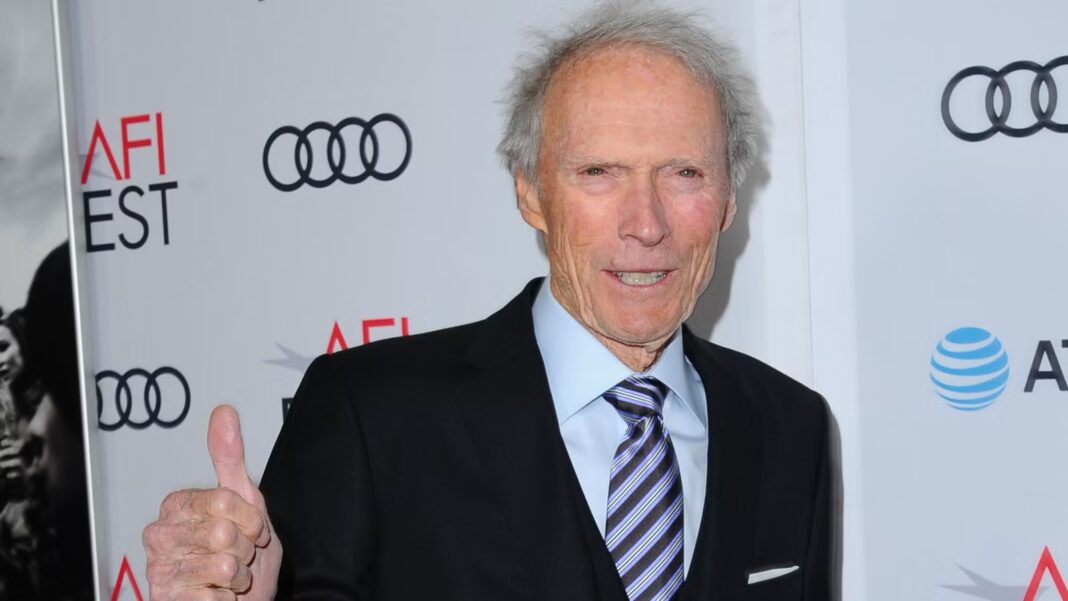
In October 2010, as Hereafter was about to open, the AP asked Clint Eastwood to name his five favorite films that he’d directed. He named six. He had over 30 features to pick from by then, beginning with Play Misty for Me in 1971 and running through Hereafter.
Three of the six have him completely off-screen, and only two are Westerns. Together, they reflect a diverse, well-defined career that speaks to his passions and greatest accomplishments. These films, which sit among the best movies directed by Clint Eastwood, deserve to be celebrated — both for what he said about them and for their impact on cinema.
‘Mystic River’ (2003)
Boston Friends Reunited by Murder
What Clint Eastwood Said: Three childhood friends from a working-class Boston street — Jimmy (Sean Penn), Dave (Tim Robbins), and Sean (Kevin Bacon) — are brought back together when Jimmy’s daughter, Katie, is murdered. Eastwood told the AP he liked both the Dennis Lehane novel and the Brian Helgeland screenplay. He was very much taken with the notion of fate dealing these men a bad hand and making it progressively worse. “No amount of sane advice can stop the train,” he said.
Why It Holds Up: The mystery of who killed Katie is less important than the effect of suspicion on three men who all share that same trauma. Eastwood’s straightforward direction lets the actors do the work and brings the emotional story to the forefront. Jimmy’s breakdown at the scene of the crime is absolutely superb, and one of the defining scenes in Eastwood’s oeuvre. There’s no justice in the end, and that’s very much in keeping with the “bad hand” the director spoke of.
‘Bird’ (1988)
Clint Eastwood Films His Jazz Hero

What Clint Eastwood Said: Bird follows saxophonist Charlie Parker (Forest Whitaker) from his rise in the 1940s bebop scene to his death at 34. Eastwood told the AP he took the project because he’d always admired Parker’s playing. He also liked the idea of a film about self-destructive people, noting that no amount of success or the respect of his peers would have gotten Parker out of his despair. Bird is undeniably one of the best biopics Eastwood has directed.
Why It Holds Up: Bird has no gunfights and no Eastwood on-screen. It was a gamble for a man whose career was so closely tied to Westerns and Dirty Harry. The devil was in the details, as the score was meticulously crafted. As The Christian Science Monitor reported in 1988, Eastwood and music director Lennie Niehaus went through the old recordings, isolated Parker’s solos, and had new musicians record the backing. The narrative jumps around in time and never strays far from dark clubs, which capture the life of a jazz musician to a T.
‘Letters From Iwo Jima’ (2006)
Iwo Jima From the Other Side
What Clint Eastwood Said: Shot almost entirely in Japanese, this is a war drama about General Tadamichi Kuribayashi (Ken Watanabe) and a baker who becomes a private (Kazunari Ninomiya) defending Iwo Jima against the American invasion in 1945. Eastwood told the AP he was proud of the film. The concept came to him while he was making Flags of Our Fathers (the American side of the story). He wanted to show what it was like to be on the other side of the island — to be the ones asked to defend it, knowing they wouldn’t be coming home.
Why It Holds Up: Hollywood war films rarely take the other side’s point of view. Moreover, Eastwood was in his mid-70s when he directed the film, which was made in a language he doesn’t speak. The AFI Catalog states that first-time screenwriter Iris Yamashita wrote the script in English, which was then translated into Japanese. The film was an impressive undertaking and Eastwood’s definitive war epic. Letters From Iwo Jima won the Oscar for Sound Editing and was nominated for Best Picture.
‘Million Dollar Baby’ (2004)
A Boxing Movie About Family

What Clint Eastwood Said: Trainer Frankie Dunn (Eastwood) takes on Maggie Fitzgerald (Hilary Swank), a 30-something waitress who wants to box. Eastwood described it as a family story. Frankie has a daughter who sends his letters back unopened, and Maggie lost her dad when she was a kid. Both are guarded and find family through each other.
Why It Holds Up: Boxing films generally build to a title fight, and Million Dollar Baby is no exception. However, it transitions into a drama in its second half, focusing on the relationship. It offers a dual perspective on the sport, with the first two acts set in the gym, where Frankie and Scrap (Morgan Freeman), the former fighter who doubles as narrator, build their connection. Eastwood’s secret to directing, putting script and character first, is on full display. Million Dollar Baby won four Academy Awards, including Best Picture and Best Director.
‘Unforgiven’ (1992)
The Western He Aged Into
-
 Warner Bros.
-
Gene Hackman wearing a cowboy hat in Unforgiven Warner Bros. -
 Warner Bros
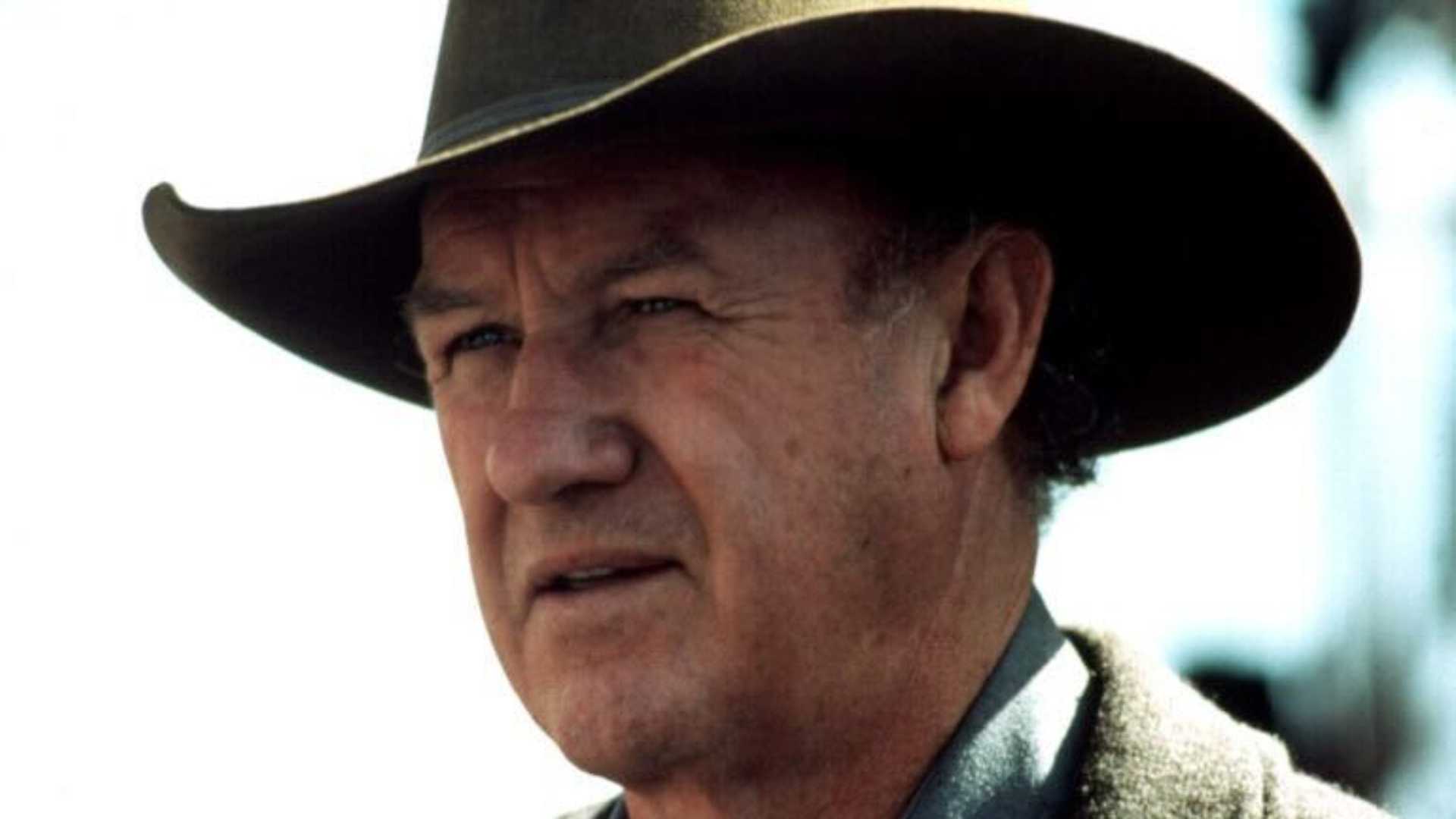
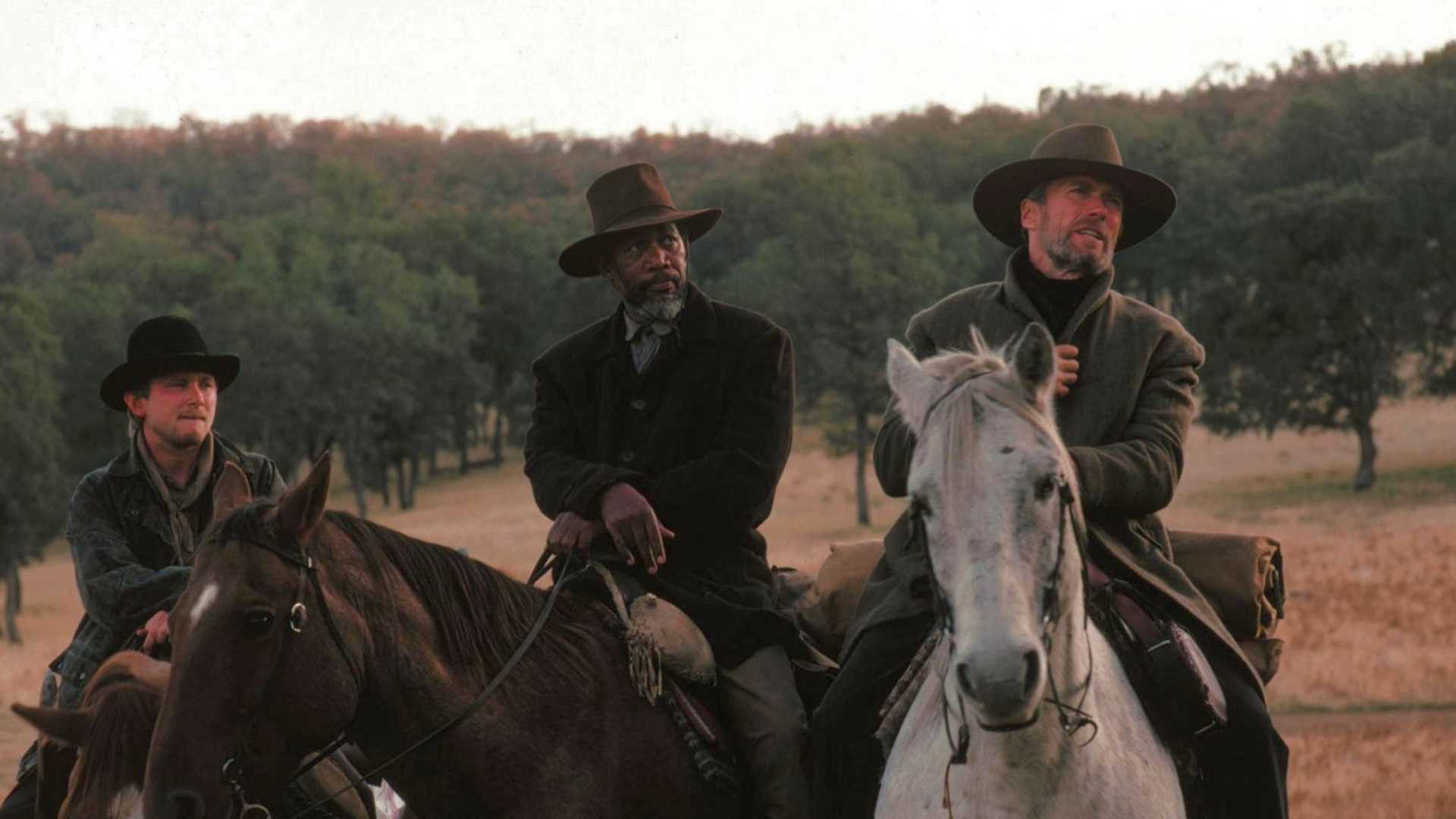
What Clint Eastwood Said: Eastwood called the script very good and praised its ambiguity about whom the hero and villain were. He pointed to Little Bill Daggett (Gene Hackman) as a man who wants to live in peace and is convinced that he is doing the right thing. Screenwriter David Webb Peoples told Yahoo! Entertainment that he wrote the script in 1976 and that Eastwood waited until he could grow into the role before making the film.
Why It Holds Up: Unforgiven ranks among the best Westerns ever made, as it reexamines the gunfighters Eastwood was famous for. William Munny (Eastwood) has a hell of a time getting on his horse, misses his easy shots, and gets sick in the rain. The first two killings are awkward and drawn out, with no quick, clean duels at all. The Academy awarded it four Oscars, including Best Picture and Best Director. The film closes with a dedication to Sergio Leone and Don Siegel, two of his formative influences, serving as his farewell to the genre.
‘The Outlaw Josey Wales’ (1976)
A Loner Builds a Family

What Clint Eastwood Said: After Union raiders murder his wife and son, Missouri farmer Josey Wales (Eastwood) joins a band of Confederate guerrillas. When the war ends, he refuses to surrender, fleeing toward Texas with a bounty on his head. Eastwood connected the Western to the 1970s, when Vietnam unsettled the country, noting that it dealt with how war divides people. He also called it the story of a cynic who regains a purpose and finds a surrogate family.
Why It Holds Up: The gunfighters Eastwood played for Sergio Leone and in High Plains Drifter ride in and ride out. Josey Wales keeps picking up company: Cherokee elder Lone Watie (Chief Dan George), a Navajo woman, and a family of Kansas settlers. The makeshift family gives the revenge story a warmth absent from his earlier Westerns.
Wales ends the confrontation with Comanche chief Ten Bears by offering peace rather than the usual firefight. The source novel has a dark origin story, but the Library of Congress still added the film to the National Film Registry in 1996.