Officials from 23 states sued the federal government on April 3 over President Donald Trump’s executive order on federal elections that targets mail-in voting.
The order, which requires the creation of a federal master list of eligible voters in every state, directs the Department of Homeland Security and Social Security Administration to collect voter information. It prohibits the U.S. Postal Service (USPS) from sending absentee ballots to those not included on the lists. The order directs the post office to send ballots only to verified individuals included in the lists, with unique bar codes applied to each envelope—one per voter—to facilitate tracking and audits.
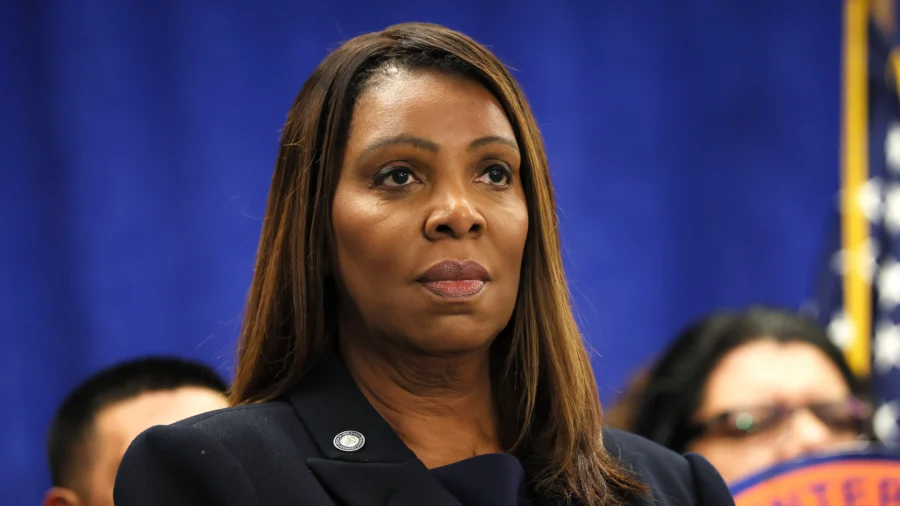
New York Attorney General Letitia James and a coalition of Democratic attorneys general who filed the new legal action alleged the executive order would disrupt state election systems, restrict mail-in voting, and threaten election officials with prosecution for doing their jobs.
“This executive order is yet another attempt to disenfranchise voters and sow distrust in our electoral system as we head into the next election cycle,” she said. “Our elections are and always have been free, fair, and secure, and we will not allow this administration to attack the very foundation of our nation.”
The legal action alleged that the executive order violates the U.S. Constitution and federal law by attempting to take control of elections away from the states and Congress. The plaintiffs are asking the court to invalidate parts of the order and forbid federal agencies from carrying out its directives.
The legal complaint described the executive order as an “unprecedented power grab.”
The Constitution provides that the president “has no authority to restrict voter eligibility or mail voting to lists of voters pre-authorized by the federal government,” the complaint stated. The plaintiffs said they filed suit to safeguard states’ “constitutional authority to administer state and federal elections.”
The lawsuit alleged that Trump’s order creates “shadow voter eligibility lists” and threatens state officials with investigation and prosecution to force states into “disenfranchising voters missing from those lists.” It also interferes with voting by mail by requiring that the USPS refrain from delivering voted ballots unless the voters appear on the post office’s precleared list, which is administered outside the control of the states that run federal elections, according to the complaint.
The order also extends the period that election officials have to preserve election records in order to accommodate threatened prosecutions, which the complaint said violates current requirements in state and federal law.
The complaint said that if the court does not block the order, it will harm states by compelling them on short notice to quickly revise election laws and policies, as well as carry out trainings and statewide voter education efforts.
“These changes will force Plaintiff States to invest enormous amounts of time and resources, diverting those resources from other critical election priorities,” at a time when some states have already held their primary elections and just months before mail-in voting procedures for the upcoming general election begin to be implemented, the complaint said.
Even with the states’ best efforts, the order “has sown and will sow confusion and chaos in their election systems, together with the threat of disenfranchisement of States’ voters,” the complaint said.
The plaintiffs asked the court to block the parts of the executive order that mandate the creation of state citizenship lists and the preservation of records. They also asked that the order’s provisions giving the USPS, Department of Homeland Security, and the Social Security Administration a role in the electoral process be enjoined.
The Epoch Times reached out to the U.S. Department of Justice for comment. No reply was received by publication time.
Trump signed the order on March 31 after Congress recently failed to pass the SAVE America Act, which would have imposed voter ID and election integrity requirements. Administration officials said the order was a necessary step to restore public confidence ahead of the midterm elections in November.
The president said he anticipated legal challenges.
“I don’t know how it could be challenged. It could probably be challenged if you find a rogue judge,” he said. “We will appeal if it is, but I don’t see how anyone else could challenge it.”
“We believe, combined, the measures in this order will help secure elections in the future and ensure the many abuses of our elections in the past are not repeated in future elections,” Scharf said.
Travis Gillmore contributed to this report.